
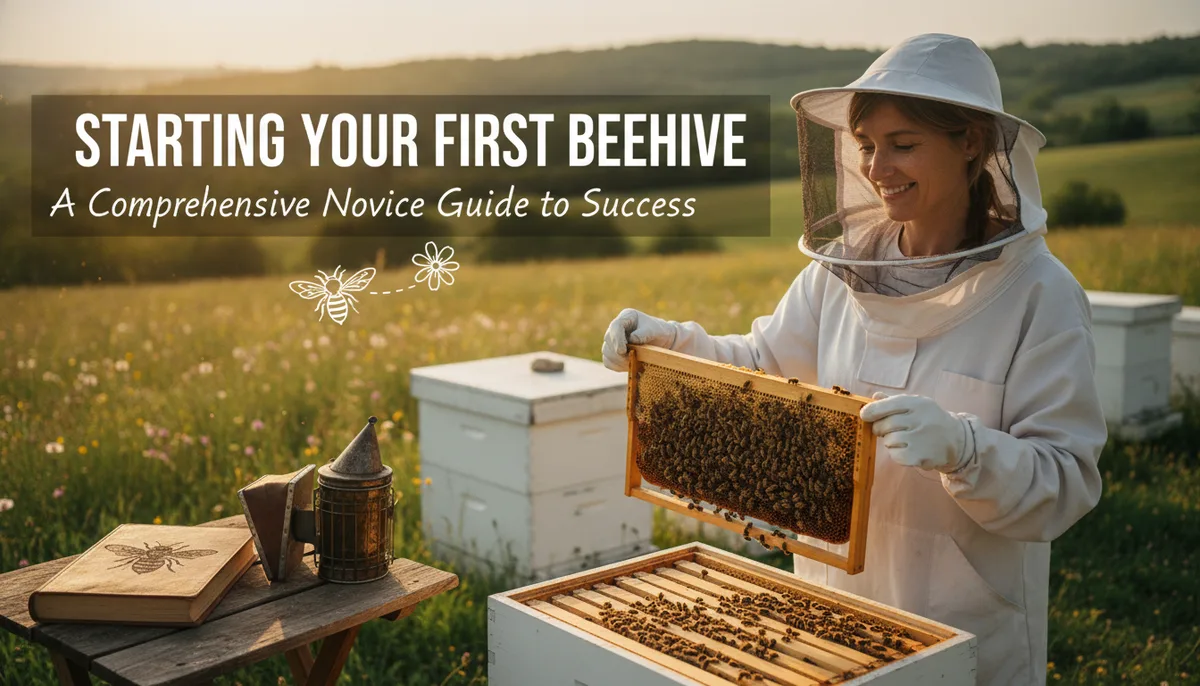
Starting Your First Beehive: A Comprehensive Novice Guide to Success
Taking the plunge into beekeeping is a transformative experience. It shifts your perspective from being a mere observer of nature to an active participant in a complex, buzzing ecosystem. However, the transition from "bee-curious" to a confident hive manager requires more than just enthusiasm; it requires smart decisions made well before the first bee arrives on your property.
Starting your first hive is a journey of education and preparation. By understanding the biology of the honey bee and the requirements of the craft, you can ensure that your first year is a success rather than a series of expensive mistakes. This guide is designed to help novices navigate the critical early stages of their beekeeping journey.
Laying the Foundation: Research and Regulations
Before you buy a single frame or a veil, your first task is to understand the legal and social landscape of beekeeping in your area. Many municipalities have specific ordinances governing the number of hives allowed per acre, the required distance from property lines, and even the necessity of a constant water source to prevent bees from visiting a neighbor’s swimming pool.
Beyond the legalities, local knowledge is your greatest asset. Honey bees behave differently based on regional climates, nectar flows, and local pest pressures. Connecting with a local beekeeping association provides access to mentors who understand the specific challenges of your zip code. They can tell you exactly when the "dandelion flow" starts in your area or which local suppliers provide the hardiest queens for your climate.
Choosing Your Hive System: The Langstroth and Beyond
The most critical piece of equipment you will choose is the hive itself. While there are several styles available, the Langstroth hive remains the industry standard for a reason. Its modular design, based on the principle of "bee space," allows for easy expansion and standardized parts.
For beginners, the 10-frame or 8-frame Langstroth is usually the best starting point because most educational materials and accessories are designed for this system. If you are concerned about the physical weight of lifting heavy honey supers, the 8-frame system offers a lighter alternative without sacrificing the benefits of the Langstroth design.
To simplify the startup process, many new beekeepers opt for a pre-configured kit. These bundles typically include the hive bodies, frames, and basic tools needed to get moving. For a detailed look at the top options available this year, see our guide on the Best Beginner Beekeeping Kits of 2024: Start Your Backyard Apiary with Confidence.
Essential Gear: Protecting Yourself and Your Bees
Beekeeping requires a specific set of tools that go beyond the hive itself. While it may be tempting to skimp on protective gear, having high-quality equipment builds confidence. A nervous beekeeper leads to nervous bees.
Protective Clothing
At a minimum, you need a high-quality veil and a bee jacket or full suit. Ventilated suits are increasingly popular as they allow airflow while keeping the fabric thick enough to prevent stings. Look for suits with reinforced veils and secure elastic closures.
The Toolkit
Every inspection requires three fundamental tools:
- The Smoker: This is your primary way to calm the bees. Smoke interrupts the bees' alarm pheromones, allowing you to work the hive with minimal defensiveness.
- The Hive Tool: Think of this as a pry bar for beekeepers. Bees use propolis (bee glue) to seal every crack, and the hive tool is essential for prying apart frames and scraping away excess wax.
- The Bee Brush: A soft-bristled brush used to gently move bees off a frame when you need to inspect the cells beneath them.
To dive deeper into the specialized equipment that makes hive management easier, explore our list of Essential Beekeeping Tools Every Newbie Needs: Beyond the Hive and Suit.
Sourcing Your Bees: Packages vs. Nucs
Once your equipment is ready, you need the stars of the show. There are two primary ways to purchase bees: packages and nucleus colonies (nucs).
- Package Bees: A package is essentially a screened box containing roughly three pounds of bees and a queen in a separate cage. Packages are generally cheaper and easier to ship, but the bees must build all their comb from scratch, which can be a slow start for a novice.
- Nucleus Colonies (Nucs): A nuc is a "mini-hive" that usually includes five frames of established comb, brood (developing bees), honey, and a laying queen. Because the colony is already established and functioning, nucs tend to grow faster and are more resilient than packages, making them a preferred choice for many beginners.
Regardless of which you choose, it is vital to order your bees early—typically in January or February—for a spring delivery.
Location Matters: Setting Up Your Apiary
Where you place your hive can determine the health of your colony. Honey bees are remarkably adaptable, but they have specific preferences that help them thrive:
- Sunlight: Hives should ideally face East or Southeast to catch the morning sun. This warms the hive early, encouraging the bees to start foraging sooner in the day.
- Wind Protection: A windbreak (like a fence or a hedge) protects the hive from chilling winter winds, which can be the difference between survival and a "dead-out" in colder climates.
- Water Source: Bees need water to cool the hive and dilute honey. If you don't provide a water source (like a birdbath with stones for them to land on), they will find one—often your neighbor’s pool or pet bowl.
- Accessibility: Ensure you have enough space to stand behind or beside the hive. Never stand directly in front of the entrance, as this blocks the "flight path" of returning foragers.
The First Year: A Season of Observation
The first year of beekeeping is less about harvesting honey and more about learning the language of the hive. Your goal is to help the colony build enough strength and food stores to survive their first winter.
Regular inspections are your classroom. You will learn to identify the queen, distinguish between worker brood and drone brood, and recognize the patterns of a healthy hive. It is a steep learning curve, but one that is incredibly rewarding. For a roadmap of what to expect month-by-month, read our guide on Navigating the First Year: A Comprehensive Guide to Transitioning from Neophyte to Confident Beekeeper.
Staying Vigilant: Pests and Future Threats
A successful beekeeper is a proactive one. The modern beekeeping landscape is fraught with challenges, most notably the Varroa destructor mite. Managing these pests is a non-negotiable part of the hobby.
Furthermore, the global nature of beekeeping means new threats are always on the horizon. While beginners should focus on the basics, staying informed about emerging issues like the potential spread of Tropilaelaps mites is part of being a responsible steward. You can learn more about these evolving challenges in our article on Tropilaelaps Redux: Preparing for the Next Great Threat to American Beekeeping.
Conclusion: The Long-Term Commitment
Beekeeping is not a "set it and forget it" hobby. It is a commitment to another living creature that requires your attention, care, and ongoing education. By starting with the right equipment, a solid foundation of knowledge, and a connection to the local beekeeping community, you are setting yourself up for a deeply fulfilling experience.
Take the plunge, stay curious, and remember that every beekeeper—no matter how experienced—was once a novice standing in front of their first hive, heart racing, ready to begin.