
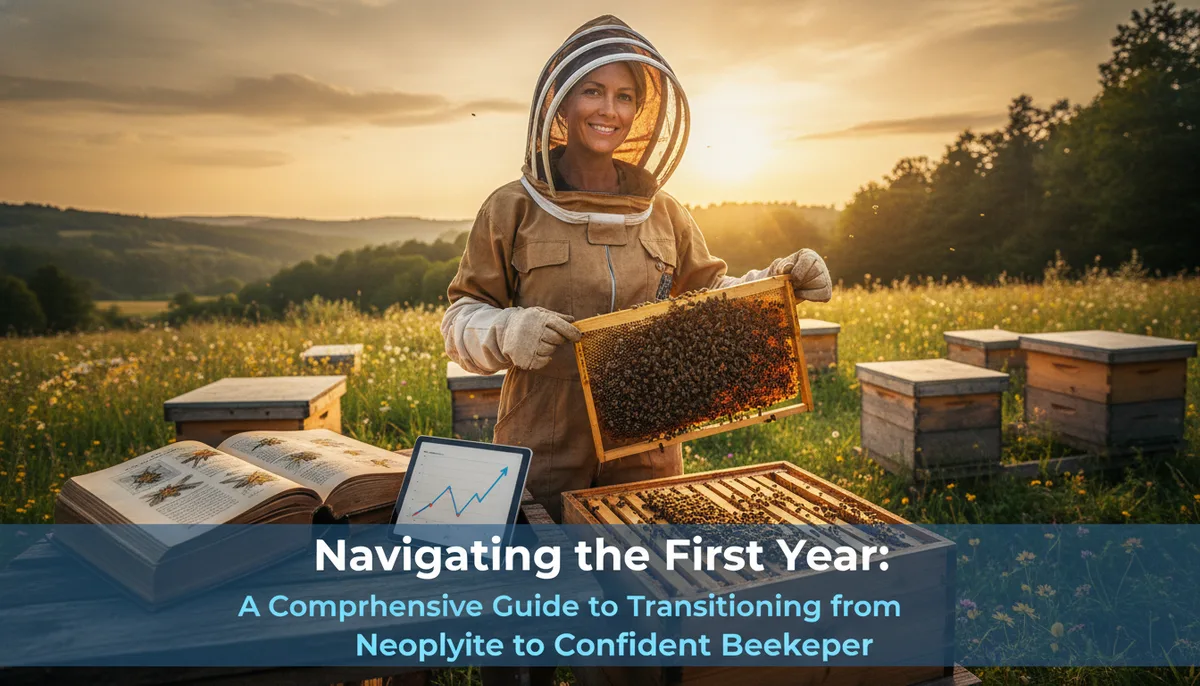
Navigating the First Year: A Comprehensive Guide to Transitioning from Neophyte to Confident Beekeeper
The Steep Learning Curve: Why Beekeeping Feels Overwhelming
Starting a backyard apiary is often romanticized as a peaceful endeavor of watching bees drift from flower to flower. However, the reality of the first season is frequently characterized by a sensory and cognitive overload. As noted by expert James E. Tew, initiating beekeeping skills is strikingly similar to learning to drive a car.
When you first sit behind the wheel, you are hyper-aware of every mirror, the pressure on the accelerator, and the terrifying proximity of other vehicles. In beekeeping, your "mirrors and pedals" are your smoker, your hive tool, your protective veil, and the thousands of stinging insects reacting to your every move. This initial phase—the "neophyte" phase—is defined by a lack of muscle memory. You are so focused on not dropping a frame or getting a bee in your glove that you often miss the subtle clues the colony is giving you about its health.
The goal of the first year is not necessarily to produce a record-breaking honey crop, but to move past this mechanical anxiety. Understanding that this overwhelm is a universal experience for every veteran beekeeper can help you stay the course when the learning curve feels vertical.
Mastering the Mechanics: Equipment and Muscle Memory
To move from a state of high-alert anxiety to fluid management, you must master your tools. A common mistake for beginners is over-complicating their setup. In the beginning, simplicity is your ally. You need gear that works reliably so that you can stop thinking about the gear and start thinking about the bees.
Choosing the Right Starting Point
Selecting your first hive setup is a foundational decision. Many beginners find themselves lost in a sea of options, from top-bar hives to Flow Hives. However, the standard Langstroth hive remains the gold standard for beginners because of its modularity and the wealth of community knowledge available for it.
For those looking to start with a solid foundation, exploring the Best Beginner Beekeeping Kits of 2024: Start Your Backyard Apiary with Confidence can provide a curated list of equipment that minimizes the guesswork.
Langstroth 10-frame beehive starter kit
The Smoker: Your Most Important Communication Tool
The smoker is not just a tool to "scare" bees; it is a tool to disrupt their pheromone communication. Learning how to light a smoker so that it stays lit for the duration of your inspection—and produces cool, white smoke rather than hot, acrid sparks—is a rite of passage. Once you can operate your smoker with one hand while manipulating a frame with the other, you have achieved a major milestone in your technical development.
The Psychological Barrier: Overcoming the Fear of the Sting
Even the most enthusiastic beginner feels a twinge of primal fear when opening a hive for the first time. The sound of thousands of bees vibrating in unison is a powerful sensory experience. This fear often leads to jerky movements, which in turn agitates the bees, creating a negative feedback loop.
Building Confidence Through Protection
The best way to overcome this psychological barrier is to trust your equipment. A high-quality bee suit acts as armor for your confidence. When you know you are protected, your movements become slower and more deliberate. This calm demeanor is sensed by the bees, leading to a much more peaceful inspection.
For a deep dive into the gear that provides the best balance of safety and comfort, see our guide on Top-Rated Bee Suits for Maximum Protection: Stay Safe and Cool in the Apiary.
Understanding Bee Temperament
It is also vital to recognize that bee temperament is not static. It changes based on the weather, the time of day, and the availability of forage. A colony that was "gentle as kittens" on a sunny Tuesday during a clover flow might become defensive on a cloudy Thursday when the nectar has dried up. Recognizing these shifts is part of the transition from neophyte to beekeeper.
From "Looking" to "Observing": The Art of the Hive Inspection
A common neophyte question is, "What am I supposed to be looking at?" Beginners often pull a frame, see "lots of bees," and put it back, feeling they have accomplished the task. A true beekeeper, however, is looking for the story written on the comb.
Reading the Frames
When you pull a frame, you should be looking for specific indicators of colony health:
- The Queen's Presence: You don't always need to see the queen. Seeing "pearly white" C-shaped larvae or tiny upright eggs (which look like grains of rice) confirms she was there within the last three days.
- Food Stores: Is there a "halo" of honey and pollen around the brood nest? A colony with no visible stores is a colony on the brink of starvation.
- Space Management: Are the bees filling the frames to the edges? Is it time to add another box?
The Importance of Documentation
Because the first year is a blur of new information, memory is a poor tool for management. This is where the practice of journaling becomes invaluable. By recording what you see each week, you begin to notice patterns—how the population explodes in spring, how the drones are kicked out in autumn, and how the colony reacts to various treatments.
To learn how to turn your raw notes into a powerful management tool, read The Art of the Beekeeper’s Journal: How Observation Transforms Your Apiary.
Navigating the "What Now?" Moments
Every new beekeeper hits a moment where the textbook doesn't match the reality inside the hive. Perhaps you see queen cells and don't know if they are swarm cells or supersedure cells. Perhaps you see a pile of dead bees on the landing board after a cold snap.
The Problem with "Checklist Beekeeping"
Neophytes often want a rigid schedule: "On Day 14, do X." But biology is fluid. Beekeeping is more about "if/then" logic than a calendar. If the bees are building "burr comb" on the inner cover, then they need more space. If you see no eggs but plenty of honey, then you may be queenless or honey-bound.
Seeking Mentorship and Community
James Tew emphasizes that beekeeping is a community-driven craft. No book can replace a veteran beekeeper looking over your shoulder and saying, "Hear that pitch? That’s the sound of a queenless hive." Joining a local beekeeping association is perhaps the single most important step a neophyte can take to ensure their second year is more successful than their first.
Conclusion: The Transition to Stewardship
The journey from a neophyte to a beekeeper is not measured in the number of hives you own, but in the shift of your perspective. It happens the first time you anticipate a swarm before it happens. It happens when you can light your smoker on the first try in a high wind. It happens when you stop seeing a hive as a box of "pets" and start seeing it as a complex, super-organism that requires your stewardship.
Beekeeping is a lifelong apprenticeship. Even those who have kept bees for decades consider themselves students of the hive. By embracing the steep learning curve, investing in the right gear, and focusing on the art of observation, you will move past the "driving anxiety" of your first season and into the rewarding, deep-seated rhythm of the apiary.