
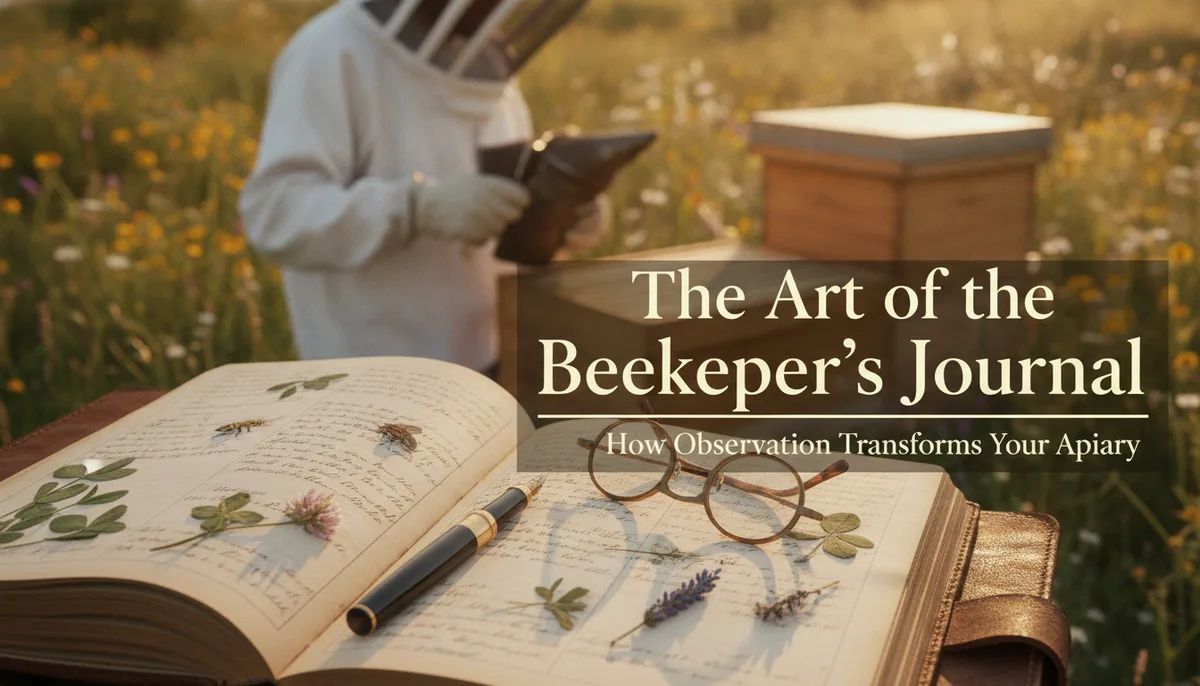
The Art of the Beekeeper’s Journal: How Observation Transforms Your Apiary
Beekeeping is often described as a blend of science and art. The science involves understanding biology, pathology, and chemistry. The art, however, lies in the subtle nuances of observation—the ability to read the "mood" of a colony or notice the slight shift in flight patterns as a nectar flow begins. This is where the beekeeper’s journal becomes an indispensable tool.
As the old saying goes, you don’t need a specific excuse or a formal reason to keep a beekeeper’s journal. You can simply sit down next to your bees and write whatever comes to mind. In those quiet moments, away from the smoke and the lifting of heavy boxes, your own thoughts may surprise you. Documenting these reflections doesn't just create a record of the past; it builds a bridge to becoming a more intuitive and successful steward of your hives.
Why Every Beekeeper Needs a Journal
In the excitement of a spring inspection, it is easy to believe you will remember which hive had the most aggressive queen or which colony was lagging in honey production. However, by the time autumn rolls around, those details often blur together. A journal serves as the external hard drive for your apiary management.
Tracking Long-Term Trends
A journal allows you to see patterns that are invisible in a single day. Are your bees consistently struggling in July? Do they always seem to swarm when the black locust trees bloom? By recording these details year after year, you transition from reactive beekeeping to proactive management. You begin to anticipate the needs of your colonies based on historical data specific to your micro-climate.
Improving Hive Health
When you track varroa mite counts, treatment dates, and subsequent colony strength, you gain a clear picture of what works in your specific environment. If you are just starting out, having a record of your journey is vital. For those using the Best Beginner Beekeeping Kits of 2024: Start Your Backyard Apiary with Confidence, a journal helps you document how your equipment performs and how your first package or nuc settles into its new home.
Setting Up Your Journaling Practice
There is no "right" way to keep a journal, but consistency is key. Some beekeepers prefer the tactile experience of a physical notebook, while others opt for digital apps or spreadsheets.
The Physical Notebook
There is something uniquely satisfying about a notebook stained with propolis and beeswax. A physical journal is easy to carry into the field and doesn't require an internet connection. When choosing a physical notebook, look for something durable and weather-resistant.
The Digital Approach
Digital journals allow you to attach photos and videos directly to your entries. This is incredibly helpful for tracking brood patterns or identifying mysterious pests. Apps specifically designed for beekeeping can also generate graphs of your hive's weight or mite counts over time.
The Hybrid Method
Many experienced beekeepers use a "field note" system. They jot down quick observations on a notepad or a voice recorder while in the apiary and then transfer those notes to a more permanent, detailed ledger or digital file once they are back inside and cleaned up.
What to Record: Beyond the Basics
While recording the date and the presence of the queen is standard, a truly valuable journal goes deeper. To gain the most insight, consider including the following categories in your entries:
Weather and Environment
Bees are highly sensitive to atmospheric conditions. Record the temperature, wind speed, and cloud cover. More importantly, note the "phenology"—the study of cyclic and seasonal natural phenomena. What is blooming? When did the first dandelion appear? When did the maples start dropping pollen? This data is often more accurate for timing your management than a calendar.
Colony Temperament and Vitality
How did the bees react to your presence? Were they calm on the combs, or were they "runny" and agitated? Noting the temperament can help you decide if a colony needs a new queen. Additionally, record the "sound" of the hive. A queenless colony often has a distinct, higher-pitched roar that an observant beekeeper can learn to identify.
Inspection Details
- Brood Pattern: Is it solid or "shotgun" (spotty)?
- Food Stores: How many frames of honey and pollen are present?
- Space: Do they have enough room to expand, or are they backfilling the brood nest with nectar?
During the peak of summer, these details are crucial. For guidance on managing your colonies during the hottest months, refer to our guide on Beating the Heat: The Ultimate Guide to Summer Hive Inspections and Beekeeper Safety.
The Meditative Beekeeper: Writing as a Tool for Observation
The most profound entries in a beekeeper's journal often don't come from the inspection itself, but from the time spent sitting quietly near the hive entrance. This practice, often called "entrance observation," is where you truly learn the language of the bees.
When you sit down next to your bees without the intent to open the hive, you see things you would otherwise miss. You see the foragers returning with heavy baskets of bright orange pollen. You see the guard bees checking incoming traffic. You might even see the orientation flights of young bees, a dizzying cloud of activity that looks like a swarm but is actually a sign of a growing, healthy colony.
To do this comfortably, you need the right gear. Even when you aren't opening the hive, wearing protective clothing can give you the peace of mind to sit still and focus. Check out our recommendations for Top-Rated Bee Suits for Maximum Protection: Stay Safe and Cool in the Apiary to find a suit that allows for long periods of comfortable observation.
Learning from the Past: The Power of Review
A journal is only as good as the time you spend reviewing it. At the end of each season, take an evening to read through your entries from the previous year. You will likely find "surprises" that you had forgotten.
Identifying Successes and Failures
Did the hive you fed early in the spring produce more honey? Did the colony you split in May avoid swarming? Reviewing these outcomes helps you refine your techniques. It’s also a time to be honest about mistakes. Perhaps you waited too long to treat for mites, or you missed the signs of a failing queen. Documenting these errors ensures they become learning opportunities rather than repeated failures.
Comparing Years
As you accumulate three, five, or ten years of journals, you become a local expert. You will know exactly when the nectar flow typically ends in your zip code and when the first frost usually hits. This localized knowledge is far more valuable than any general beekeeping book.
Essential Gear for the Documenting Beekeeper
To make journaling a habit, keep your supplies accessible. If you have to hunt for a pen every time you go to the apiary, you likely won't write anything down.
- A Dedicated Pen: Use a pen with archival, waterproof ink so your notes don't bleed if they get wet.
- A Camera or Smartphone: For capturing visual evidence of queen cells, brood diseases, or interesting forage.
- A Storage Box: A small, weather-tight bin kept near the hives can hold your journal, pens, and a magnifying glass for closer inspection of eggs and larvae.
Conclusion: Your Legacy in the Apiary
Keeping a beekeeper’s journal is an act of devotion to your craft. It transforms beekeeping from a hobby into a journey of discovery. Whether you are recording the weight of your honey harvest or simply describing the way the sunlight hits the wings of a foraging worker, you are capturing the essence of the natural world.
Don't worry about being poetic or overly technical. Just sit, watch, and write. Your bees have much to teach you, and your journal is the place where those lessons are preserved. Over time, these excerpts will form a narrative of your life with the bees—a story of growth, challenges, and the quiet surprises found in the heart of the hive.