
Product Reviews for Hive & Honey
Research-backed Backyard beekeeping for hobbyists and small-scale honey producers. review notes for Aspiring and intermediate beekeepers looking for reliable equipment recommendations, hive management tips, and seasonal health strategies., focused on feature fit, public product details, and useful comparison context.
Essential Gear for Queen Rearing and Specialty Harvesting
As beekeepers move past their first year of colony management, the focus often shifts from simple survival to more advanced practices. Whether you are looking to become more self-sufficient by raising your own queens or you want to diversify your harvest with premium comb honey, the right equipment is the difference between a frustrating season and a successful one. Based on current industry trends and management best practices, we have identified the key categories of gear that help intermediate beekeepers elevate their apiary.
Queen Rearing Tools for the Hobbyist
Many beekeepers assume that raising queens is a task reserved for commercial operations. However, with the right tools, hobbyists can successfully produce high-quality queens to improve hive genetics or expand their number of colonies.
- Grafting Tools: The most critical tool for queen rearing is the grafting needle. There are two primary styles: the stainless steel fixed-tip needle and the "Chinese-style" flexible grafting tool. The Chinese-style tool is often preferred by beginners because it features a flexible plastic tongue that slides under the larva and its royal jelly, making the transfer to a cell cup much easier.
- Cell Cups and Bars: To raise a queen, you must trick the bees into building a queen cell. Plastic cell cups are the industry standard, as they are uniform and easily fit into cell bars. These bars are then placed into a "cell builder" colony.
- Mating Nucs: Once the queen cells are capped and ready to emerge, they need a small environment to start their new life. Mating nucs—miniature hives—are essential here. They require fewer bees to maintain than a standard five-frame nuc, allowing you to raise multiple queens simultaneously without depleting your main honey-producing colonies.
Efficient Harvesting: Clearing the Supers
When it comes time for the honey harvest, the first challenge is removing the bees from the honey supers without causing a frenzy or damaging the comb. There are two primary methods for this, each requiring specific equipment:
- Bee Escapes: These are one-way valves (such as the Triangle Escape or the Porter Bee Escape) that fit into the hole of an inner cover. You place the escape board beneath the honey supers you wish to harvest. Over 24 to 48 hours, the bees move down into the brood nest and cannot return. This is the gentlest method for the bees and requires no chemicals.
- Fume Boards and Repellents: For beekeepers with many hives, waiting 48 hours for a bee escape isn't always practical. A fume board is a felt-lined cover that is sprayed with a bee repellent. When placed on top of the hive, the scent drives the bees down into the lower boxes within minutes. While highly efficient, it requires careful application to ensure the repellent does not linger in the honey.
The Comb Honey Comeback
While liquid honey is the modern standard, there is a growing demand for comb honey—honey in its most natural, unprocessed state. Producing high-quality comb honey requires specialized equipment to ensure the bees build straight, clean, and marketable sections.
- Ross Rounds: This system uses specialized plastic rings and thin foundation. The bees build the comb directly into the circular rings, which are then popped out and capped with clear lids. This eliminates the need for cutting and minimizes the mess.
- Cassette Systems: Similar to Ross Rounds, these systems use square or rectangular cassettes. They are ideal for beekeepers who want to produce "sections" of honey that look beautiful on a charcuterie board or in a gift basket.
- Thin Surplus Foundation: If you prefer the traditional "cut comb" method, you must use a specific type of foundation. Thin surplus foundation is much thinner than standard brood foundation and contains no wire reinforcement, making it completely edible and soft to the bite.
Health and Nutrition Monitoring Gear
As emphasized by experts like Randy Oliver, the foundation of any successful harvest or queen-rearing program is colony health—specifically Varroa mite management and nutrition.
- Varroa Testing Kits: You cannot manage what you do not measure. An alcohol wash kit is the most accurate tool for monitoring mite levels. These kits allow you to quickly sample 300 bees and get a precise count of the mite load, informing whether a treatment is necessary before the honey flow or before you start queen rearing.
- Internal Feeders: For new packages or nucleus hives, nutrition is paramount. Division board feeders (which replace a frame inside the hive) or top feeders are superior to entrance feeders because they are less likely to trigger "robbing" behavior from other hives and allow the bees to access syrup even in cooler weather.
By investing in these specialized tools, beekeepers can move beyond basic maintenance and begin to master the more intricate and rewarding aspects of apiculture. Whether it's the precision of a grafting tool or the nostalgic appeal of a comb honey cassette, the right gear makes the craft more sustainable and productive.
Elevating the Honey Experience: From Extraction Gear to the Art of Dippering
Whether you are a first-year beekeeper or a culinary enthusiast, the tools you choose to interact with honey dictate the quality of the final experience. From the mechanical precision required during a late-summer harvest to the simple physics of serving honey at the breakfast table, the right equipment ensures that the "liquid gold" produced by the hive is treated with the respect it deserves.
In this review highlight, we examine the essential gear for harvesting luxury-grade honey and the specialized tools that transform honey service into an art form.
Extraction Methods for Luxury-Grade Honey
The transition from "backyard honey" to a luxury product—similar to the way fine wines are treated in high-end hotels—begins with the extraction process. As seen with specialty varieties like Sourwood Gold, the timing and method of extraction are critical.
When reviewing extraction equipment, beekeepers generally choose between manual and electric centrifugal extractors or the traditional "crush and strain" method.
- Centrifugal Extractors: These are the gold standard for those looking to preserve the integrity of the wax comb. By spinning the frames, the honey is pulled out by centrifugal force, allowing the "drawn-out" comb to be returned to the bees. This saves the colony the massive energy expenditure required to build new wax.
- The Luxury Standard: To achieve the clarity and viscosity found in premium sourwood harvests, a radial extractor is often preferred. This ensures that the honey is removed evenly without the need to flip frames constantly, reducing the risk of comb breakage and minimizing the introduction of air bubbles, which can cloud the honey.
The key to a successful extraction isn't just the machine, but the timing. Reviewing your local floral "flow" is essential; extracting too early results in high moisture content (which can lead to fermentation), while waiting too long may result in the honey crystallizing within the comb.
The Art of Dippering: Why the Honey Dipper Wins
For the consumer, the product review often ends at the jar, but the tool used for serving is just as vital. While a standard spoon is the most common household choice, the honey dipper is a specialized tool designed specifically to handle the unique viscosity of honey.
The "art of dippering" relies on the physics of the tool’s horizontal grooves. When you dip the wooden head into the jar and rotate it slowly, the honey is trapped within these grooves by surface tension. As long as you keep the dipper rotating, the honey will not drip. Once you stop the rotation over your toast or tea, gravity takes over, and the honey flows in a steady, controlled stream.
Why choose a honey dipper over a spoon?
- Drip Control: The rotational physics of the dipper prevents the sticky mess often associated with spoons.
- Aeration: The process of "dippering" can subtly aerate the honey, releasing the delicate floral aromas of high-end varieties like Sourwood or Tupelo.
- Material Integrity: Most dippers are made of turned wood (such as olive or maple). Unlike some metallic spoons, high-quality wood is chemically inert and won't react with the acidity of the honey, preserving its pure flavor profile.
First-Year Essentials: Tools for Hive Health
You cannot have a premium honey harvest without a healthy colony. For those in their first year of beekeeping, the "products" you invest in are often medicinal or nutritional rather than purely mechanical. According to long-term data from experts like Randy Oliver of Scientific Beekeeping, two categories of products are non-negotiable for the modern keeper: Varroa mite management tools and colony nutrition supplements.
- Varroa Management Kits: Since the invasion of the Varroa destructor mite, beekeeping has become a more technical endeavor. A high-quality "alcohol wash" kit or a CO2 injector for mite sampling is an essential tool. These products allow you to monitor mite levels accurately, ensuring you only apply treatments when necessary, which protects the purity of your future honey harvest.
- Nutritional Supplements: In areas with "dearth" periods (times when no flowers are blooming), pollen patties and sugar syrup feeders are essential products. Reviewing the protein content of pollen patties is vital; a high-quality patty ensures the queen continues to lay eggs, maintaining a population large enough to take advantage of the next nectar flow.
Final Thoughts on Product Selection
The journey from a nucleus hive to a luxury honey tasting involves a specific ecosystem of products. For the beekeeper, the focus should be on health-monitoring tools and efficient extraction gear that preserves the bees' hard work. For the honey lover, investing in a well-crafted wooden dipper isn't just about aesthetics—it’s about the functional mastery of one of nature’s most complex liquids. By choosing the right tools at every stage, you ensure that the honey remains a "special occasion" product, whether it's being harvested in the field or drizzled in a five-star kitchen.
Essential Gear for the First Three Years: A Review of Management Tools
Starting a journey in beekeeping is often described as an "evolutionary struggle," both for the bees and the keeper. As highlighted by veteran beekeepers and researchers, the modern apiary faces challenges—ranging from parasitic mites to nutritional deficits—that didn't exist a few decades ago. For those navigating their first 36 months, the difference between a thriving colony and an empty hive often comes down to the tools used for management. Based on recent industry insights and longitudinal beekeeper experiences, we have synthesized a review of the essential product categories every new beekeeper should prioritize.
Nutritional Support: Choosing the Right Feeders and Syrups
One of the most debated topics in beekeeping is supplemental feeding. Research into the "Three Sweet Syrups"—honey, sucrose (table sugar), and high-fructose corn syrup (HFCS)—reveals that while they are chemically similar, their application in the hive requires different tools.
While honey is often touted as the ideal "elixir," many experts note that the chemical differences between HFCS and honey are minimal in terms of basic caloric delivery. However, for the first-year beekeeper starting with a nucleus hive or package, sucrose syrup is the standard recommendation for building comb.
When reviewing feeding products, consider the following:
- Frame Feeders: These replace a standard frame inside the hive body. They are excellent for preventing "robbing" from other colonies but require opening the hive to refill.
- Top Feeders: These sit above the brood chamber. They allow for large volumes of syrup, which is critical during the "August slump" when natural nectar sources may dry up.
- The Nutrition Factor: Beyond simple sugars, modern beekeeping often requires pollen supplements. Products that provide balanced nutrition are essential during the first year to ensure the queen continues laying during nectar dearths.
Record-Keeping: Analog vs. Digital Tools
A common pitfall for new beekeepers is the "memory trap." As noted in "Off the Wahl Beekeeping," the importance of good notes cannot be overstated. Beekeepers generally fall into two categories: the meticulous studier and the casual observer. For long-term success, the meticulous approach—supported by the right tools—is superior.
Reviewing your options for record-keeping:
- Dedicated Hive Logs: Traditional weather-resistant notebooks (like "Rite in the Rain" products) are favored by many for their reliability in the field. They don't require a battery and can withstand sticky propolis and honey.
- Digital Beekeeping Apps: These allow for data aggregation and can remind you of when a mite treatment is due or when a queen was last spotted.
- The "Three-Year Perspective": As seen in the "Apoidea Tale of Three Augusts," your note-taking needs evolve. Year one is about survival and observation; year two often involves troubleshooting losses; by year three, your notes become a predictive tool that helps you anticipate the needs of your specific local environment.
Varroa Management: The Non-Negotiable Investment
If there is one product category that determines the success of a first-year beekeeper, it is Varroa mite management. Expert consensus from "Scientific Beekeeping" suggests that once a colony is started, Varroa management and colony nutrition are the two most important factors. If these are handled, most other problems disappear.
Essential tools for this category include:
- Monitoring Kits: Before treating, you must test. Alcohol wash kits are widely considered the gold standard for accuracy compared to sticky boards.
- Treatment Rotations: Mites can develop resistance, and different treatments are temperature-sensitive. Reviewing and stocking a variety of organic acids (like Oxalic or Formic acid) or thymol-based products ensures you have the right tool for the specific season.
- Protective Gear: While not a "treatment," high-quality veils and suits are essential during mite checks, which can be more invasive than a standard quick inspection.
Educational Resources as "Products"
In beekeeping, knowledge is as much a tool as a hive tool. The first year is a steep learning curve where the bees act as "wild animals living in a box." Investing in updated literature is vital because beekeeping practices from twenty years ago are often insufficient for today’s pest pressures.
We recommend looking for resources that offer "step-by-step" management plans tailored to your specific climate. A plan for the Sierra Foothills will look very different from a plan for the Northeast, particularly regarding the timing of the honey flow and the duration of winter clusters.
Summary of the Three-Year Journey
The transition from a cautious beginner to a confident beekeeper takes time.
- Year 1: Focus on survival, comb building, and learning the "language" of the bees.
- Year 2: Often the most difficult year, as the "honeymoon phase" ends and the reality of mite cycles and winter losses sets in.
- Year 3: A year of rewarding confidence where the tools and record-keeping habits established in years one and two finally pay off in a sustainable harvest.
By focusing your budget on high-quality feeders, reliable record-keeping tools, and scientifically-backed mite treatments, you set the foundation for a successful apiary that can weather the challenges of the modern environment.
September Gear Spotlight: Protecting the Hive for Winter
As we move into September 2026, the focus of the apiary shifts from honey production to colony survival. This month is a critical window for beekeepers to address two primary threats: the peak of Varroa mite populations and the increased pressure from robbing bees and hornets. Recent updates from industry leaders like Randy Oliver and the latest releases in mite treatment technology, specifically Apivar 2.0, provide new data points for our product evaluations this season.
The Evolution of Amitraz: Apivar 2.0
One of the most significant updates for fall 2026 is the broader availability and implementation of Apivar 2.0. For years, the original Apivar strips have been a cornerstone of Varroa management due to their ease of use and high efficacy during the brood-rearing season.
Apivar 2.0 represents a refined delivery system for the active ingredient, amitraz. While the core chemical remains the same, the "2.0" designation refers to an optimized plastic polymer strip designed for more consistent release rates across varying temperature gradients. In our review of current field reports, the primary advantage of the 2.0 version is its reliability during the fluctuating temperatures of late summer and early autumn. Unlike temperature-sensitive treatments like formic acid or thymol, Apivar 2.0 does not require a specific "weather window" to be effective, making it a versatile tool for beekeepers who may have missed the peak summer treatment period.
However, beekeepers should remain vigilant. As noted in recent beekeeping literature, the reliance on a single mode of action can lead to resistance. We recommend using Apivar 2.0 as part of a rotation strategy, particularly if you have used amitraz-based products exclusively for several seasons.
Oxalic Acid Extended-Release (OAE): A Cautionary Note
While Oxalic Acid (OA) has traditionally been applied via vaporization or dribble during broodless periods, the "extended-release" method—using OA dissolved in glycerin on cellulose sponges or strips—has gained massive popularity. However, the September 2026 report from Randy Oliver (Scientific Beekeeping) offers a vital cautionary warning regarding the timing of these products.
Data suggests that while OAE is highly effective during the summer when the bees are active and moving across the strips, applying these extended-release products too late into the winter can be counterproductive. If the bees cluster and lose contact with the strips, or if the moisture levels in the hive change the acidity concentration on the strip surface, it can lead to localized toxicity or simply a failure to control mites. For those looking at OAE products this month, the consensus is clear: these are late-summer tools, not a "set and forget" solution for the dead of winter.
Hardware for Hive Defense: Robbing Screens vs. Entrance Reducers
September is notoriously the "robbing season." As nectar flows dry up, stronger colonies will seek out the stores of weaker ones, and hornets become more aggressive. This month, we are highlighting the necessity of specialized hardware over standard entrance reducers.
- Entrance Reducers: While a standard wooden or plastic reducer is better than nothing, it often creates a "bottleneck" that is still easily breached by a determined swarm of robbers.
- Robbing Screens: These are the superior choice for September. A robbing screen uses a mesh barrier that confuses intruding bees (who follow the scent of the hive directly to the mesh) while allowing the resident bees to exit and enter through a hidden top or side opening.
If you are managing nucleus colonies or hives that have been weakened by mites, a robbing screen is no longer an optional accessory; it is a piece of survival equipment. We recommend models that allow for easy ventilation, as September can still see significant heat spikes.
Nutrition and Supplements: Preparing for the Dearth
As highlighted in the latest "First Year Beekeeping" guidance, colony nutrition is the second pillar of hive health alongside mite management. When natural pollen sources dwindle in late September, the quality of your protein supplements matters.
We are currently tracking the performance of "clean" pollen patties—those that avoid high-fructose corn syrup and focus on essential amino acid profiles that mimic natural pollen. The goal of feeding this month is not to stimulate massive brood rearing (which would also increase mite populations) but to ensure the "Winter Bees" (diutinus bees) have the fat bodies necessary to survive until spring.
When selecting a nutritional supplement this month, look for products with a crude protein content of at least 15-20% and ensure they are placed directly above the cluster to ensure accessibility as the nights grow colder.
Summary of Recommendations
For the September 2026 transition, your "product kit" should ideally include:
- Apivar 2.0 strips for reliable, non-temperature-dependent mite knockdown.
- Robbing Screens for every hive, but especially for weaker colonies and nucs.
- High-quality Protein Supplements to bolster the health of the emerging winter bee generation.
- Oxalic Acid (for vaporization or dribble) kept in reserve for a final "clean up" treatment once the hive goes broodless in late autumn, rather than relying on extended-release strips throughout the winter.
Preparing for the "Winter Bee" Generation: Essential Tools for September
As we move past the midpoint of September, the focus of the apiary shifts from honey production to colony survival. This is often described as the most critical window for beekeepers, particularly those in their first or second year. According to veteran insights from sources like Scientific Beekeeping, the success of your hive next spring depends almost entirely on the health of the bees being raised right now. These are the "diutinus" bees—long-lived winter bees that possess the fat bodies necessary to survive the cold months and nurse the first brood of the new year.
To ensure these bees are healthy, beekeepers must focus on two primary pillars of management: Varroa mite suppression and optimized colony nutrition. Below, we review the essential categories of equipment and supplies required to navigate this transition successfully.
Varroa Monitoring and Treatment Kits
The introduction of the parasitic Varroa mite has fundamentally changed beekeeping, making it a more intensive practice than it was decades ago. By September, mite populations often reach their peak just as the bee population begins to dwindle. If mite levels are high now, the "winter bees" will be born compromised by viruses, leading to a "peters out" colony in January.
- Alcohol Wash Kits: For accurate monitoring, the industry standard remains the alcohol wash. We recommend kits that feature a double-basket design, which allows for easier separation of mites from the bees during the agitation process. This provides a precise "mites per hundred" count, allowing you to make data-driven treatment decisions rather than guessing.
- Treatment Options: While we do not endorse a single chemical, the current consensus emphasizes rotating treatments to prevent resistance. In the heat of September, beekeepers must be cautious with formic acid treatments, which can be temperature-sensitive. Ensure you have a reliable thermometer to monitor hive-top temperatures before application.
Supplemental Feeding Systems
September is often a time of "dearth" in many regions, where natural forage disappears before the final fall blooms. Because the colony is currently rearing the most important generation of the year, nutritional stress must be avoided at all costs.
- Frame Feeders vs. Top Feeders: For late-season feeding, internal frame feeders (especially those with ladders or floats to prevent drowning) are highly effective because they sit near the cluster, keeping the syrup warm. However, if you are looking to bulk up winter stores quickly, a top-mounted "chimney" style feeder allows for larger volumes of syrup (2:1 ratio) to be administered with minimal disturbance to the brood nest.
- Pollen Supplements: If natural pollen is scarce, providing a high-protein pollen patty can stimulate the queen to continue laying the necessary winter bees. Look for supplements with a proven amino acid profile that mimics natural floral pollen.
Honey Processing: The Whipped Honey Trend
While much of September is dedicated to hive health, it is also the time when many beekeepers are processing their final summer harvest. One of the most popular ways to add value to your harvest is through the production of whipped (or creamed) honey.
Inspired by popular recipes like Ana’s Whipped Honey, this process involves controlled crystallization to create a smooth, spreadable texture. To achieve professional results, you don't necessarily need industrial equipment, but a few specific tools are essential:
- High-Torque Stand Mixers: Small batches can be made using a standard kitchen stand mixer. The key is a slow, consistent aeration process.
- Seed Honey: To jumpstart the "creaming" process, you will need a starter or "seed" honey—a jar of previously creamed honey with very fine crystals.
- Temperature-Controlled Storage: After mixing, the honey needs to set at approximately 55°F (13°C). A dedicated wine cooler or a cool basement corner is ideal for ensuring the crystals set small and smooth rather than gritty.
Educational Resources for the First-Year Keeper
As emphasized by experts like Randy Oliver, the most important "tool" in your kit is education. Beekeeping is an evolutionary struggle, and staying updated on the latest scientific findings regarding bee biology and mite dynamics is mandatory. We recommend maintaining a library of current guides that focus on "Integrated Pest Management" (IPM).
Whether you are managing a nucleus hive or a package started earlier this spring, remember that your primary job in September is to be a protector. By investing in accurate testing kits, robust feeding systems, and the knowledge to use them, you give your diutinus bees the best possible chance to see the flowers of 2027.
Essential Gear for Late-Season Hive Management and Winter Preparation
As we move into the final days of September, beekeepers across North America are facing the most critical window for winter preparation. Success in the coming spring is largely determined by the actions taken now to manage varroa mite loads and ensure adequate food stores. Drawing on recent insights from industry experts, including the "heft test" methodologies discussed by PerfectBee and the foundational management principles established by Randy Oliver of Scientific Beekeeping, we have compiled a review of the essential categories of gear you need to safeguard your colonies this season.
Monitoring Tools: The Manual Heft vs. Digital Hive Scales
One of the most vital "tools" in a beekeeper's arsenal isn't a piece of equipment you buy, but a skill you develop: the heft test. As noted in recent global bee health series, late September is the ideal time to establish your baseline for hive weight. By tilting your hive from the back to gauge its weight, you can estimate whether the colony has the 60–90 pounds of honey required to survive a cold winter.
However, for beekeepers who prefer data-driven precision over manual estimation, digital hive scales have become a transformative product category.
- Manual Scales: Simple spring-loaded scales can be hooked under the back of the hive to provide a more accurate "lift weight" than a simple hand-tilt.
- Remote Digital Monitors: High-end systems now offer cellular or Wi-Fi connectivity, providing real-time data on hive weight, internal temperature, and humidity. These are particularly useful for beekeepers in volatile climates, such as those in the Canadian provinces or the Sierra Foothills, where sudden temperature drops can lead to isolation starvation if the cluster cannot move to food.
Varroa Management Systems
The consensus among modern beekeeping experts is clear: varroa mite management is non-negotiable. As Scientific Beekeeping emphasizes, the introduction of the parasitic varroa mite around 1990 fundamentally changed the stress and virus dynamics of the honey bee. By late September, your "winter bees"—the long-lived generation that must survive until spring—are being raised. If mite levels are high now, these bees will be compromised by viruses.
When reviewing mite treatment products, it is essential to choose a delivery system that matches your local climate and hive configuration:
- Formic Acid Strips: Effective because they can penetrate capped brood to kill mites where they reproduce. However, they are temperature-sensitive and should generally not be used if daytime highs exceed 85°F (29°C).
- Thymol-Based Gels: A more "natural" essential oil approach that works well in moderate temperatures but requires specific spacers or rim boards to allow the bees to circulate the vapors.
- Oxalic Acid Vaporizers: A popular choice for late-season "clean-ups" once the hive is broodless. This requires an investment in a high-quality vaporizer tool and proper Personal Protective Equipment (PPE), including a respirator rated for organic acid vapors.
Nutritional Support: Feeders and Supplements
Colony nutrition is the second pillar of winter survival. If your "heft test" reveals a light hive, you must act quickly before temperatures drop too low for the bees to take down liquid syrup.
- Top Feeders: These high-capacity units sit directly under the outer cover. They are excellent for the "heavy feeding" required in late September because they can hold several gallons of 2:1 sugar syrup, allowing the bees to store it rapidly.
- Frame Feeders: These replace one or two frames inside the hive body. While they put the food closer to the cluster, they require opening the hive to refill, which may not be ideal in cooler autumn weather.
- Winter Patties and Fondant: Once the weather turns consistently cold (below 50°F), bees can no longer process liquid syrup. At this stage, switching to solid carbohydrate sources like fondant or specialized "winter patties" (which have lower protein content than spring pollen patties) is necessary to prevent starvation.
Protective Gear and Education
For first-year beekeepers, the transition into fall management can be overwhelming. As highlighted by the Scientific Beekeeping "Starting Out" resources, education is as important as any physical tool. Investing in a comprehensive beekeeping manual or a local club membership provides the "software" to run your "hardware" effectively.
Furthermore, as you perform more frequent inspections for mite counts and weight checks, ensure your protective gear is in good repair. Bees can become more defensive in the fall as they protect their winter stores and deal with "robbing" pressure from other colonies and wasps. A high-quality ventilated suit and reliable smoker are essential for maintaining a calm environment during these high-stakes late-season inspections.
By focusing on these three categories—monitoring, mite management, and nutrition—you align your apiary with the best practices of the world’s leading beekeeping researchers. The goal of your gear selection this month should be simple: ensure your bees are healthy, heavy, and hardy enough to greet the first flowers of 2027.

Honey vs. High-Fructose Corn Syrup: The Surprising Chemistry of Nature’s Sweetener
Is honey truly a health elixir, or is it chemically identical to high-fructose corn syrup? Explore the deep science of sugars,......
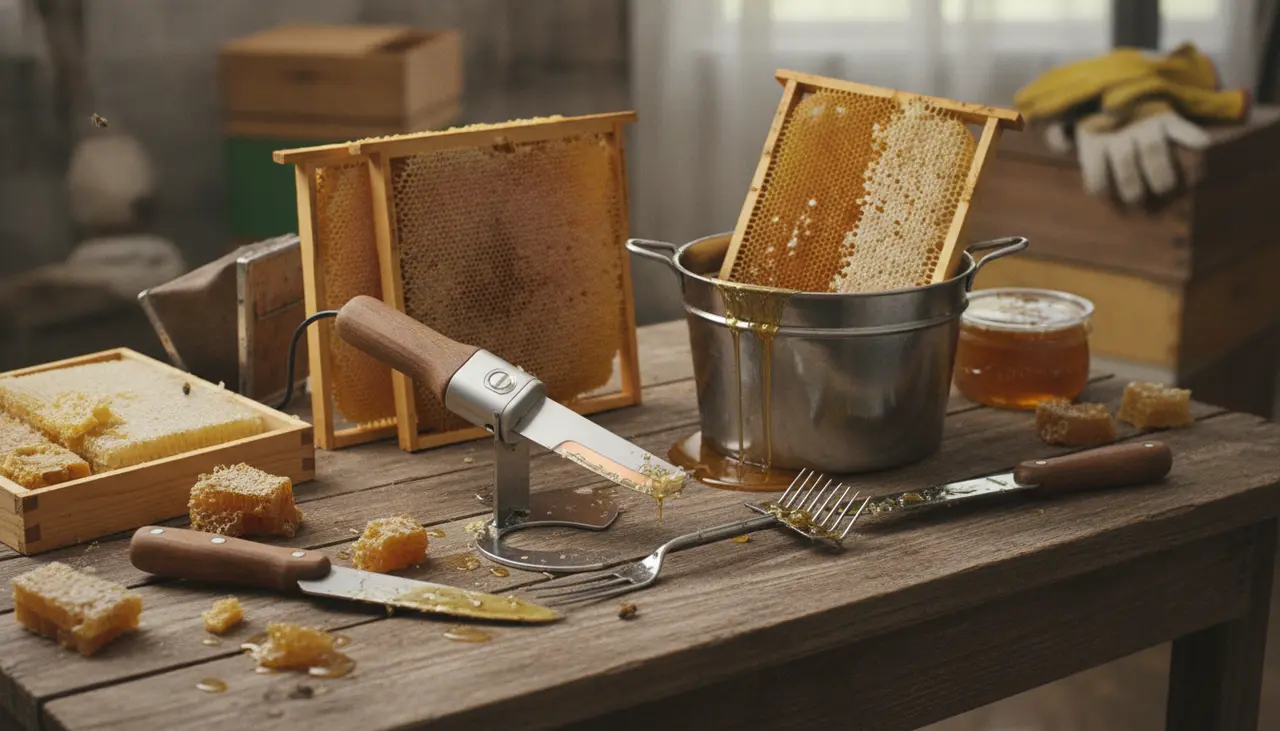
Reviewing the Best Uncapping Knives for Honey: Finding Your Perfect Harvest Tool
Ready to harvest your first golden frames? We compare the best uncapping knives and tools to help you choose the right gear for......
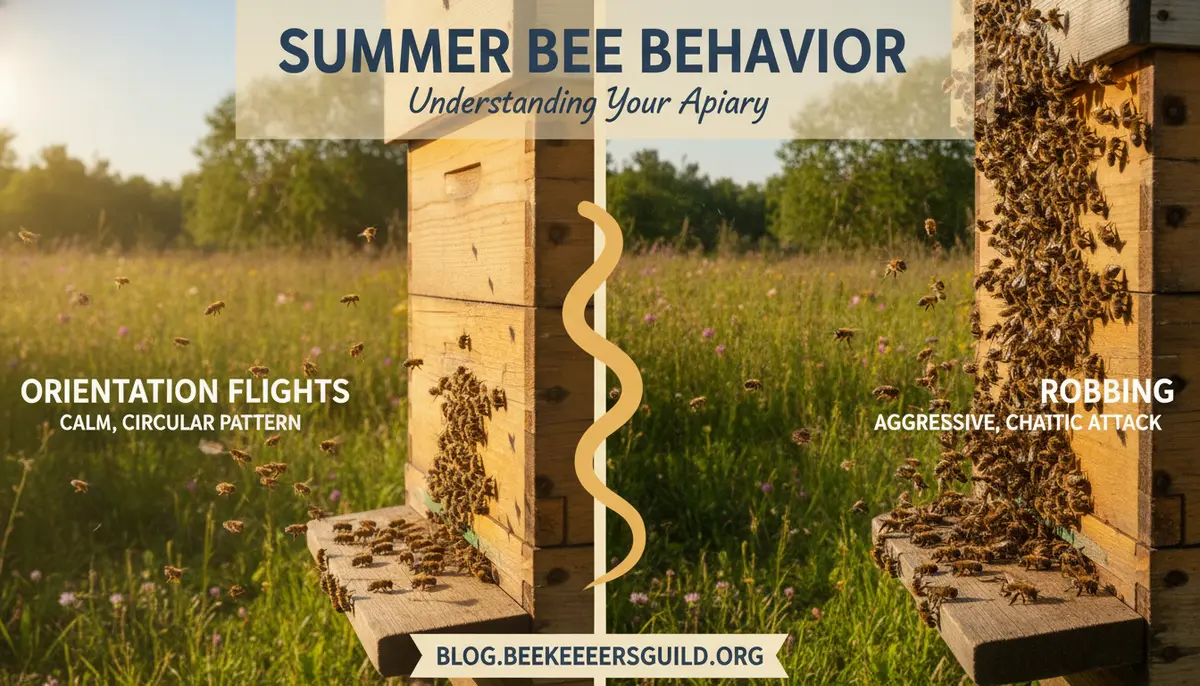
Orientation Flights vs. Robbing: Understanding Summer Bee Behavior in Your Apiary
Seeing a cloud of bees in front of your hive can be alarming. Learn the crucial differences between orientation flights and......
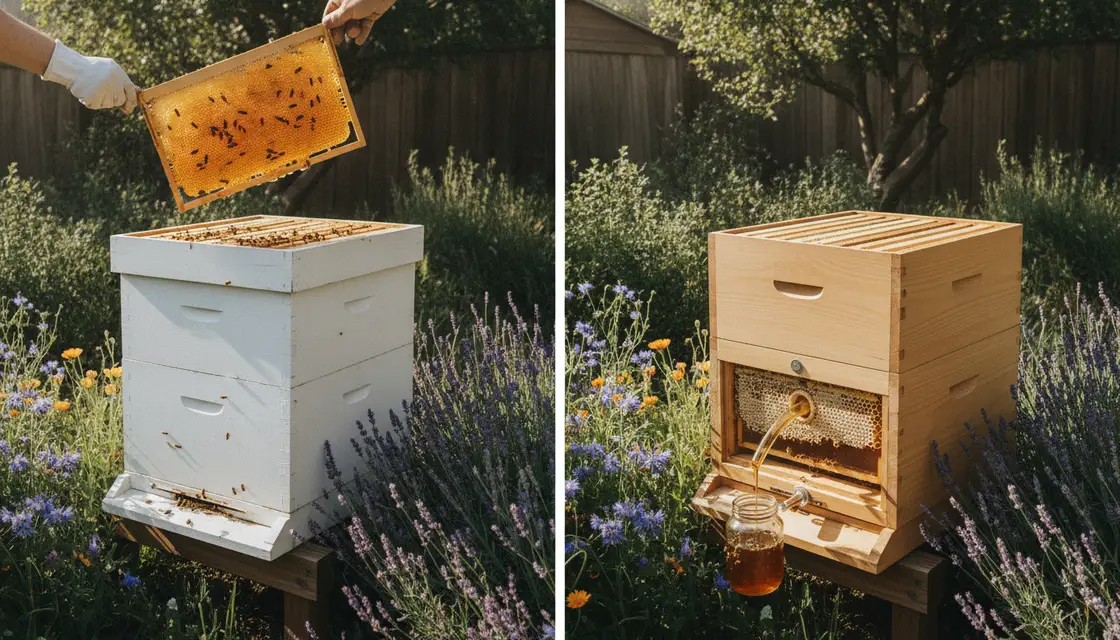
Langstroth vs. Flow Hive: Which is Right for You?
Choosing your first hive is a big decision. We break down the differences between the traditional Langstroth and the innovative......