
Essential Beekeeping Tools Every Newbie Needs: Beyond the Hive and Suit
Disclosure: This post contains affiliate links. If you click through and make a purchase, Hive & Honey may earn a small commission at no additional cost to you. We only recommend tools that meet the standards of the backyard beekeeping community.
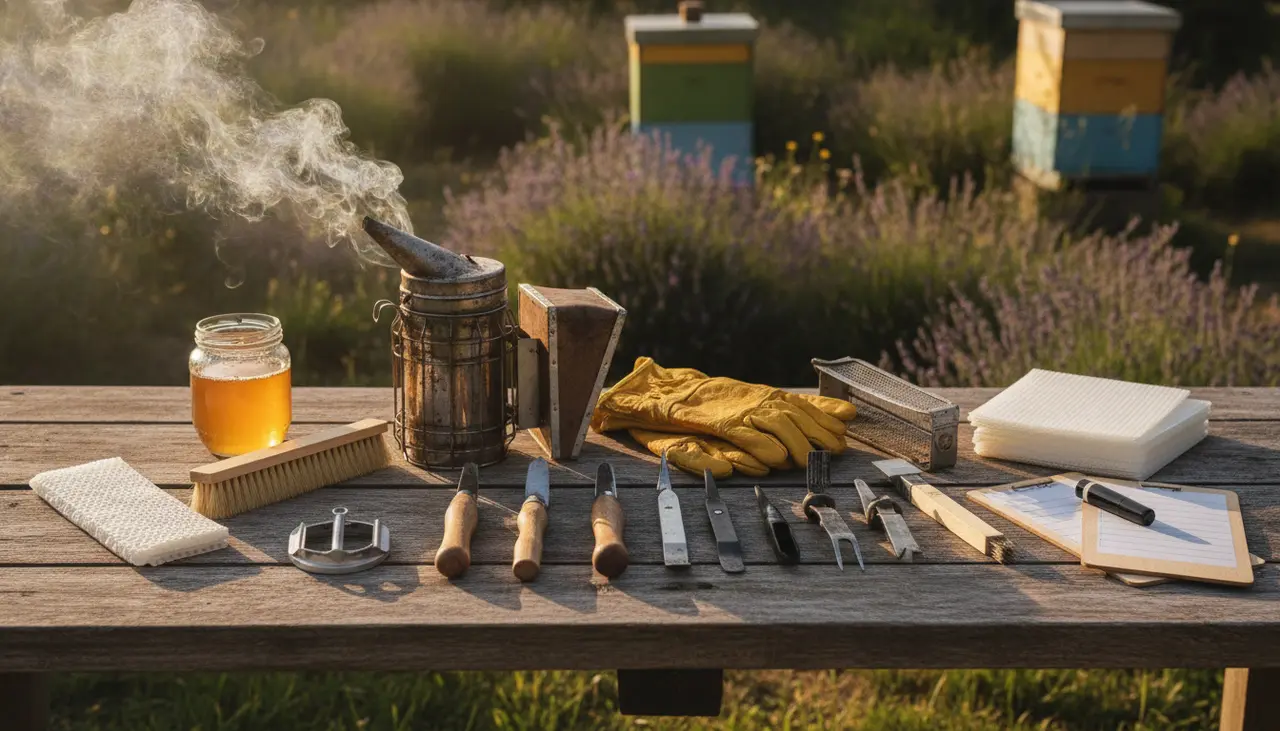
If you are just starting out, your beekeeping tools list should focus on four core categories: manipulation tools (the hive tool), calming tools (the smoker), movement tools (the bee brush), and nutritional support (feeders). While a hive and a suit are your foundation, these smaller handheld items are what allow you to actually perform a hive inspection without harming your bees or yourself.
The New Beekeeper’s Toolkit: Who This Guide Is For
This guide is specifically designed for the backyard hobbyist. If you’ve just ordered your first "nuc" (nucleus colony) or package of bees and you’re staring at a catalog full of shiny gadgets, this is for you. We’re stripping away the "nice-to-haves" and focusing on the "need-to-haves" so you can spend more time observing your bees and less time overspending on equipment you won't use.
Essential Beekeeping Tools Comparison
| Tool Type | Primary Function | Most Popular Version | Best For |
|---|---|---|---|
| Hive Tool | Prying frames & scraping propolis | J-Hook Tool | Beginners needing leverage |
| Smoker | Calming bees during inspection | Stainless Steel w/ Guard | Safety and durability |
| Bee Brush | Gently moving bees off frames | Soft Synthetic Bristle | Harvesting or queen spotting |
| Feeder | Providing syrup in early spring/fall | Frame Feeder | Preventing "robbing" behavior |
1. The Hive Tool: Your All-in-One Assistant
Think of the hive tool as an extension of your hand. Bees are masters of "propolis," a sticky resin they use to glue everything in the hive together. Without a hive tool, you simply won't be able to lift a frame to check for the queen or brood.
- Standard Tool: A flat bar with one curved end. It’s great for scraping wax off the top of frames.
- J-Hook Tool: This is often the favorite for newbies. The "J" shape provides a mechanical advantage, making it much easier to lift heavy, stuck frames without jarring the bees.
Practical Tradeoff: While the J-hook is better for lifting, it’s slightly more awkward for scraping. Many hobbyists eventually carry both in their pocket.
2. The Smoker: The Key to a Calm Inspection
A smoker is the most iconic piece on any beekeeping tools list, and for good reason. A few puffs of cool smoke signal the bees to gorge on honey, which makes them docile and less likely to sting.
- Look for: A smoker with a heat guard (the wire cage around the canister). This prevents you from accidentally burning your suit or your hands during a long session.
- Best for: Every single inspection. Even if your bees seem "gentle," having a lit smoker nearby is a vital safety measure.
If you are still deciding on your full setup, you might find our guide on the Best Beginner Beekeeping Kits of 2024: Start Your Backyard Apiary with Confidence helpful for seeing how these tools are often bundled.
3. The Bee Brush: Gentle Movement
There will be times when you need to move bees—perhaps they are clustered where you need to set a frame down, or you are clearing a frame to check for pests.
- The Approach: You don't "scrub" the bees. You use long, gentle, flicking motions.
- Pro Tip: Look for a brush with soft, long bristles. Stiff bristles can agitate the bees or even injure them.
4. Feeders: Ensuring Colony Survival
Especially in your first year, your bees will need help. They have to build out all the wax comb in their new home, which requires an immense amount of energy.
- Frame Feeders: These sit inside the hive in place of a frame. They are excellent because the bees can access the syrup without leaving the warmth of the cluster.
- Entrance Feeders: These are easier to refill but can sometimes encourage "robbing" from other colonies.
Managing these tools effectively is a big part of Navigating the First Year: A Comprehensive Guide to Transitioning from Neophyte to Confident Beekeeper, where we discuss the rhythm of hive checks.
Common Beginner Mistakes with Tools
- Using Too Much Smoke: You only need a few light puffs at the entrance and under the inner cover. "Smoking them out" can actually cause the colony to panic.
- Leaving Tools in the Grass: Hive tools are notoriously easy to lose. Paint the handle of your tool neon orange or pink so you can spot it in the clover.
- Neglecting Tool Hygiene: Propolis and wax can carry diseases. It’s a good habit to wipe your hive tool down with rubbing alcohol or scorch it with your smoker flame between different hives.
Frequently Asked Questions
Do I really need a bee brush? While some experienced keepers use a handful of tall grass, a soft bee brush is much more predictable for a beginner. It’s a low-cost tool that significantly reduces bee mortality during inspections.
What is the best fuel for a smoker? Most hobbyists use pine needles, burlap, or wood pellets. The goal is "cool, white smoke." If the smoke is blue and hot, it can singe the bees' wings.
Should I buy a tool kit or individual items? Buying a kit is often more affordable when you are starting from scratch. Just ensure the kit includes a stainless steel smoker with a guard, as the cheaper galvanized versions tend to rust over a single season.
Final Thoughts
Starting your backyard apiary is about building a relationship with your bees. Having the right beekeeping tools list ready before your bees arrive ensures that your first inspection is a moment of wonder rather than a moment of stress. Take it slow, keep your smoker lit, and remember—we were all newbies once!