
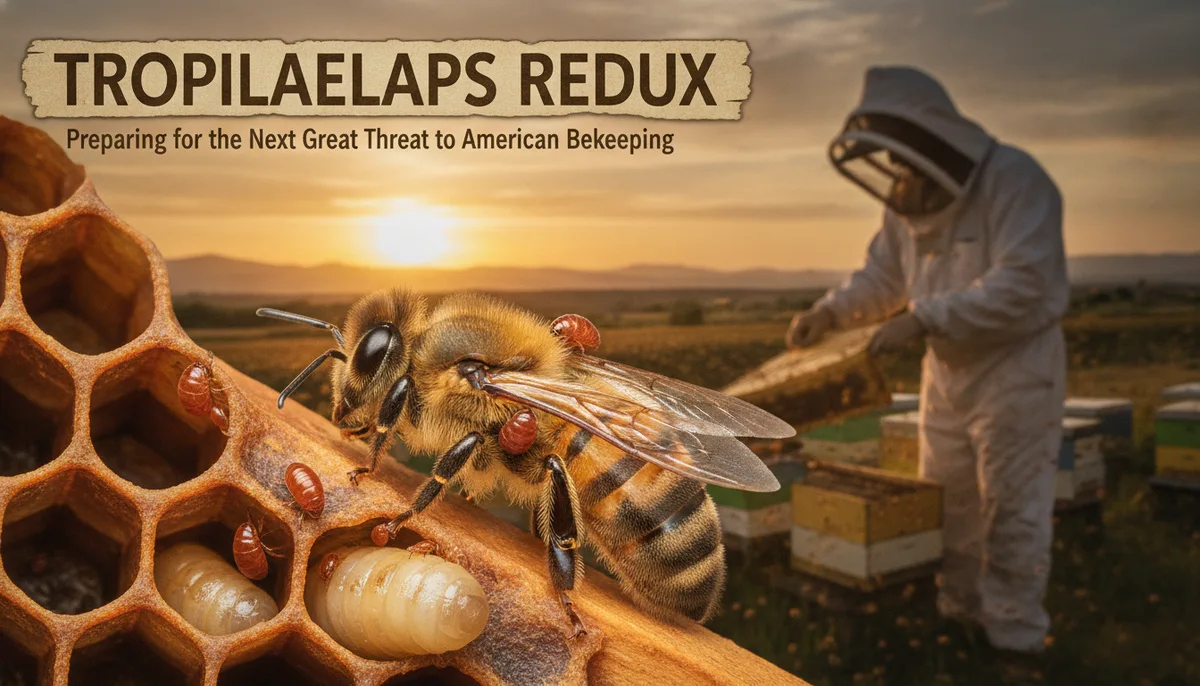
Tropilaelaps Redux: Preparing for the Next Great Threat to American Beekeeping
For decades, the American beekeeping industry has been defined by its struggle against Varroa destructor. This parasitic mite has reshaped how we manage hives, forcing a shift from "bee-having" to intensive "bee-keeping." However, the horizon is darkening with new challenges. As Ross Conrad recently highlighted in Bee Culture, we are facing a "redux" of concerns—threats that have been discussed for years but are now reaching a critical mass.
From the rapid spread of Tropilaelaps mites to the arrival of the yellow-legged hornet and the systemic issues of reduced environmental oversight, the modern beekeeper must be more vigilant than ever. Understanding these threats is the first step in ensuring the survival of your colonies.
The Shadow of Tropilaelaps: Why Beekeepers Should Be Concerned
While Varroa mites are the enemy we know, Tropilaelaps mites represent an enemy that could potentially outpace our current management strategies. Native to Asia, where they parasitize the giant honey bee (Apis dorsata), these mites have successfully jumped to the Western honey bee (Apis mellifera).
The concern regarding Tropilaelaps is not merely its presence, but its efficiency. These mites are smaller, faster, and reproduce at a rate that makes Varroa look sluggish by comparison. If Varroa is a slow-moving siege, Tropilaelaps is a blitzkrieg. For those just starting their journey, understanding these risks is essential. If you are setting up your first hive, consider starting with the Best Beginner Beekeeping Kits of 2024: Start Your Backyard Apiary with Confidence to ensure you have the right equipment for close hive inspections.
Tropilaelaps vs. Varroa: Knowing Your Enemy
To effectively manage a hive, you must know exactly what you are looking for. While both mites feed on bee hemolymph and fat bodies, their biological profiles differ significantly.
Lifecycle and Speed: The Tropilaelaps Advantage
The most dangerous attribute of the Tropilaelaps mite is its short reproductive cycle. They spend very little time on adult bees (the phoretic stage). While Varroa can survive for weeks on an adult bee, Tropilaelaps mites typically need to enter a brood cell within one to two days, or they will die.
However, once inside the cell, they reproduce rapidly. Because their lifecycle is shorter than that of Varroa, their population can explode within a single brood cycle, quickly reaching levels that can collapse a colony before a beekeeper even realizes there is an infestation.
Physical Characteristics: Spotting the Difference
Tropilaelaps mites are roughly half the size of Varroa mites. They are elongated rather than circular and are known for their rapid, scurrying movement across the comb. Unlike Varroa, which often hides between the abdominal segments of adult bees, Tropilaelaps is more likely to be seen running across the faces of the brood cells.
high magnification beekeeping loupe or digital microscope
The Cumulative Burden: Hornets and Pesticides
The threat to honey bees is rarely a single factor; it is the accumulation of stressors that leads to colony collapse. Ross Conrad points out that alongside parasitic mites, we are seeing the emergence of new predators and the weakening of regulatory protections.
The Arrival of the Yellow-Legged Hornet
The yellow-legged hornet (Vespa velutina) has recently made headlines following its detection in the United States. Unlike the "murder hornet" (Northern Giant Hornet), the yellow-legged hornet is smaller but no less deadly to honey bees. They are specialists in "hawking" bees—hovering outside hive entrances and snatching returning foragers out of the air. This constant predation creates a "foraging paralysis," where the colony becomes too stressed to fly, leading to starvation and decline.
Regulatory Gaps: The EPA and Pesticide Oversight
Environmental factors play a massive role in bee resilience. When the EPA reduces oversight and regulation of pesticides and pollution, the chemical burden on honey bees increases. Sublethal exposure to neonicotinoids and other pesticides can impair a bee’s ability to navigate, forage, and even resist mites.
A weakened immune system makes a colony far more susceptible to the viruses vectored by both Varroa and Tropilaelaps. This systemic issue highlights why your first year of beekeeping is so critical—you aren't just learning to manage bees; you are learning to manage their environment. For more on this transition, see Navigating the First Year: A Comprehensive Guide to Transitioning from Neophyte to Confident Beekeeper.
Why Federal Research Matters More Than Ever
The "Tropilaelaps Redux" isn't just about the mites themselves; it's about our capacity to respond to them. Historically, the United States has relied on robust federal research to develop integrated pest management (IPM) strategies. However, the loss of research infrastructure poses a significant risk.
The decline in federal support for bee research means that by the time Tropilaelaps becomes a widespread problem, we may not have the evaluated treatment protocols needed to stop it. This loss of institutional knowledge is a quiet crisis that every beekeeper should be aware of. To understand the gravity of this situation, read more about The Beltsville Crisis: Why Losing Federal Bee Research Threatens the Future of American Beekeeping.
Practical Biosecurity: Protecting Your Backyard Apiary
While large-scale regulatory issues may feel out of your hands, there are practical steps every backyard beekeeper can take to improve biosecurity and prepare for emerging threats.
- Strict Equipment Quarantine: Never share equipment with other beekeepers without thorough sterilization. If you buy used equipment, ensure it has been scorched or frozen to kill any potential pathogens or mites.
- Monitor Brood Health: Since Tropilaelaps spends most of its life in the brood, regular uncapping of a small sample of drone or worker brood is essential. Look for the small, reddish-brown mites scurrying inside the cells.
- Maintain Strong Colonies: A crowded, healthy hive is better equipped to defend against hornets and deal with the stress of parasites. Avoid over-harvesting honey, and ensure your bees have adequate nutrition during nectar dirths.
Monitoring and Mitigation Strategies
If Tropilaelaps is suspected, the traditional alcohol wash used for Varroa may be less effective because the mites spend so little time on adult bees. Instead, beekeepers should look for "sticky board" drops or perform "brood bumping"—tapping a frame of brood over a white tray to dislodge any fast-moving mites.
Current treatments for Varroa, such as formic acid or thymol-based products, have shown some efficacy against Tropilaelaps, but their rapid lifecycle means the window for treatment is much tighter. Vigilance is the only true defense.
The Future of the Hive
The challenges highlighted by Ross Conrad—the "redux" of old fears made new—serve as a reminder that beekeeping is an evolving discipline. We cannot rely on the methods of ten years ago to solve the problems of tomorrow. By staying informed, participating in local beekeeping associations, and advocating for environmental protections, we can provide our bees with a fighting chance.
Whether you are a hobbyist with two hives or a commercial keeper with two thousand, the health of our pollinators depends on our collective ability to recognize and respond to these emerging threats before they become the new "normal." Focus on health, stay observant, and remember that a well-managed hive is the best defense against any invader, whether it has eight legs or a yellow-legged sting.