
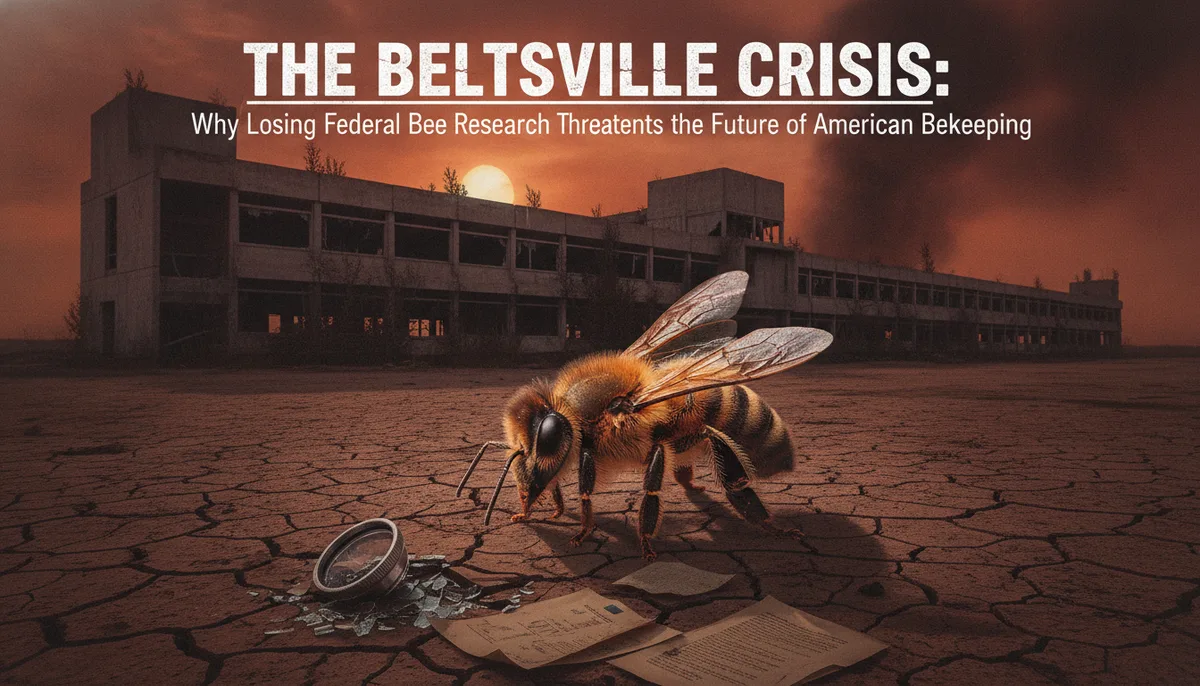
The Beltsville Crisis: Why Losing Federal Bee Research Threatens the Future of American Beekeeping
The backbone of American agriculture is not just the soil or the machinery; it is the honey bee. These tiny pollinators are responsible for one out of every three bites of food we eat, contributing billions of dollars to the U.S. economy. Yet, at a time when bee populations face unprecedented threats from parasites, pesticides, and climate change, the infrastructure designed to protect them is under fire.
The U.S. Department of Agriculture (USDA) has announced plans to close the Beltsville Agricultural Research Center (BARC) in Maryland. This 6,500-acre facility is not just another government building; it is the crown jewel of federal bee research. For beekeepers, farmers, and consumers, the closure of Beltsville represents a significant blow to the stability of our food system.
The Legacy of the Beltsville Bee Research Laboratory
Located just outside Washington, D.C., the Beltsville Agricultural Research Center has served as the epicenter of apiary science for decades. Its vast 6,500-acre landscape provides a unique environment where researchers can conduct large-scale field studies in a controlled setting. This scale is nearly impossible to replicate at smaller university labs or private facilities.
The Bee Research Laboratory at Beltsville is specifically tasked with documenting and mitigating the decline of honey bee colonies. It houses some of the world’s leading experts on bee pathology, physiology, and genetics. By losing this facility, the United States loses a centralized hub of institutional knowledge that has historically led the charge against emerging threats like Colony Collapse Disorder (CCD) and the spread of the Varroa destructor mite.
Why Federal Research is Essential for Hobbyists and Professionals
For those just starting out, the connection between a federal lab in Maryland and a backyard hive might seem distant. However, the protocols and safety standards found in the Best Beginner Beekeeping Kits of 2024: Start Your Backyard Apiary with Confidence are often rooted in research conducted at institutions like Beltsville.
The Bee Disease Diagnosis Service
One of the most practical services Beltsville provides is the Bee Disease Diagnosis Service. This program allows beekeepers from across the country to submit samples of bees and brood for analysis. Federal scientists then identify pathogens such as American Foulbrood (AFB), Nosema, or various viral loads.
Without this free or low-cost federal service, beekeepers would have to rely on expensive private labs or, worse, go without diagnosis. Undiagnosed diseases in a single apiary can quickly spread to neighboring hives, creating a regional health crisis for pollinators.
Developing Resilient Bee Stocks
Beltsville has been instrumental in breeding programs aimed at creating "hygienic" bees—colonies that are naturally more resistant to mites and diseases. This research helps reduce the industry's reliance on chemical treatments, leading to cleaner honey and healthier ecosystems.
The Economic Impact on the U.S. Food System
The loss of a premier research station isn't just a "bee problem"; it’s a food security problem. The U.S. agricultural system relies heavily on migratory pollination. Every year, millions of hives are transported across the country to pollinate everything from California almonds to Maine blueberries.
If bee health continues to decline without the oversight of federal research, the cost of pollination services will skyrocket. These costs are invariably passed down to the consumer. We are looking at a future where staples like apples, cherries, and broccoli become luxury items because the "ally" that ensures their production—the honey bee—is no longer supported by robust federal science.
A Vulnerable Ally: The Timing of the Closure
The decision to close Beltsville comes at a particularly precarious moment. Bee populations are already on a knife's edge. According to recent surveys, beekeepers in the U.S. continue to lose an average of 30% to 40% of their colonies annually.
Closing the nation’s premier lab now is akin to shuttering a major infectious disease hospital in the middle of a pandemic. As new threats emerge—such as the potential spread of the Tropilaelaps mite or the impact of extreme weather patterns on forage availability—the need for the 6,500-acre research capacity of Beltsville has never been greater.
How Beekeepers Can Adapt to a Changing Research Landscape
With federal support potentially waning, the responsibility for hive health falls more heavily on the individual beekeeper. Observation and data collection at the local level have become the new frontline of bee conservation.
The Power of Observation
In the absence of broad federal data, your own apiary records become vital. Understanding the nuances of your local environment—when the nectar flow starts, how your bees react to specific weather patterns, and the efficacy of your mite treatments—is essential. We highly recommend mastering The Art of the Beekeeper’s Journal: How Observation Transforms Your Apiary to keep a detailed pulse on your colony's health.
Investing in Nutrition and Health
As research into natural resistance continues to face funding hurdles, beekeepers must be proactive in supporting colony immunity. This includes ensuring diverse forage and using high-quality supplements when natural resources are scarce.
The Path Forward: Advocacy and Resilience
The potential closure of the Beltsville Agricultural Research Center is a wake-up call for the beekeeping community. It highlights the fragility of the systems we take for granted. While the loss of such a facility is a setback, it also serves as a catalyst for beekeepers to become more politically active and more scientifically minded in their own practices.
Supporting Local and University Research
While Beltsville is a federal powerhouse, many state universities also conduct vital research. Supporting these programs through donations or by participating in citizen science projects (like the Bee Informed Partnership) can help fill the gap left by federal cuts.
Contacting Representatives
The USDA is a cabinet-level department, and its budget and priorities are influenced by Congressional oversight. Beekeepers and agricultural stakeholders have a voice. Writing to representatives about the importance of the Beltsville Bee Lab and the broader necessity of pollinator research is a tangible step toward protecting the future of the industry.
Final Thoughts
The bees and beekeepers of America are losing a valuable ally in the Beltsville Agricultural Research Center. This facility has been a silent guardian of our food system, providing the science necessary to keep our pollinators flying. As we face a future with potentially less federal oversight, the importance of education, meticulous hive management, and community advocacy has never been higher.
Protecting our bees is not just about saving an insect; it is about securing the bounty of our tables and the health of our environment for generations to come.