
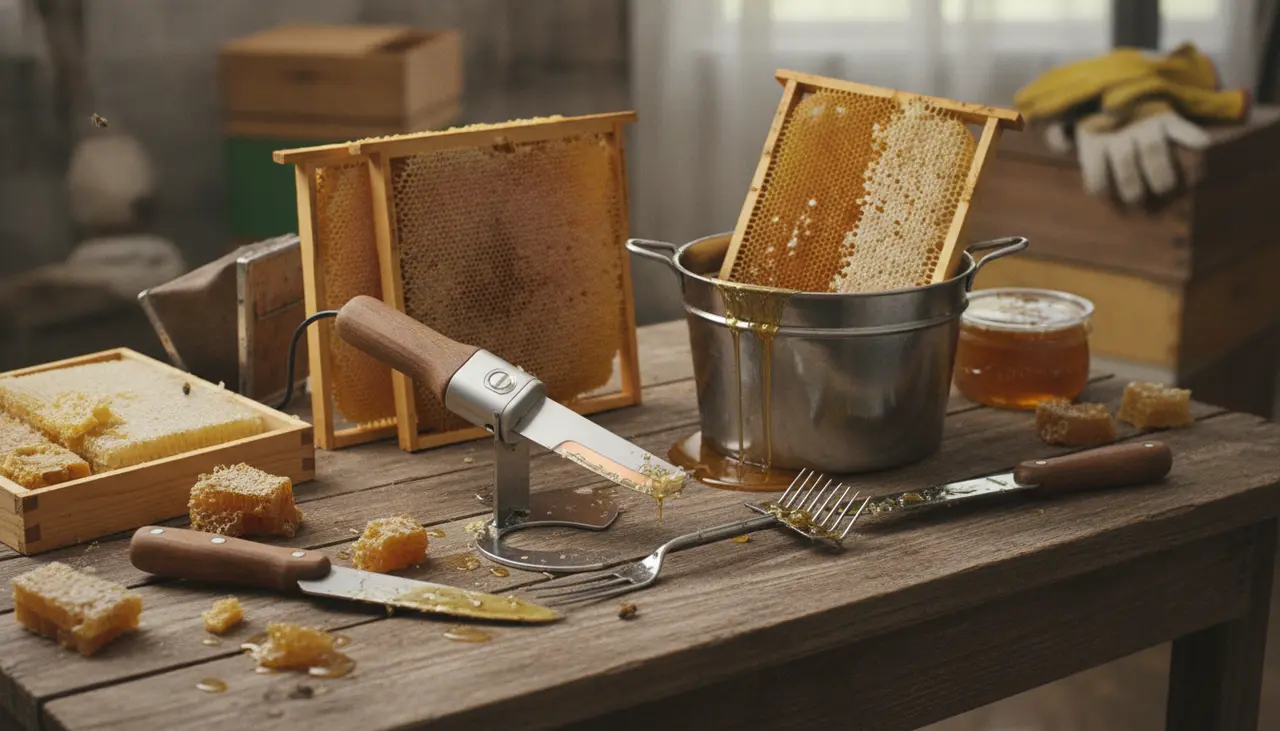
Reviewing the Best Uncapping Knives for Honey: Finding Your Perfect Harvest Tool
Affiliate Disclosure: This post contains affiliate links. If you purchase through these links, Hive & Honey may earn a small commission at no extra cost to you, helping us keep the smoker lit and the bees buzzing.
For most backyard beekeepers, the electric uncapping knife is the ultimate game-changer for harvest season. It uses a heated blade to slice through wax cappings in a single, smooth motion, significantly reducing hand fatigue and the time spent at the extraction table.
If you are managing more than two or three hives, an electric knife is almost always worth the investment. However, if you prefer a slower pace or have a very small apiary, a high-quality serrated cold knife combined with a sturdy uncapping fork can get the job done with less equipment to manage. The key is finding a tool that feels comfortable in your hand and matches the scale of your honey production.
The Magic of the Harvest: Choosing Your Uncapping Method
There is nothing quite like the smell of a honey house (or your kitchen) during extraction. It’s the culmination of months of hard work—both yours and the bees'. But as any hobbyist will tell you, the "uncapping" phase is where the real work happens. This is the process of removing the thin layer of beeswax the bees use to seal the honey in the comb.
Whether you are a "one-hive wonder" or a growing small-scale producer, the tool you choose for this task determines how much honey you recover and how tired your wrists feel the next morning. In this guide, we’ll look at the pros and cons of electric knives versus traditional manual tools to help you find your perfect match.
Uncapping Tools Comparison at a Glance
| Tool Type | Heat Source | Speed | Skill Level | Ideal For |
|---|---|---|---|---|
| Electric Uncapping Knife | Built-in Element | Very Fast | Intermediate | 3+ hives; high efficiency |
| Serrated Cold Knife | None (Manual) | Moderate | Beginner | 1-2 hives; budget-conscious |
| Uncapping Fork (Scratcher) | None | Slow | Beginner | Detail work; uneven comb |
| Steam-Heated Knife | External Steam | Fast | Advanced | Large hobbyist apiaries |
Deep Dive: The Electric Uncapping Knife
If you’ve ever tried to slice cold butter with a dull knife, you understand why the electric uncapping knife is so popular. The heat allows the blade to glide through the wax without snagging the delicate comb underneath.
Why we love it:
- Speed: You can uncap a frame in seconds compared to minutes with a manual tool.
- Clean Cuts: It leaves a very clean edge on the cells, making it easier for the bees to repair the comb once you return the frames to the hive.
- Consistency: Once the knife reaches its operating temperature, it maintains a steady heat, ensuring every frame is handled with the same ease.
The Tradeoffs:
- Heat Management: You have to be careful not to let the knife sit too long on a frame, or you risk scorching the honey.
- Safety: It gets very hot! You’ll need a dedicated stand to rest it on safely between frames.
The Reliable Manual Alternatives
Not every beekeeper needs a powered tool. If you are just starting out, you might find that the simplicity of manual tools fits your workflow better.
1. The Serrated Cold Knife
A high-quality, long-bladed serrated knife is the backbone of many small-scale setups. To make it work effectively, many beekeepers keep a pot of hot water nearby to dip the blade into between frames. This "pseudo-heat" helps the blade move through the wax more easily.
2. The Uncapping Fork (The "Scratcher")
Even if you own the fanciest electric knife on the market, you still need an uncapping fork. Bees don’t always build perfectly flat comb. When there are low spots or "canyons" in the wax that a flat blade can’t reach, the fork allows you to go in and manually scratch open those stubborn cells.
If you are still gathering your basic kit, check out our guide on Essential Beekeeping Tools Every Newbie Needs: Beyond the Hive and Suit to see how these fit into your overall toolkit.
Best For Use-Case Recommendations
- Best for the Growing Hobbyist: An Electric Uncapping Knife with an Adjustable Thermostat. Being able to control the heat prevents honey scorching and gives you more confidence as you learn the rhythm of uncapping.
- Best for the Pure Beginner: A Serrated Stainless Steel Knife and a Plastic-Handled Uncapping Fork. This combo is affordable, indestructible, and teaches you the "feel" of the comb before you upgrade to powered equipment.
- Best for "Difficult" Frames: The Uncapping Roller. This tool uses small spikes to pierce the cappings rather than slicing them off. It’s great for frames where the comb is uneven or fragile.
Once your frames are uncapped, the next step is the centrifuge. For help choosing the right machine for your kitchen or garage, read our review of the Best Honey Extractors for Small Scale Harvests: A Backyard Beekeeper’s Guide.
Common Beginner Mistakes to Avoid
- Cutting Too Deep: You only want to remove the wax "cap." If you slice deep into the cell walls, you are removing the bees' hard work and making them spend more energy rebuilding the comb next year.
- Working with Cold Frames: Honey flows best when it's warm. If you can, harvest on a warm day or keep your frames in a warm room before uncapping. Cold wax is brittle and harder to slice.
- Forgetting the Uncapping Tank: You need a place for the "cappings" (the wax shavings) to fall. A simple plastic tub with a strainer on top works wonders to catch the wax while letting the excess honey drip through.
- Leaving the Knife Plugged In: Always unplug your electric knife the second you are done. They do not usually have auto-shutoff features and can become a fire hazard if left on a wooden table.
Frequently Asked Questions
How hot does an electric uncapping knife get? Most electric knives reach temperatures between 250°F and 300°F. This is why it is crucial to keep the knife moving and never leave it resting directly on the wax or honey for more than a second.
Can I use a regular kitchen bread knife? In a pinch, yes—but it’s not ideal. Beekeeping-specific knives are usually longer (to span the width of a Langstroth frame) and have a specific serration pattern designed for wax rather than bread.
How do I clean my uncapping knife? While the knife is still slightly warm (but unplugged!), wipe it down with a damp cloth. Avoid using harsh chemicals. If there is burnt-on wax, a plastic scraper can usually pop it off once the blade has cooled completely.
Final Thoughts from the Apiary
Harvesting honey is one of the most rewarding parts of beekeeping. It’s the "paycheck" for all those hot afternoons spent checking for mites and ensuring your queen is healthy. Choosing the right uncapping tool isn't just about speed; it's about making the process enjoyable so you look forward to it every year.
If you're just starting your journey and haven't hit your first harvest yet, don't worry! Every expert started exactly where you are. For a look at the bigger picture of your first twelve months, see our guide on Navigating the First Year: A Comprehensive Guide to Transitioning from Neophyte to Confident Beekeeper.