
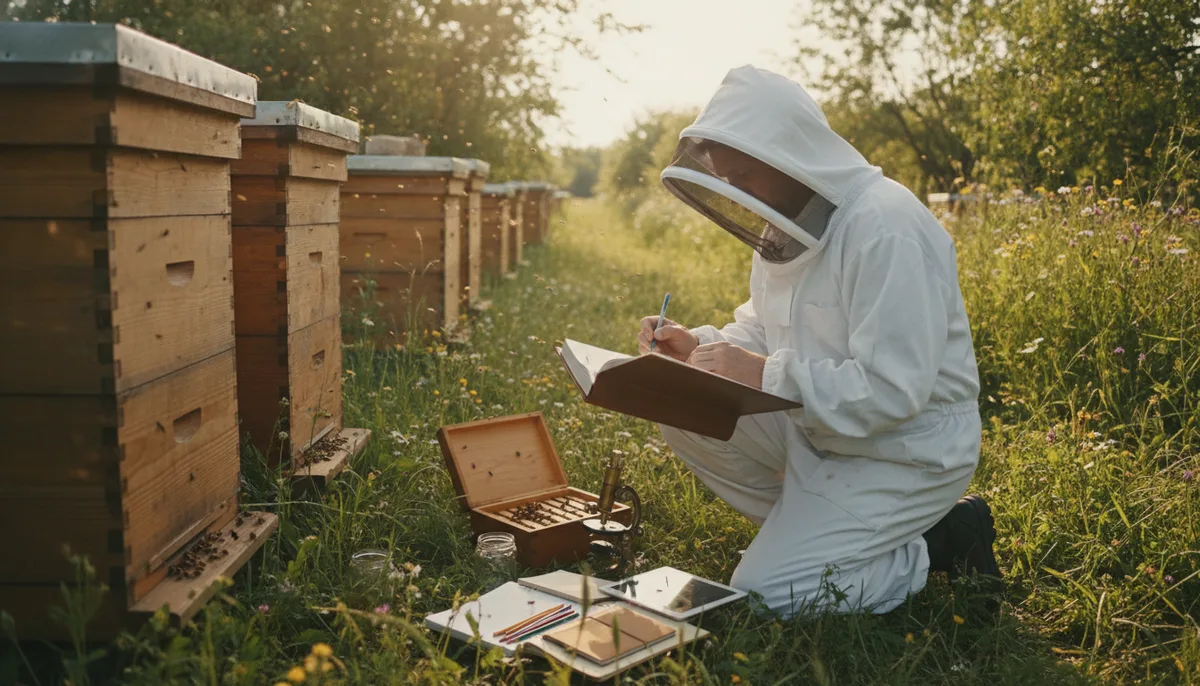
Beyond the Inspection: Why Meticulous Records Are a Beekeeper’s Best Tool
In the world of apiculture, there is a distinct line between someone who simply "has bees" and a true beekeeper. According to veteran beekeeper Richard Wahl, beekeepers generally fall into two categories: the dedicated practitioner who reads, studies, and meticulously tracks their progress, and the more passive observer. While the latter may enjoy the novelty of a backyard hive, it is the former—the one who treats their apiary with the rigor of a scientist—who consistently sees their colonies survive the winter and produce a bounty of honey.
The cornerstone of this dedicated approach is not the smoker or the veil, but the humble notebook. Note-taking is often the most overlooked aspect of apiary management, yet it is the single most effective way to transition from a "neophyte" to a confident steward of the hive.
The Memory Fallacy in the Apiary
Many beginners believe they will remember the specific state of each hive. They assume they will recall that Hive A had three frames of capped brood while Hive B seemed a bit light on nectar. However, once you are managing multiple colonies—or even just two—the details begin to blur.
By the time you have finished your third inspection of the day, the specifics of the first have often evaporated. This "memory fallacy" can lead to missed opportunities for intervention. Without a record, you cannot objectively track whether a colony is growing or dwindling. Recording your observations allows you to compare the current state of the hive against its history, providing a narrative of the colony’s health that memory alone cannot sustain. This is a vital part of navigating the first year, where the learning curve is steepest.
What to Record: The Anatomy of a Hive Inspection
A good set of notes should be concise yet comprehensive. You don’t need to write a novel, but you do need to capture the data points that influence colony survival. Richard Wahl suggests focusing on several key areas during every visit.
Environmental Context
Always start with the date, time, and weather. Bees behave differently at 65°F than they do at 85°F. High humidity or an approaching storm can make a colony more defensive. Recording these factors helps you understand the "temperament" of your bees—are they naturally aggressive, or were they just grumpy because of the low-pressure system moving through?
Queen Status and Brood Pattern
You do not always need to see the queen to know she is there. In fact, searching for her every time can be unnecessarily disruptive. Instead, look for evidence of her work.
- Eggs: Seeing tiny, rice-like eggs at the bottom of cells confirms the queen was present within the last three days.
- Larvae: Note the presence of "C-shaped" larvae in various stages of development.
- Brood Pattern: Is the capped brood solid and wall-to-wall, or is it "spotty"? A spotty pattern can indicate a failing queen or a disease like European Foulbrood.
Resource Stores
A colony can starve in the middle of summer if there is a "nectar dearth." Record how many frames of honey and pollen are present. If you notice stores are dropping despite warm weather, it may be time to supplement with sugar syrup or pollen patties.
Tracking Pests and Disease Trends
One of the most critical reasons for keeping good notes is the management of Varroa mites. Mite populations do not stay static; they grow exponentially as the bee population increases.
If you perform a mite wash or a sticky board count, the number itself is only half the story. The real value lies in the trend. Is the count higher than last month? Did the treatment you applied in August actually bring the numbers down? Without written records, you are essentially guessing at the efficacy of your pest management strategy.
Furthermore, documentation is your first line of defense against emerging threats. By keeping a detailed log, you are better prepared for challenges like Tropilaelaps Redux, as you will be more likely to spot anomalies in brood health or adult bee behavior early on.
Choosing Your Medium: Paper vs. Digital
The "best" way to take notes is the one you will actually use. Beekeeping is a sticky, propolis-covered hobby, which presents unique challenges for record-keeping.
The Traditional Notebook
Many beekeepers prefer a physical notebook. It doesn't require a battery, and you don't have to worry about getting honey on a touchscreen. Using a dedicated apiary journal allows you to sketch frame layouts or quickly jot down observations while your smoker is still lit.
Digital Apiary Apps
Modern beekeeping apps allow you to take photos, set reminders for future inspections, and even generate graphs of your mite counts. The ability to attach a photo of a suspicious-looking frame to a specific date's entry is an invaluable tool for troubleshooting later with a mentor.
Regardless of which method you choose, ensure your recording kit is part of your essential beekeeping tools so that you never head to the yard without it.
The Seasonal Review: Learning from the Past
The true power of note-taking is realized during the winter months when the bees are clustered and the beekeeper is indoors. This is the time to review your logs from the previous year.
Ask yourself:
- When did the first pollen start coming in? (This helps you time your spring feeding next year.)
- Which hive produced the most honey, and what were the characteristics of that queen?
- Did the hives that failed show any warning signs in July or August that I missed at the time?
By analyzing your notes, you begin to see patterns that are specific to your local microclimate. You will learn exactly when the black locust trees bloom in your neighborhood or when the goldenrod flow typically ends. This localized knowledge is something you cannot get from a textbook; it must be earned through observation and documentation.
Troubleshooting Through Documentation
When a hive fails—and eventually, most beekeepers will lose a colony—the first question asked is "Why?" Without notes, the answer is usually a guess. With notes, you can perform a "post-mortem" analysis.
Perhaps you noticed the queen's laying pattern becoming erratic in September, but you didn't act. Or maybe you see that a particular hive consistently had lower food stores than its neighbors, suggesting it was being robbed. These insights allow you to adjust your management style for the next season, turning a loss into a valuable lesson.
Conclusion: The Path to Mastery
Becoming a master beekeeper is not about how many hives you own, but how well you understand the bees within them. Richard Wahl’s observation holds true: the dedicated beekeeper is a student of the hive.
By committing to a disciplined note-taking routine, you are doing more than just writing down numbers. You are developing the "eye" of a beekeeper. You are learning to see the subtle shifts in colony behavior and health that others might miss. Over time, these records become your most valuable asset, providing a roadmap for success that ensures your apiary remains healthy, productive, and resilient for years to come.