
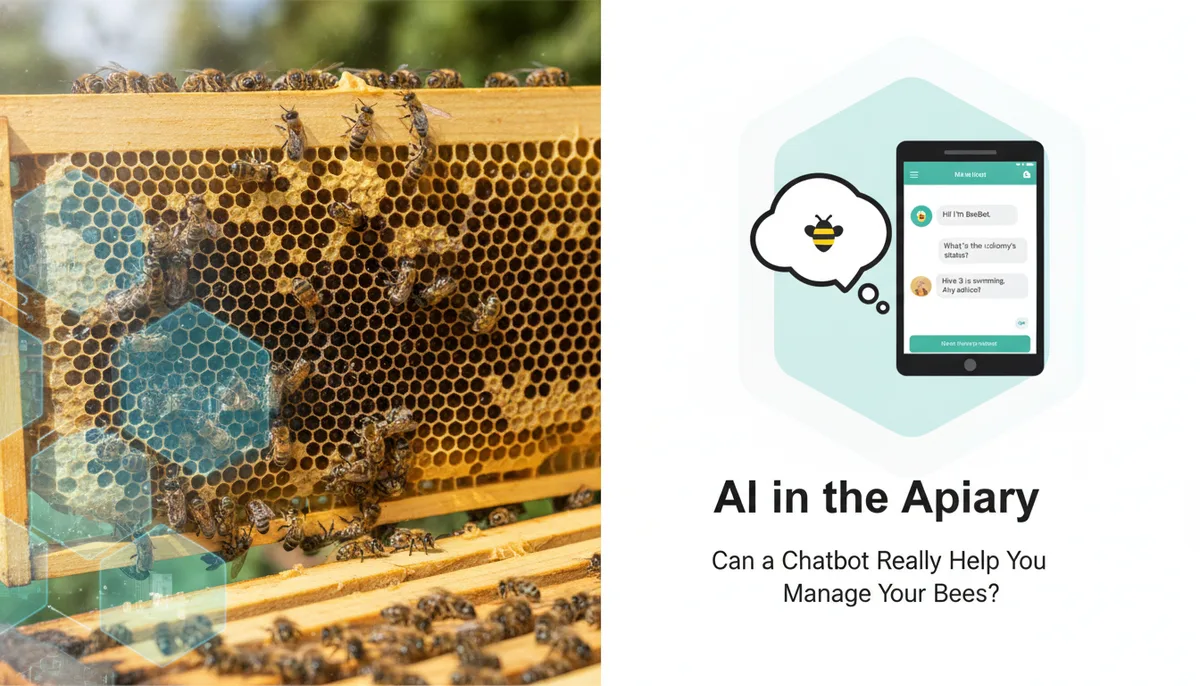
AI in the Apiary: Can a Chatbot Really Help You Manage Your Bees?
The Intersection of Tradition and Technology
Beekeeping is often viewed as a timeless craft, a bridge between humans and the natural world that has remained largely unchanged for centuries. However, the digital revolution is finally reaching the apiary. From sensor-laden "smart hives" to the recent rise of Large Language Models (LLMs) like ChatGPT, beekeepers are now standing at a crossroads between traditional husbandry and artificial intelligence.
In a recent exploration by Becky Masterman for Bee Culture, the potential for AI to serve as a beekeeping consultant was put to the test. The results highlight a fascinating paradox: while AI possesses a nearly infinite library of beekeeping literature, it lacks the "boots-on-the-ground" intuition that defines a master beekeeper. For the modern hobbyist or commercial operator, the challenge lies in knowing when to trust the algorithm and when to trust the smoker.
The Digital Consultant: What AI Brings to the Hive
Artificial Intelligence functions by processing vast datasets to identify patterns and generate responses based on statistical probability. When applied to beekeeping, this means an AI can synthesize information from thousands of research papers, textbooks, and forum posts in seconds.
Rapid Data Synthesis
For a beginner, the sheer volume of information regarding honey bee biology can be overwhelming. AI excels at summarizing complex topics. If you need a breakdown of the 21-day worker bee developmental cycle or a comparison of different mite treatment thresholds, a chatbot can provide a structured answer faster than any manual search.
Predictive Analytics and Trend Monitoring
When integrated with hive sensors, AI moves from a simple chatbot to a predictive powerhouse. By analyzing internal hive temperature, acoustic frequencies (the "hum" of the bees), and weight fluctuations, AI can alert beekeepers to potential swarming events or queenlessness before a physical inspection even takes place.
Smart Hive Wi-Fi Monitoring System
Drafting Management Plans
AI can be a helpful tool for organizing your season. By inputting your specific hardiness zone and your goals (e.g., honey production vs. pollination), you can use AI to help draft a rough calendar for inspections and feedings. However, this is where the limitations begin to surface.
The Limitations of Artificial Intelligence in Beekeeping
While the "Interview with a Chatbot" conducted by Masterman showed that AI can sound incredibly authoritative, it is prone to significant gaps in practical application. Beekeeping is a sensory-heavy practice. An AI cannot smell the distinct, sour odor of American Foulbrood, nor can it feel the subtle change in a colony's temperament on a humid afternoon.
The Problem of "Hallucinations"
In the world of AI, a "hallucination" occurs when the model provides a factually incorrect answer with absolute confidence. In beekeeping, this can be dangerous. An AI might suggest a chemical treatment at the wrong dosage or recommend a management technique that is illegal or outdated in your specific region.
Lack of Local Context
Beekeeping is intensely local. The forage available in the Pacific Northwest is vastly different from the nectar flow in the Georgia Piedmont. AI often struggles with these micro-nuances, providing "average" advice that may not apply to your specific backyard. This is why Navigating the First Year: A Comprehensive Guide to Transitioning from Neophyte to Confident Beekeeper emphasizes the importance of local mentorship over purely digital learning.
The Absence of Intuition
Experienced beekeepers often talk about a "feeling" they get when opening a hive. This intuition is actually the brain processing thousands of micro-signals—the way the bees are hanging on the frames, the pitch of their buzz, the speed of their movement. AI cannot replicate this biological connection. It can process the data, but it cannot "know" the bees.
AI as a Tool for Biosecurity and Emerging Threats
One area where AI shows immense promise is in the early detection of invasive species and diseases. As global trade increases, so does the risk of spreading pathogens.
For instance, the beekeeping community is currently on high alert regarding Tropilaelaps mercedesae, a parasitic mite that could potentially be more devastating than Varroa. AI-driven image recognition software is being developed to help beekeepers identify these tiny threats through smartphone photos of hive debris or brood frames. Keeping abreast of these developments is crucial, as seen in the ongoing research regarding Tropilaelaps Redux: Preparing for the Next Great Threat to American Beekeeping.
By training AI models on thousands of images of healthy vs. infested hives, we can create an early-warning system that far exceeds the scanning speed of the human eye.
Practical Ways to Use AI in Your Apiary Today
If you want to experiment with AI without putting your bees at risk, consider using it for administrative and educational tasks rather than direct hive-side decision-making.
- Summarizing Research: Ask the AI to summarize recent studies on Varroa resistance or the effects of specific pesticides on queen longevity.
- Troubleshooting Gear: If you are struggling with assembly, AI can often provide step-by-step troubleshooting for standard equipment. This is a great supplement to our list of Essential Beekeeping Tools Every Newbie Needs: Beyond the Hive and Suit.
- Educational Quizzes: Use AI to quiz you on bee anatomy or disease symptoms to sharpen your knowledge before the season begins.
- Logbook Analysis: If you keep digital records of your hive inspections, you can paste your notes into an AI and ask, "Based on these notes from the last three months, what patterns are emerging in Hive B's population growth?"
The Human-Machine Partnership: The Future of Beekeeping
The goal of integrating AI into beekeeping should not be to replace the beekeeper, but to augment their abilities. We are entering an era of "Precision Apiculture," where data-driven insights help us make better choices for honey bee health.
Becky Masterman’s inquiry into AI reminds us that while the chatbot can "talk" about bees, it cannot "keep" them. The responsibility for the life of the colony remains firmly in the hands of the person holding the smoker. AI can tell you that the nectar flow is starting based on regional weather patterns, but it won't be there to help you lift the heavy supers when they are full of honey.
As we look toward the future, the most successful beekeepers will likely be those who combine the ancient wisdom of the craft with the analytical power of modern technology. Use the AI to check your facts and organize your data, but always let the bees have the final word.
Conclusion: Staying Grounded in the Hive
Artificial intelligence is a powerful ally, but it is a tool, not a master. As you explore the possibilities of digital hive management, remember that the most important "intelligence" in the apiary is that of the honey bees themselves. Their complex social structure and environmental adaptations have survived for millions of years without an algorithm.
By staying curious and skeptical, beekeepers can use AI to enhance their stewardship of these incredible pollinators while maintaining the hands-on connection that makes beekeeping such a rewarding pursuit.
High-Accuracy Digital Scale for Honey Bee Hives