
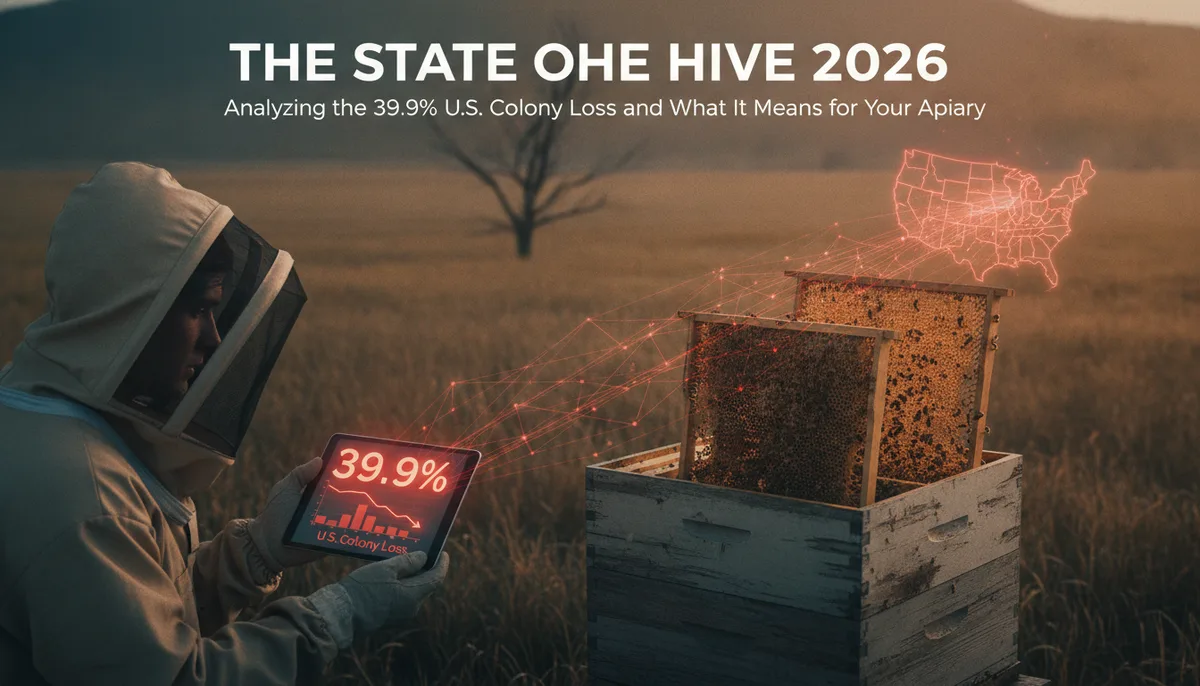
The State of the Hive 2026: Analyzing the 39.9% U.S. Colony Loss and What It Means for Your Apiary
Understanding the 2025-2026 U.S. Beekeeping Survey Results
On June 24, 2026, the beekeeping community received a sobering update on the state of pollinator health in the United States. The annual U.S. Beekeeping Survey, a definitive benchmark for the industry, released its colony loss estimates for the period spanning April 2025 to April 2026. The data, spearheaded by Auburn University in collaboration with Oregon State University and the Apiary Inspectors of America, revealed a national colony loss rate of 39.9%.
For the modern beekeeper, these numbers are more than just statistics; they represent the collective struggle against environmental stressors, pathogens, and management hurdles. While the 39.9% figure represents an aggregate of commercial, sideliner, and backyard operations, it serves as a critical pulse check for the biological stability of our most important managed pollinators.
Understanding these results requires looking beyond the headline. To maintain a resilient apiary, beekeepers must translate this national data into local action. Whether you are just starting out with the Best Beginner Beekeeping Kits of 2024: Start Your Backyard Apiary with Confidence or you are a seasoned veteran, these findings underscore the volatile nature of modern apiculture.
The Drivers of Colony Mortality: A Multi-Faceted Challenge
The survey results do not exist in a vacuum. A loss of nearly 40% suggests that the "four Ps"—pests, pathogens, pesticides, and poor nutrition—continue to exert immense pressure on honey bee biology.
Varroa Destructor and Viral Loads
The Varroa mite remains the primary biological threat to honey bee colonies. It is not merely the physical damage caused by the mites feeding on the bees' fat bodies, but the role they play as vectors for diseases like Deformed Wing Virus (DWV) and Acute Bee Paralysis Virus (ABPV). As the survey data suggests, even with modern intervention, nearly four out of ten colonies are failing to survive the annual cycle, often due to high mite loads leading into the winter months.
Environmental Volatility and Forage Scarcity
The period between 2025 and 2026 saw significant shifts in regional weather patterns. Unpredictable blooms and "green deserts"—areas where green grass exists but flowers do not—have made it harder for colonies to build the protein stores necessary for brood rearing. Nutrition is the foundation of the bee's immune system; without diverse pollen sources, bees are less equipped to detoxify pesticides or fight off nosema.
The Role of Academic and Federal Research
The collaboration between Auburn University and Oregon State University highlights the indispensable role of academic oversight in the beekeeping industry. By collecting data from thousands of beekeepers across the country, these institutions provide a roadmap for where research funding and management education need to be directed.
However, the infrastructure supporting this research is often under threat. The reliance on university-led surveys becomes even more critical when federal resources are stretched thin. For instance, the ongoing concerns regarding The Beltsville Crisis: Why Losing Federal Bee Research Threatens the Future of American Beekeeping remind us that the data provided by Auburn and OSU is a vital lifeline for an industry that lacks a centralized federal safety net. Without this rigorous annual accounting, the beekeeping community would be "flying blind" against emerging threats.
Practical Management: Moving from Statistics to Survival
Seeing a 39.9% loss rate can be discouraging, but it should instead serve as a catalyst for more precise hive management. If the national average is 40%, the goal for the individual beekeeper is to implement the "best practices" that place them in the surviving 60%.
Rigorous Monitoring Protocols
You cannot manage what you do not measure. Successful beekeepers are moving away from visual inspections alone and toward data-driven monitoring. This includes:
- Monthly Mite Checks: Utilizing alcohol washes or sugar shakes to determine exact mite counts per 300 bees.
- Weight Monitoring: Using hive scales to track nectar flows and winter consumption rates.
- Brood Pattern Analysis: Identifying early signs of queen failure or disease before the colony reaches a point of no return.
For those in their first year, the learning curve is steep. If you find yourself overwhelmed by the technical requirements of keeping bees alive in this climate, consulting a resource like Navigating the First Year: A Comprehensive Guide to Transitioning from Neophyte to Confident Beekeeper can provide the structured approach necessary to beat the national loss averages.
Commercial vs. Backyard Losses: A Growing Divide?
While the 39.9% figure is a national average, the experience of a commercial migratory beekeeper often differs drastically from that of a backyard hobbyist. Commercial operations often face higher stress due to transportation and monoculture pollination, yet they often have more rigorous chemical treatment schedules.
Backyard beekeepers, conversely, may struggle with "re-infestation" from neighbor colonies (often called "mite bombs") or lack the experience to identify subtle signs of colony decline. The U.S. Beekeeping Survey data serves as a reminder that regardless of the scale of your operation, the biological requirements of the honey bee remain the same. High-quality equipment, timely feeding, and proactive pest management are the universal requirements for success.
Investing in Quality Infrastructure
One way to mitigate environmental stress is to ensure your hive hardware is up to the task. Poorly insulated hives or those with inadequate ventilation can lead to moisture buildup in the winter, which is a leading cause of colony death in colder climates.
Apimaye Insulated 10-Frame Langstroth Hive
The Economic Impact of Colony Loss
A 39.9% loss is not just a biological tragedy; it is an economic one. For commercial beekeepers, these losses represent the cost of replacing "packages" or "nucs," the loss of pollination contracts, and reduced honey yields. For the hobbyist, it represents the frustration of lost time and the recurring cost of restocking an empty hive.
When colony losses are high, the price of bees inevitably rises. This makes the ability to split your own surviving colonies and raise your own queens a vital skill for sustainability. By selecting for queens that survived the 2025-2026 season, beekeepers are essentially participating in a grassroots breeding program for local resilience.
Conclusion: Building a Resilient Future
The U.S. Beekeeping Survey's 2025-2026 report is a call to action. While 39.9% is a challenging number, it also highlights the importance of the work being done by Auburn University, Oregon State University, and the Apiary Inspectors of America. Their transparency allows the industry to advocate for better land-use policies, more funding for bee research, and better educational resources for beekeepers.
As we look toward the 2026-2027 season, the focus must remain on proactive health management. By staying informed, monitoring closely, and supporting the research institutions that track these trends, we can work toward a future where "The State of the Hive" is one of growth rather than loss.