
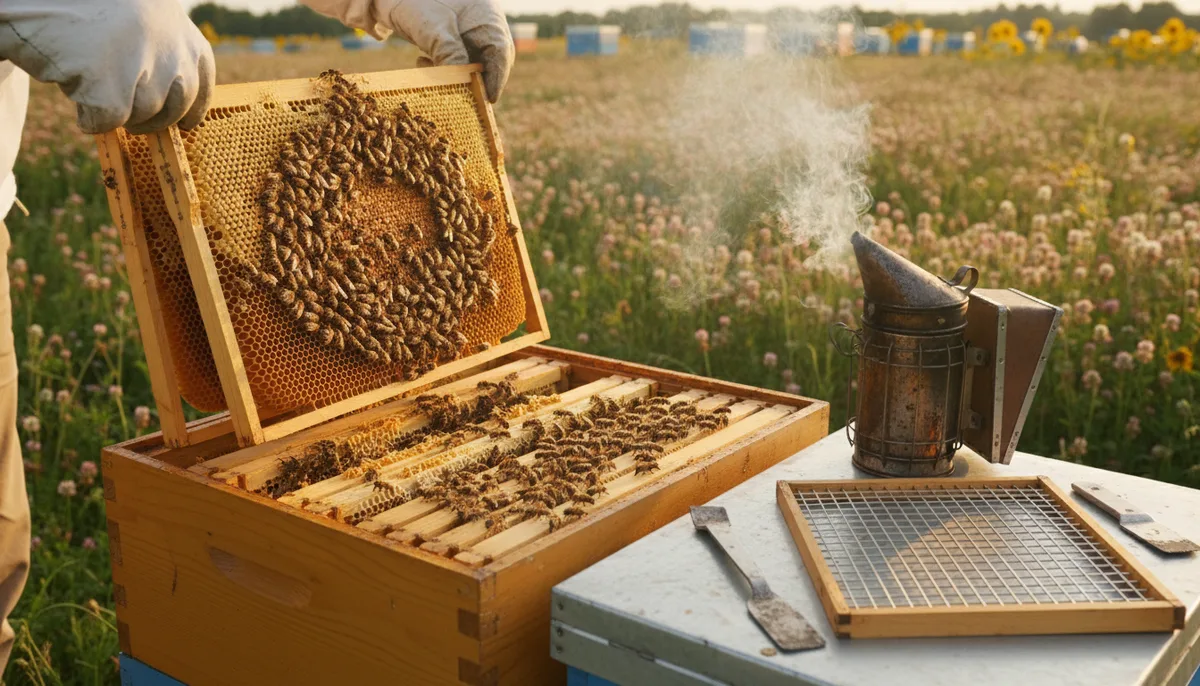
The Sacred Geometry of the Hive: Understanding Bee Space and Modern Apiary Management
In the world of apiculture, there is a measurement so fundamental that it serves as the invisible architecture of every modern hive. We call it "bee space." To the uninitiated, it is a mere 3/8 of an inch—a gap so small it might seem incidental. But to the honey bee, and the beekeeper, this space is sacred. It is the difference between a thriving, manageable colony and a chaotic mass of wax and propolis that defies intervention.
Understanding bee space is more than a history lesson; it is a foundational skill for any apiarist. Whether you are Navigating the First Year: A Comprehensive Guide to Transitioning from Neophyte to Confident Beekeeper or you are a seasoned veteran, respecting this biological constant is the key to hive longevity and ease of management.
The Discovery That Changed Everything: Lorenzo Langstroth’s Insight
Before 1851, beekeeping was a destructive and often tragic endeavor. Bees were kept in "skeps" (straw baskets) or "log gums." To harvest honey, beekeepers frequently had to kill the colony or significantly damage the comb, as the bees would attach their wax structures directly to the walls of the container. There was no way to inspect for disease or monitor the queen without tearing the hive apart.
Enter Lorenzo Lorraine Langstroth. An American clergyman and beekeeper, Langstroth observed a specific behavioral pattern in Apis mellifera. He noticed that bees left a very specific amount of space between their combs—enough to crawl through, but not so much that they felt the need to bridge the gap with extra wax.
The 3/8-Inch Rule
Langstroth quantified this gap as being between 1/4 and 3/8 of an inch (approximately 6mm to 9mm). He realized that if he built a wooden box with frames that maintained this exact distance from the walls and from each other, the bees would leave the frames "free." This allowed the frames to be lifted out individually without the bees "gluing" them to the hive body. This discovery led to the patent of the Langstroth hive, the design that remains the industry standard today.
The Biology of the Gap: Why Bees Respect the Space
To understand why bees behave this way, we must look at the hive as a functional city. Bees are masters of efficiency and climate control. Every millimetric choice they make is designed to facilitate movement, airflow, and defense.
Propolis vs. Burr Comb
The bees' reaction to space is binary:
- Too Small (Less than 1/4 inch): If a gap is too narrow for a bee to pass through comfortably, they perceive it as a crack or a structural weakness. They will seal this gap with propolis (bee glue), a sticky resin gathered from tree buds.
- Too Large (More than 3/8 inch): If a gap is too wide, the bees view it as "wasted" real estate. To maximize storage and structural integrity, they will fill this void with "burr comb" or "bridge comb"—extra wax cells that connect one surface to another.
When a beekeeper respects the 3/8-inch "sweet spot," the bees use the area as a hallway. It becomes a thoroughfare for workers to move between the brood nest and the honey supers, allowing for the seamless flow of resources and pheromones.
Practical Application: Maintaining Bee Space in Your Apiary
As a beekeeper, your primary job is to maintain the integrity of this space. Over time, wax buildup, propolis, and even the warping of wooden components can "shrink" or "expand" the bee space, leading to management headaches.
Frame Alignment and Spacing
One of the most common mistakes beginners make is failing to push frames tightly together. Most modern frames are designed with "self-spacing" shoulders. When pushed together, these shoulders automatically create the correct bee space between the faces of the comb. If you leave even a small gap between these shoulders, you are essentially creating a "too large" space elsewhere in the hive, which the bees will inevitably fill with messy bridge comb.
The Importance of the Hive Tool
To maintain bee space, you must regularly scrape away the excess propolis and wax that accumulates on the frame rests and shoulders. If you allow propolis to build up, it acts like a shim, gradually pushing your frames out of alignment and violating the sacred 3/8-inch rule.
For those just starting, having the right equipment is vital. You can find more about the necessary gear in our guide on Essential Beekeeping Tools Every Newbie Needs: Beyond the Hive and Suit.
Beyond the Cavity: Ground-Nesting Bees and Their Spatial Needs
While the Langstroth hive and the concept of bee space are centered on the European honey bee, it is important to recognize that not all bees are cavity nesters. The source material by Ross Conrad reminds us of the "ground-nesting bees," which represent the vast majority of bee species worldwide.
Unlike honey bees, which require a hollow void (like a tree or a box) and specific comb spacing, ground-nesting bees—such as mining bees, sweat bees, and squash bees—require "sacred space" of a different kind. Their space is the undisturbed soil.
Soil Architecture
Ground-nesting bees excavate tunnels where they lay their eggs and provide "pollen balls" for their larvae. For these species, the "space" is defined by soil density, moisture levels, and the absence of heavy tilling or chemical treatments. While we don't manage them in frames, we can support them by leaving patches of bare, sunny earth in our gardens. This "Sacred Bee Space" is just as vital to the ecosystem as the 3/8-inch gap in our Langstroth hives.
Troubleshooting Common Bee Space Violations
Even with the best intentions, your hive will eventually face a "space crisis." Recognizing these early can save you hours of frustration during the honey harvest.
Dealing with "Cross-Comb"
Cross-comb occurs when bees build their wax across multiple frames rather than within the confines of a single frame. This usually happens when a hive is not level or when frames are missing. If you find cross-comb, it must be corrected immediately. Use your hive tool to carefully cut the wax and, if possible, rubber-band it into the correct position within a frame.
The "Squish" Factor
When bee space is ignored, and frames are glued together, the act of prying them apart often results in "rolling" or "squishing" bees—including, potentially, the queen. By maintaining clean frame rests and proper spacing, you ensure that the frames slide out smoothly, protecting the lives of your colony members.
If you are looking to start your journey with a setup that respects these principles from day one, consider reviewing the Best Beginner Beekeeping Kits of 2024: Start Your Backyard Apiary with Confidence.
The Philosophy of the Gap
Ross Conrad’s exploration of "Sacred Bee Space" invites us to see the hive not just as a box of insects, but as a masterpiece of biological engineering. When we respect bee space, we are working with the bees' natural instincts rather than against them.
This respect extends beyond the wooden box. It includes the way we treat the land for ground-nesting species and the way we handle the frames during a mid-summer inspection. The 3/8-inch gap is a reminder that in nature, there is a place for everything—a place to move, a place to build, and a place to rest.
Key Takeaways for the Apiarist
- Precision Matters: Always push frames together so the shoulders touch.
- Cleanliness is Management: Use your hive tool to scrape propolis from frame rests every time you inspect.
- Level Your Hives: A hive that is tilted side-to-side will often lead to bees building comb that violates the vertical bee space.
- Observe the Ground: Remember that your backyard is home to many bees that don't live in boxes; protect their "space" by avoiding heavy mulching or tilling in known nesting areas.
By mastering the science of the gap, you transition from being someone who "keeps bees" to someone who truly understands the language of the hive. The sacred bee space is the silent dialogue between the bees and the keeper—a 3/8-inch testament to the harmony of the natural world.