
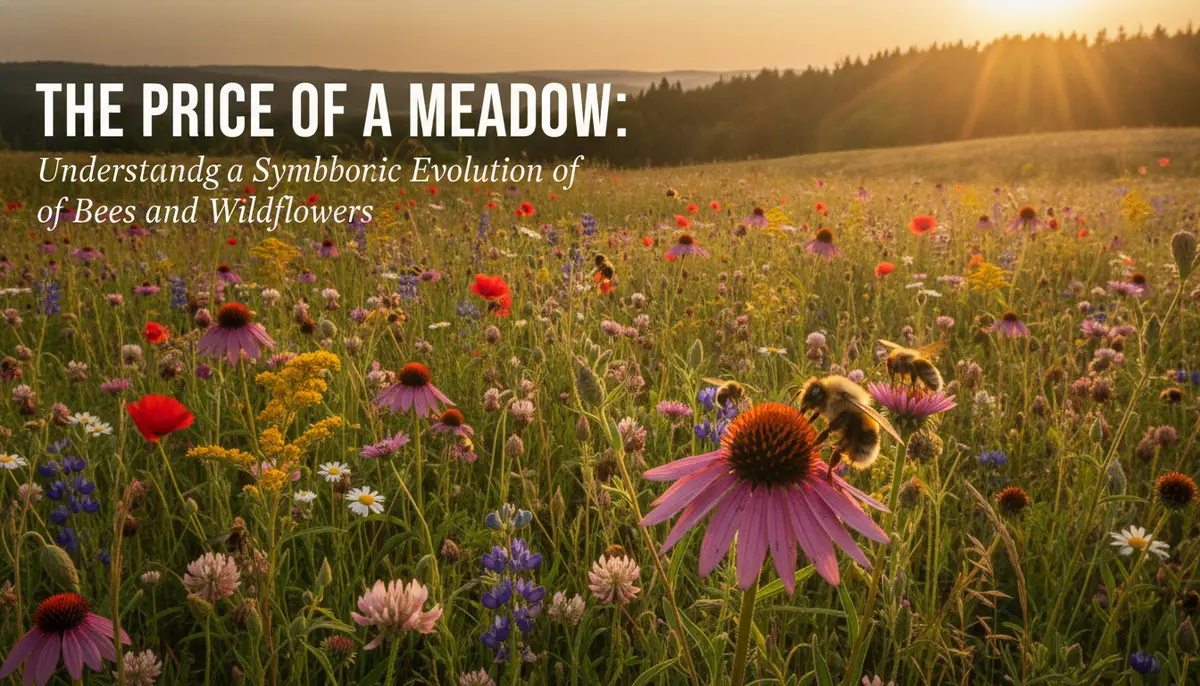
The Price of a Meadow: Understanding the Symbiotic Evolution of Bees and Wildflowers
The image of a sunlit meadow, vibrant with the colors of wildflowers and the steady hum of insects, is more than just a pastoral cliché. It is a biological masterpiece millions of years in the making. According to the American Bee Journal, the link between a sunlit meadow and a bee is "ironclad," rooted not just in our aesthetic appreciation of nature but in the hard science of evolutionary biology.
Bees and meadows did not simply find each other by chance. They co-evolved over eons, forming a symbiotic union so profound that it is accurate to say they created one another. To understand the "price" of a meadow is to understand the value of this relationship—and what we stand to lose if the connection is severed.
The Evolutionary Pact: How Bees and Flowers Shaped the World
The story of the meadow is the story of a long-term partnership. Long before humans walked the earth, flowering plants (angiosperms) and bees were locked in a dance of mutual adaptation. This process, known as co-evolution, fundamentally changed the landscape of our planet.
The Sustenance-for-Service Model
At its core, the relationship is a trade. Flowers provide bees with two essential resources: nectar (carbohydrates for energy) and pollen (protein and fats for rearing brood). In exchange, bees provide a service that plants cannot perform themselves: mobile, targeted pollination. Unlike the wind, which scatters pollen haphazardly, a bee moves with purpose from one flower to another of the same species, ensuring successful fertilization.
Physical Adaptations
This partnership resulted in incredible physical specializations. Bees developed branched hairs on their bodies to trap pollen grains and specialized "baskets" (corbiculae) on their legs to carry them. Simultaneously, flowers evolved colors, scents, and shapes specifically designed to attract bees. The "bullseye" patterns visible only in the ultraviolet spectrum—which bees can see—are nature’s own landing lights, guiding the pollinator to the nectar source.
The True Value of a Meadow
When we ask, "At what price a meadow?" we must look beyond the real estate value of the land. The ecological services provided by a healthy meadow are nearly impossible to quantify in traditional currency, yet they underpin the health of our entire food system.
Biodiversity and Ecosystem Resilience
A meadow is a reservoir of genetic diversity. By supporting a wide variety of bee species—from the social honeybee to the solitary mason bee—a meadow ensures that if one species struggles, others are present to continue the work of pollination. This resilience is what keeps ecosystems stable during periods of environmental stress.
Soil Health and Carbon Sequestration
Beyond the bees, meadows are vital for the earth itself. The deep root systems of native perennial wildflowers and grasses help prevent soil erosion and improve water infiltration. These roots also act as carbon sinks, pulling carbon dioxide from the atmosphere and storing it in the ground, making meadow preservation a key component of climate health.
The Modern Crisis: Fragmentation of the Wild
Despite the ironclad link between bees and meadows, these habitats are disappearing at an alarming rate. Modern agriculture, urban sprawl, and the obsession with perfectly manicured green lawns have fragmented the landscape. When a meadow is replaced by a monoculture crop or a chemical-laden lawn, the symbiotic chain is broken.
The loss of these spaces is a primary driver behind the decline of bee populations globally. Without the diverse nutrition provided by a meadow, bees become more susceptible to diseases, pesticides, and the impacts of climate change. We are currently facing a pivotal moment where the "price" of losing these spaces is becoming clear through reduced crop yields and declining biodiversity.
To understand how critical these issues are on a national level, one can look at The Beltsville Crisis: Why Losing Federal Bee Research Threatens the Future of American Beekeeping, which highlights the institutional challenges we face in protecting these vital insects.
How to Restore the Connection: Creating Your Own Meadow
The good news is that the relationship between bees and meadows can be restored, even on a small scale. Whether you have acres of land or a small suburban backyard, you can contribute to the "re-meadowing" of the world.
Step 1: Choose Native Species
The most important rule in meadow restoration is to use native plants. Native bees have evolved alongside native flowers; often, they cannot access the nectar or pollen of exotic ornamental plants. Research the wildflowers indigenous to your specific region to ensure you are providing the right "key" for the local "lock."
Step 2: Ensure Continuous Blooms
A healthy meadow provides food from early spring through late autumn. When planning your space, select a variety of plants that bloom at different times. Early-season willows and dandelions are just as important as late-season goldenrod and asters, which help bees build up stores for the winter.
Step 3: Minimize Disturbance
Bees need more than just food; they need homes. Many native bees nest in the ground or in the hollow stems of old plants. By leaving some areas of your meadow "messy"—avoiding heavy mulching and leaving dead stalks over the winter—you provide the nesting sites necessary for the next generation of pollinators.
For those looking to take a more active role in supporting these populations through beekeeping, starting with the right equipment is essential. You can explore the Best Beginner Beekeeping Kits of 2024: Start Your Backyard Apiary with Confidence to begin your journey.
The Art of Observation: Becoming a Steward of the Meadow
Restoring a meadow is not a "set it and forget it" project. It requires a shift in perspective. Instead of viewing a landscape as something to be controlled, we must view it as a living system to be observed and supported.
The most successful beekeepers and conservationists are those who spend time simply watching. By observing which flowers the bees visit most frequently, or noting when the first queens emerge in the spring, you develop a deeper intuition for the needs of the ecosystem. This practice is detailed in our guide on The Art of the Beekeeper’s Journal: How Observation Transforms Your Apiary.
high-quality outdoor binoculars for nature observation
The Beekeeper’s Role in Conservation
While honeybees are often the "face" of pollination, a true meadow supports hundreds of species of wild bees, butterflies, and other beneficial insects. As a steward of the land, your goal is to create a habitat that serves the entire community. This holistic approach not only benefits your honeybees by providing diverse nutrition but also strengthens the local environment.
Investing in the Future: The Cost of Inaction
What is the price of a meadow? It is the cost of the seeds, the time spent removing invasive species, and the patience required to let the land heal. But the price of not having the meadow is far higher. It is the loss of the "ironclad" link that has sustained life on this planet for millions of years.
By planting even a small patch of wildflowers, you are participating in an ancient tradition of co-creation. You are ensuring that the dance between the bee and the bloom continues for another generation.
Practical Tips for Maintenance
- Mow Wisely: If you must mow, do so only once a year in late winter or early spring to allow seeds to drop and insects to overwinter.
- Avoid Pesticides: The use of neonicotinoids and other systemic pesticides can turn a beautiful meadow into a death trap for bees.
- Water Mindfully: Once established, native meadows are often drought-tolerant, but they may need support during their first year of growth.
The symbiotic union of the bee and the meadow is a reminder that we are not separate from nature; we are part of its intricate web. Protecting that web starts with a single flower and the bee that finds it.