
The Milkweed Trap: Understanding the Fatal Interaction Between Honey Bees and Asclepias
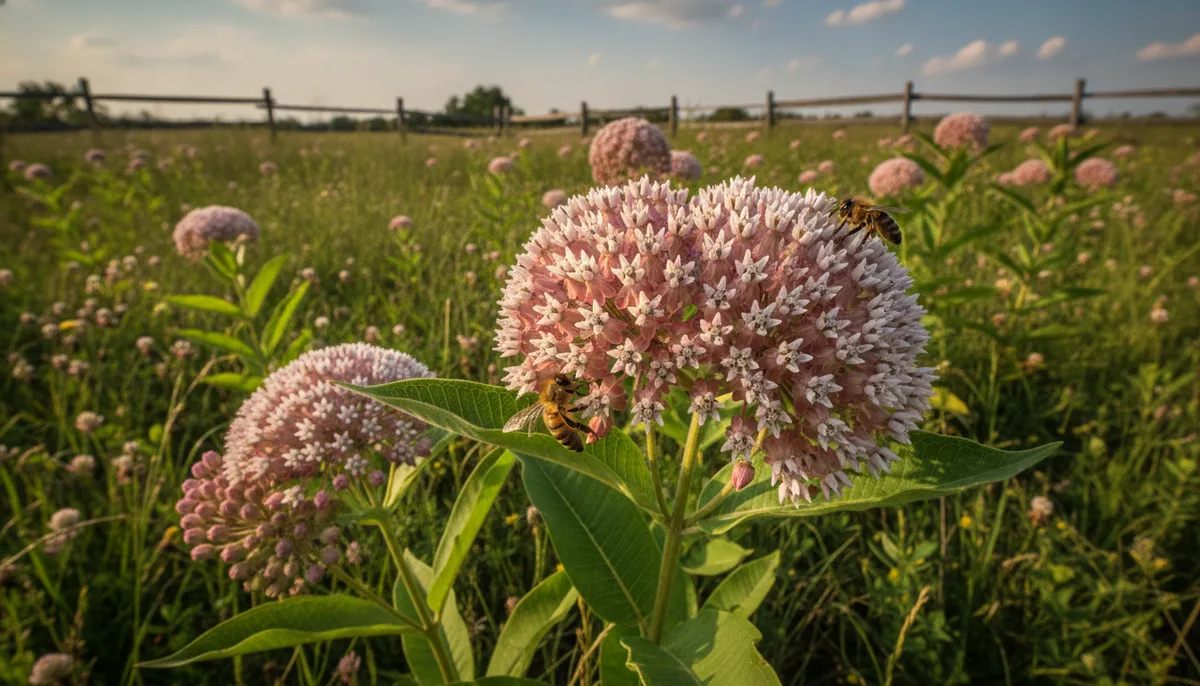
The relationship between honey bees (Apis mellifera) and milkweed (Asclepias) is one of the most fascinating—and occasionally macabre—interactions in the botanical world. To the casual observer, a patch of milkweed is a bustling hub of pollinator activity, essential for the survival of monarch butterflies and a rich source of nectar for honey bees. However, a closer look at the intricate blossoms often reveals a darker side: honey bees dangling lifelessly from the flowers, their legs ensnared in the plant's complex reproductive machinery.
This phenomenon, often referred to as the "milkweed trap," has long been a subject of study for entomologists. Work by researchers like Kathy Keatley Garvey at the UC Davis Department of Entomology and Nematology delves into the ecological consequences of these deaths. For the beekeeper, seeing dead foragers can be alarming, but understanding the "why" and the "how" of this interaction is crucial for maintaining a balanced perspective on pollinator-friendly landscaping.
The Mechanics of the Milkweed Trap
Unlike most flowering plants that offer loose, powdery pollen, milkweed has evolved a highly specialized delivery system. Its pollen is contained in waxy sacs called pollinia. These sacs are connected by a wishbone-shaped structure known as a translator arm, which meets at a central point called the corpusculum.
When a honey bee lands on a milkweed flower to sip its abundant nectar, its leg may accidentally slip into a slit in the flower’s reproductive organ (the stigmatic chamber). To successfully pollinate the plant, the bee must pull its leg out, snagging the corpusculum and dragging the pollinia along with it to the next flower.
Why Honey Bees Get Stuck
The "trap" occurs when the bee’s leg or tarsal claw becomes wedged so firmly in the slit that the insect cannot exert enough force to pull it free. While larger, more powerful insects like bumblebees or certain wasps can usually muscle their way out, the honey bee—a species not native to North America and therefore not co-evolved with our native milkweeds—sometimes finds itself overmatched.
If the bee cannot escape, it eventually dies of exhaustion, dehydration, or predation. This leads to the sight of "bee graveyards" in particularly dense milkweed patches, raising questions about the impact on the hive and the plant’s own reproductive success.
Ecological Consequences: The Deterrent Factor
One of the primary questions researchers like Garvey explore is whether the presence of these dead bees serves as a warning to others. In the complex world of honey bee communication, visual and chemical cues are everything.
Visual Cues and Foraging Behavior
Honey bees are highly visual creatures. When a forager approaches a flower and sees a dead sister hanging from the petals, does she perceive a "danger" signal? Some studies suggest that the presence of a carcass can indeed act as a deterrent, causing the bee to skip that specific blossom in favor of a "clean" one. This behavior could theoretically reduce the pollination efficiency for that specific milkweed plant, as visitors become more cautious.
The Role of Alarm Pheromones
When a bee is struggling to free itself, it may release alarm pheromones (such as isopentyl acetate). These chemical signals tell other bees that a threat is nearby. For a honey bee enthusiast or a researcher, observing this behavior reveals the high-stakes nature of foraging. If the pheromone lingers, it may protect other bees from the same fate but simultaneously leave the milkweed unpollinated for a period.
Impact on the Hive: Should Beekeepers Worry?
For the hobbyist or commercial beekeeper, the sight of dead bees is always a cause for concern. However, in the context of milkweed, the loss is rarely a "colony-level" event.
As you move through navigating the first year: a comprehensive guide to transitioning from neophyte to confident beekeeper, you learn that a healthy hive loses hundreds of foragers every day to various natural causes—predation, weather, and simple old age. The few foragers lost to milkweed are usually a drop in the bucket compared to the massive nectar gains the plant provides.
Balancing Nectar Rewards vs. Forager Loss
Milkweed is a "high-reward" plant. Its nectar concentration is exceptionally high, often making it a preferred forage source even when other flowers are in bloom. The "cost" of losing a few bees to the pollinia traps is often offset by the massive influx of carbohydrates that the rest of the foragers bring back to the hive.
If you are monitoring your hive's health during the milkweed bloom, using can help you see the net gain in honey stores, which almost always outweighs the minor loss of individual foragers.
The Plant's Perspective: Is Killing Pollinators a Strategy?
It is important to clarify that milkweed does not "want" to kill bees. A dead bee is a failure for the plant. If the bee dies while trapped, the pollinia it was supposed to carry to another flower remains stuck, and the plant's reproductive cycle is interrupted.
The milkweed's mechanism is designed for a "perfect fit." Native bees, such as the large Bombus species, have the leg morphology and strength to navigate these slits efficiently. The honey bee's struggle is a byproduct of being a generalist pollinator trying to fit into a specialist's lock.
Does the Presence of Dead Bees Result in Lower Seed Set?
Research continues into whether "bee-trapping" milkweed populations suffer from lower genetic diversity or seed production. If dead bees deter future visitors, the plant may actually be penalized for having too tight a grip. This evolutionary tension ensures that only the most efficient pollinators—those who can enter and exit the chamber without dying—are the ones primarily responsible for the next generation of milkweed.
Management for the Backyard Beekeeper
If you find trapped bees in your garden, there is no need to reach for the shears. Milkweed is the sole host plant for monarch butterfly larvae and a critical component of the North American ecosystem.
What You Can Do
- Observation: Use the opportunity to study bee anatomy and behavior. Observing how bees interact with different flower shapes is a key part of becoming an expert. Having essential beekeeping tools every newbie needs: beyond the hive and suit like a good veil and a magnifying glass can make this a safe and educational experience.
- Diversity in Planting: If you are worried about the "trap" effect, ensure your garden has a variety of forage. When bees have options like clover, borage, or lavender, the pressure on the milkweed is spread out among different pollinator species.
- Don't Interfere: It can be tempting to try and "rescue" a trapped bee with tweezers. However, the force required to pull the leg out often causes more damage to the bee's delicate joints than the plant did. Nature's processes, however harsh, are best left to play out.
Conclusion: A Natural Balance
The "trapped honey bee" is a poignant reminder of the complexities of the natural world. It highlights the specialized evolution of native plants and the challenges faced by the honey bee as a "newcomer" to the North American landscape.
While the sight of a dead bee on a beautiful flower is jarring, it is not a sign of an ecological crisis. Instead, it is a testament to the high-stakes game of survival and reproduction that happens in our backyards every day. By supporting milkweed, beekeepers are supporting a broader ecosystem that benefits monarchs, native bees, and ultimately, the health of the environment that their own honey bees depend on.
For those interested in the deeper scientific nuances of this interaction, the ongoing work at UC Davis remains the gold standard for understanding how these tiny tragedies fit into the larger picture of entomology and conservation. Rather than fearing the milkweed, we should respect it as one of nature's most sophisticated—and demanding—nectar sources.