
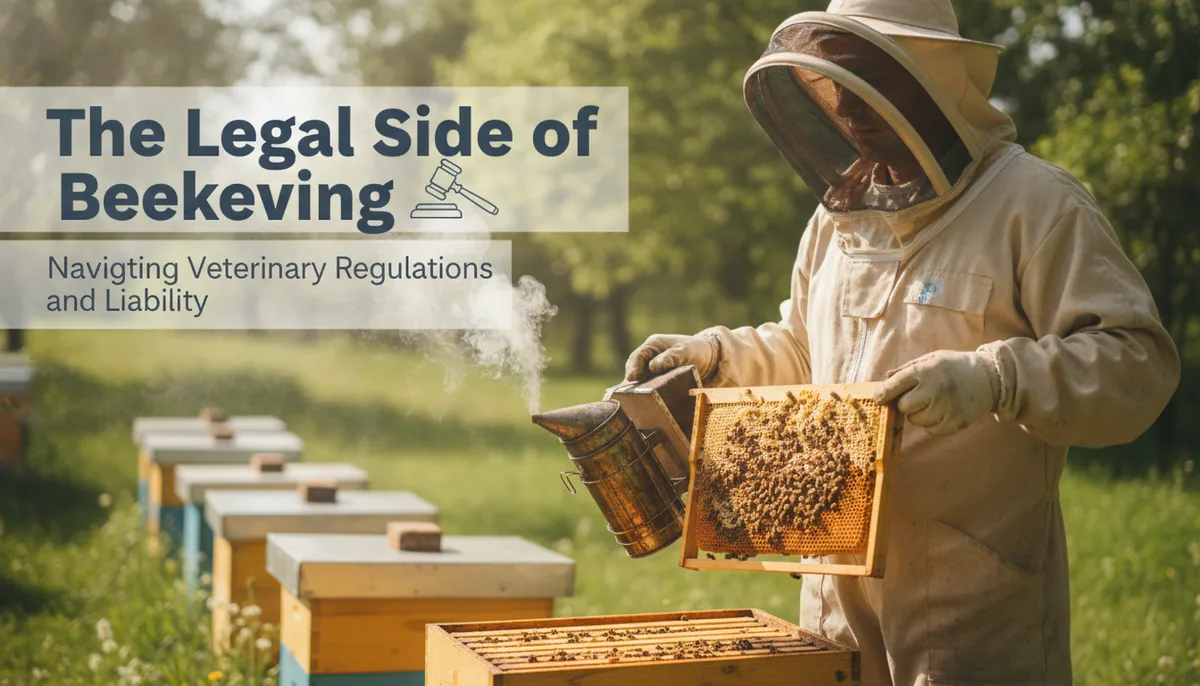
The Legal Side of Beekeeping: Navigating Veterinary Regulations and Liability
The Intersection of Law and the Apiary
For many, beekeeping begins as a labor of love—a fascination with the intricate social structure of the hive and the rewarding harvest of golden honey. However, as your backyard hobby scales into a serious pursuit or a commercial enterprise, the landscape shifts from purely biological to increasingly legal. Understanding the laws that govern beekeeping is no longer optional; it is a fundamental requirement for avoiding legal liability and ensuring the long-term health of your colonies.
As Dr. Tracy Farone, a prominent voice in the "Bee Vet" community, emphasizes, most professionals must be aware of the laws affecting their field to mitigate risk. In the world of apiculture, this involves a complex web of local zoning ordinances, state apiary inspections, and federal regulations regarding animal health and food safety. Whether you are Navigating the First Year: A Comprehensive Guide to Transitioning from Neophyte to Confident Beekeeper or managing hundreds of colonies, legal literacy is your best defense against unforeseen complications.
The Veterinary Feed Directive (VFD) and the Modern Beekeeper
One of the most significant shifts in beekeeping law occurred in January 2017, when the U.S. Food and Drug Administration (FDA) implemented the Veterinary Feed Directive (VFD). This regulation changed the way beekeepers access medically important antibiotics. Prior to this change, many treatments for bacterial diseases like American Foulbrood (AFB) and European Foulbrood (EFB) were available over the counter.
What is the VFD?
The VFD is a framework designed to ensure that antibiotics important to human medicine are used judiciously in food-producing animals, including honey bees. Under these rules, beekeepers can no longer simply walk into a farm supply store and purchase antibiotics. Instead, they must work through a licensed veterinarian.
To issue a VFD or a prescription, a veterinarian must establish a Veterinary-Client-Patient Relationship (VCPR). This means the vet has assumed responsibility for making clinical judgments regarding the health of the bees, has sufficient knowledge of the apiary through exams or visits, and is available for follow-up.
Why the Change Matters
The transition to veterinary oversight was met with some resistance in the beekeeping community, primarily due to the scarcity of "bee-friendly" veterinarians. However, the legal reality is that using these medications without professional oversight is a violation of federal law. Furthermore, the involvement of a veterinarian provides a layer of diagnostic security. Misidentifying a disease and applying the wrong treatment not only wastes resources but can lead to antibiotic resistance and the further spread of virulent pathogens.
Managing Liability in Honey Production
Liability in beekeeping extends beyond the risk of stings. As a producer of a food product, you are responsible for the safety and purity of the honey you sell or distribute. Legal liability can arise if honey is found to contain prohibited residues, such as unapproved pesticides or antibiotics used outside of VFD guidelines.
Ensuring Product Purity
To protect yourself legally, you must adhere to strict withdrawal periods for any treatments used in the hive. If you are harvesting honey, it is vital to ensure that no chemical treatments were present during the nectar flow. Utilizing precision tools for quality control can help maintain the standards required for safe consumption.
A refractometer allows you to verify that your honey has the correct moisture content (typically below 18.6%), which prevents fermentation and ensures a stable, marketable product. Selling fermented or adulterated honey can open a beekeeper up to consumer protection lawsuits and health department citations.
Zoning and Nuisance Laws
On a local level, beekeepers must be wary of "nuisance" laws. These are often triggered by neighbor complaints regarding bee flight paths or water-seeking behavior (such as bees landing in a neighbor's pool). While many states have "Right to Farm" acts that protect beekeepers, these protections are not absolute. Maintaining good relations with neighbors and following best practices—such as providing a consistent water source on your own property—is a legal strategy as much as a social one.
The Importance of Rigorous Record-Keeping
If you are ever faced with a legal challenge or a state inspection, your records are your primary evidence of due diligence. A lack of documentation is often interpreted as a lack of care in the eyes of the law.
What to Document
Every beekeeper should maintain a comprehensive log that includes:
- Inspection Dates: What was observed in each hive?
- Medication and Treatments: What was applied, in what dosage, and under whose authority (VFD/Prescription)?
- Hive Origins: Documentation for any nucs or packages purchased, including health certificates from the state of origin.
- Harvest Data: Batch numbers and dates for honey extraction.
Having a physical or digital paper trail demonstrates that you are operating within the bounds of the law and following the guidance of veterinary professionals.
The Veterinarian as a Strategic Partner
Rather than viewing veterinary regulations as a hurdle, successful beekeepers view their veterinarian as a strategic partner. A vet can provide insights into biosecurity that go beyond the scope of traditional beekeeping mentors. This partnership is particularly crucial when dealing with emerging threats that could lead to massive economic losses and legal quarantine measures.
Biosecurity and Disease Prevention
The role of the vet is to help you implement a biosecurity plan. This includes protocols for cleaning tools between yards and identifying symptoms of "high-consequence" pests. As the global movement of bees continues, the risk of introducing new threats increases. For instance, the beekeeping community is currently on high alert for the Tropilaelaps mite, a parasite that could prove even more devastating than Varroa. Understanding the legal reporting requirements for such pests is vital. For more on this, see Tropilaelaps Redux: Preparing for the Next Great Threat to American Beekeeping.
Navigating State and Federal Inspections
In many jurisdictions, apiary inspection is a mandatory part of beekeeping. State inspectors have the legal authority to enter your property and inspect your hives for contagious diseases like American Foulbrood. In many states, if AFB is found, the law requires the immediate destruction of the colony by fire.
Knowing Your Rights and Responsibilities
While the idea of an inspector burning your hives is daunting, these laws exist to protect the industry as a whole. Resisting an inspection or hiding diseased hives can lead to significant fines and the revocation of your right to keep bees. A proactive approach—regularly testing your own hives and maintaining a relationship with your state apiarist—can make the inspection process much smoother.
Conclusion: Professionalism in the Apiary
Beekeeping is evolving. The days of "set it and forget it" are long gone, replaced by a need for scientific rigor and legal compliance. By embracing the role of the veterinarian, adhering to the Veterinary Feed Directive, and maintaining meticulous records, you protect not only your bees but also your reputation and financial well-being.
As Dr. Farone suggests, we must be aware of the laws that affect our profession. Whether you are producing honey for your family or for the market, operating with a professional, legally-conscious mindset ensures that the "sweet" part of beekeeping isn't soured by avoidable legal trouble. Stay informed, stay compliant, and stay focused on the health of the hive.