
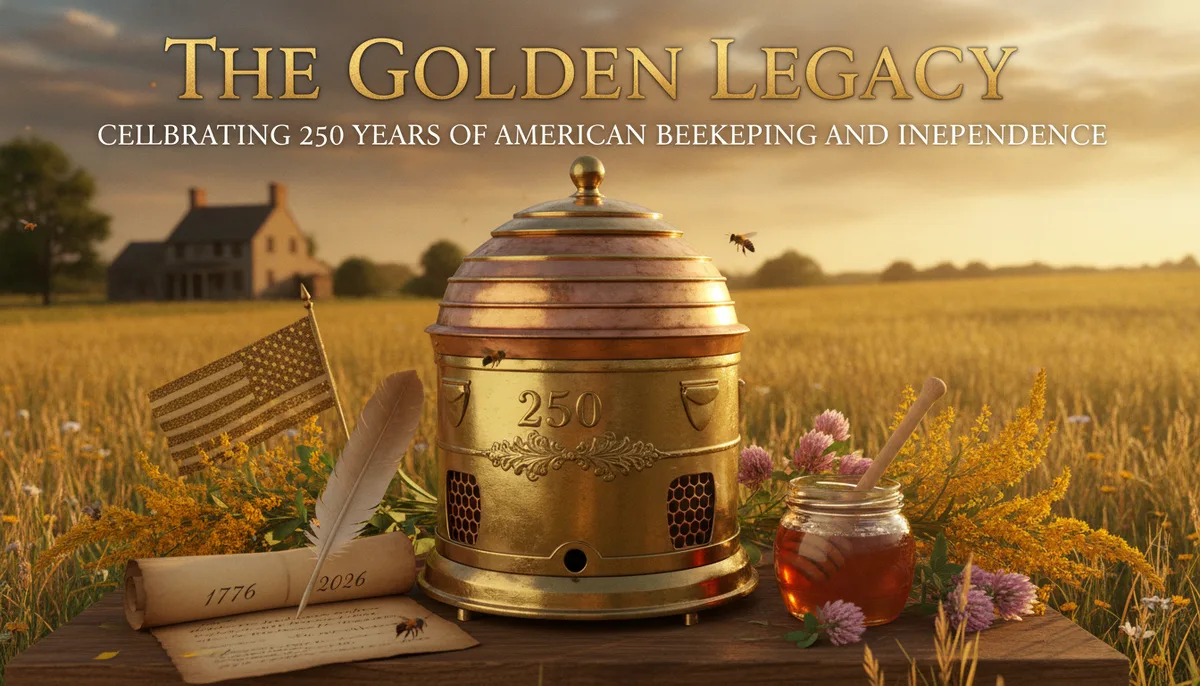
The Golden Legacy: Celebrating 250 Years of American Beekeeping and Independence
A Semiquincentennial Reflection on the American Bee
As the United States prepares to celebrate its 250th birthday, the milestone offers a unique opportunity to look beyond the political and social history of the nation and examine the environmental and agricultural threads that have woven our story together. Richard Wahl, a respected voice in the beekeeping community, recently noted that on this momentous occasion, it is fitting to present something "a bit different" than standard technical advice.
Beekeeping in America is more than just a hobby or a branch of agriculture; it is a reflection of the American spirit itself—industrious, resilient, and deeply interconnected. The honey bee, though not originally native to these shores, has become an indelible part of the American landscape. As we look toward the next quarter-millennium, understanding our past is vital to securing the future of our pollinators.
The Colonial Hive: Beekeeping and the Birth of a Nation
Before the signing of the Declaration of Independence, the "white man’s fly"—as some Native American tribes called the honey bee—was already making its mark. Introduced by European settlers in the early 1600s, honey bees were essential for the survival of colonial homesteads. They provided a primary source of sweetener at a time when imported sugar was prohibitively expensive and served as the silent engines of the burgeoning American orchard industry.
In the 18th century, beekeeping was a practice of "skeps" and hollowed-out logs. It was a crude and often destructive process, where the bees were frequently killed to harvest the liquid gold within. Yet, the philosophy of the early American beekeeper mirrored that of the early citizen: a desire for self-sufficiency and a profound respect for the seasonal cycles of the land.
As the colonies moved toward independence, the honey bee became a symbol of the collective effort required to build a new society. Just as a colony functions through the tireless work of individuals for the common good, the founding of the United States relied on a similar, albeit human, synergy.
The 19th Century Revolution: Innovation in the Apiary
The mid-1800s marked a turning point that would define American beekeeping for the next century and a half. In 1851, Lorenzo Lorraine Langstroth, a minister from Pennsylvania, discovered "bee space"—the precise 3/8-inch gap that bees will not fill with propolis or wax. This discovery led to the invention of the movable-frame hive.
This was a quintessentially American moment of innovation. It moved beekeeping from a destructive "mining" operation to a sustainable, manageable system of animal husbandry. The Langstroth hive allowed beekeepers to inspect their colonies, manage diseases, and harvest honey without harming the bees.
If you are looking to step into this long tradition of American innovation, choosing the right equipment is the first hurdle. For those just starting, exploring the Best Beginner Beekeeping Kits of 2024: Start Your Backyard Apiary with Confidence can help you find modern versions of Langstroth’s timeless design.
Langstroth 10-frame beehive kit
Beekeeping as a Symbol of American Resilience
Throughout the 20th century, beekeeping stood as a pillar of national resilience. During World War I and World War II, the "Victory Garden" movement encouraged citizens to grow their own food and keep bees to ensure pollination and provide honey as a sugar substitute during wartime rationing.
The bee became a mascot of the home front. However, the latter half of the 20th century and the start of the 21st have brought unprecedented challenges. From the arrival of Varroa mites to the mysterious onset of Colony Collapse Disorder (CCD), the American beekeeper has had to adapt with the same grit as the pioneers of the 1770s.
Today, we face a new kind of struggle. The infrastructure that supports our bees is under threat. A prime example is the recent concern surrounding federal facilities. Understanding The Beltsville Crisis: Why Losing Federal Bee Research Threatens the Future of American Beekeeping is crucial for any beekeeper who wants to advocate for the health of our national honey bee population.
The Nostalgic Comeback of Traditional Methods
As we celebrate 250 years, there is a growing movement to return to some of the more artisanal aspects of the craft. While modern technology has given us better extractors and varroa treatments, many beekeepers are looking back at the products that graced the tables of our ancestors.
Raw comb honey, once the only way honey was consumed, is seeing a massive resurgence in popularity. This "slow food" movement in beekeeping isn't just about flavor; it's about a connection to the history of the craft. You can read more about this trend in Beyond the Drizzle: Why Raw Comb Honey is Making a Nostalgic Comeback.
Practical Guidance: Honoring the Legacy in Your Backyard
If you want to honor the 250-year legacy of American beekeeping, the most impactful thing you can do is start your own hive or support a local apiary. However, the landscape has changed significantly since the days of the founding fathers.
1. Prioritize Pollinator Habitat
The American colonies were once a buffet of diverse wildflowers. Today, monoculture and urbanization have created "food deserts" for bees. Planting a "250th Anniversary Pollinator Garden" with native species like Milkweed, Goldenrod, and Aster is a patriotic act for the environment.
2. Practice Sustainable Management
In the spirit of Langstroth, modern beekeeping should focus on the health of the colony over the quantity of the harvest. This means integrated pest management (IPM) and avoiding harsh chemicals that can weaken the bees' natural immune systems.
3. Support Bee Research
The future of beekeeping depends on science. Supporting organizations that study honey bee health ensures that we won't lose the progress made over the last two centuries.
Conclusion: Preserving the Buzz for the Next 250 Years
As Richard Wahl suggested, the 250th birthday of the United States is a time to reflect on what makes this nation—and its beekeeping community—unique. We are a community built on a foundation of shared knowledge, from the early settlers to the modern researchers fighting for pollinator survival.
The honey bee is an immigrant that became an American icon. It has pollinated our crops, sweetened our history, and taught us the value of hard work and cooperation. As we look forward to the next 250 years, let us commit to being better stewards of these incredible creatures. Whether you are a seasoned pro or a neophyte just beginning your journey, you are part of a golden legacy that is essential to the American story.
By protecting our bees, we aren't just saving an insect; we are preserving a vital part of our national heritage and ensuring that the American landscape remains as fruitful and vibrant as it was when the first hives were placed on these shores centuries ago.