
The End of an Era: What the Beltsville Lab Closure Means for American Beekeeping
---CONTENT:
The Shifting Landscape of Federal Bee Research
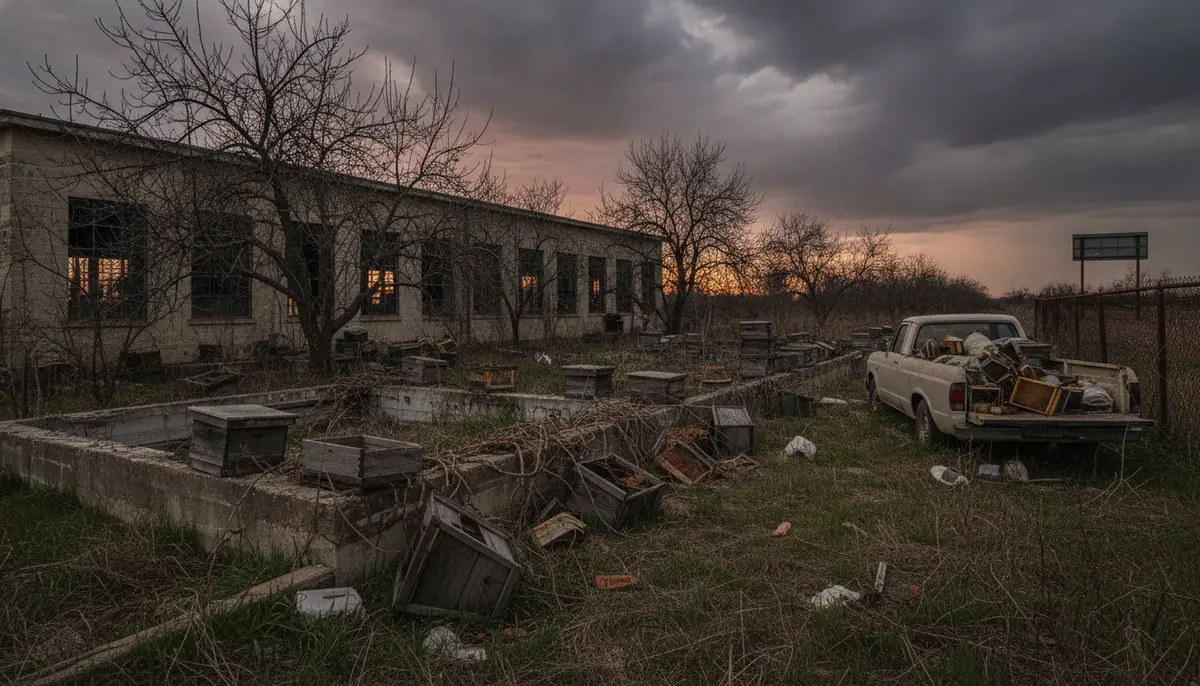
For decades, the Beltsville Agricultural Research Center (BARC) in Maryland stood as a silent sentinel for the American beekeeping industry. As one of the most storied facilities under the USDA Agricultural Research Service (ARS) umbrella, its mission was never just about local Maryland bees; it was about the national security of our food system. However, the recent closure of this specific facility has sent ripples through the beekeeping community, sparking a debate on the priority of pollinator health at the federal level.
In his analysis, "The State of Federal Bee Research is Lost," John Miller highlights a poignant reality: the closure of a facility charged with a broad mandate is rarely just a budgetary line item. It represents a fundamental loss of momentum. While the modern world often prioritizes decentralization and digital connectivity, in the realm of biological research, physical proximity and long-term institutional memory are irreplaceable assets.
For the beekeeper managing a handful of colonies in their backyard or the commercial operator moving thousands of hives across state lines, the closure of Beltsville might seem distant. Yet, the work performed there—ranging from disease diagnostics to the study of pesticide impacts—forms the scientific bedrock upon which our management practices are built.
The Loss of Institutional Memory
One of the most critical points raised by Miller is the human cost of this closure. The facility was staffed by nine full-time professionals. In the grand scheme of the federal government, nine positions might seem negligible. However, in the highly specialized field of apiculture, these nine individuals represented decades of specific, hands-on experience.
When a lab closes, the "institutional memory" often evaporates. This memory consists of the undocumented nuances of experiments, the historical context of local disease outbreaks, and the collaborative synergy that happens when experts work in the same physical space. As these families face relocation to other federal labs or choose to resign, the continuity of their research is inevitably broken.
For those navigating the first year of beekeeping, the importance of mentorship and cumulative knowledge is obvious. The same principle applies at the federal level. When we lose a hub like Beltsville, we lose a central node of that mentorship for the entire industry.
Why Centralized Research Matters for the Backyard Beekeeper
It is easy to assume that university extension programs or private tech startups can fill the void left by federal labs. While academic research is vital, it often operates on short-term grant cycles. Federal research, ideally, provides the long-term stability required to study multi-generational trends in bee health.
The Beltsville lab was instrumental in providing diagnostic services that were accessible to beekeepers. If you suspected a case of American Foulbrood (AFB), the USDA-ARS lab was the gold standard for confirmation. This service provided a crucial safety net, preventing the spread of devastating pathogens through early and accurate detection.
Without a robust, centralized federal diagnostic presence, the burden of disease identification shifts. This makes it even more imperative for beekeepers to develop their own diagnostic skills and maintain a rigorous monitoring schedule. Understanding the nuances of hive biology, such as the science of the solid and how temperature affects hive health, becomes a personal responsibility rather than just a topic for federal scientists.
The Fragmentation of Pollinator Policy
The closure of the Beltsville facility reflects a broader trend of fragmentation. When research is scattered across various smaller locations, the ability to tackle "big picture" problems—like the synergistic effects of climate change, varroa mites, and forage loss—becomes more difficult.
John Miller’s critique suggests that the mandate of the facility was far-reaching. By closing it, the USDA risks diluting its focus. For the industry, this means that advocacy becomes harder. It is much easier to lobby for the needs of honey bees when there is a clear, centralized authority dedicated to their study.
This fragmentation also impacts how data is shared. In a centralized lab, a breakthrough in mite resistance can be quickly integrated into other ongoing studies. In a decentralized model, silos often form, slowing the pace of innovation at a time when honey bees are facing unprecedented pressures.
Practical Steps: Taking Control of Your Apiary’s Health
As federal support structures shift, the individual beekeeper must become more self-reliant. This doesn't mean you need a PhD in entomology, but it does mean you should invest in the tools and education necessary to monitor your hives effectively.
The loss of easy-access federal diagnostics means that field-testing kits and proactive management are more important than ever. Beekeepers should focus on:
- Rigorous Varroa Monitoring: Don't wait for a lab to tell you your mite counts are high. Use alcohol washes or sugar shakes monthly.
- Visual Inspections for Brood Disease: Learn to identify the "pepperbox" brood pattern and the ropey consistency of AFB-infected larvae.
- Local Network Building: Join local and state beekeeping associations. These groups often pool resources for diagnostic tools that an individual might find expensive.
To stay ahead of these challenges, having a reliable set of reference materials and diagnostic tools on hand is essential.
The Role of Private and Academic Alternatives
With the closure of Beltsville, the spotlight turns to other USDA labs, such as those in Baton Rouge, Louisiana, and Logan, Utah. While these facilities do incredible work—particularly in bee breeding and wild bee research—they are already operating at high capacity.
The gap left by Beltsville may eventually be filled by the private sector or land-grant universities. However, these entities often have different motivations. Private research is frequently proprietary, and university research is often tied to specific funding sources that may not align with the immediate needs of the commercial beekeeper or the backyard hobbyist.
This transition period is a critical time for beekeepers to support organizations like the Honey Bee Health Coalition or the Bee Informed Partnership (BIP). These organizations bridge the gap between high-level research and practical apiary management.
Conclusion: A Call for Renewed Advocacy
The closure of the Beltsville Agricultural Research Center's bee lab is more than just a logistical change; it is a signal. It suggests that the infrastructure supporting our most important pollinators is more fragile than we might like to believe.
John Miller’s assessment serves as a wake-up call. If federal bee research is "lost" or at least significantly disrupted, the responsibility for the survival of the honey bee falls more heavily on the shoulders of the beekeepers themselves. We must be more diligent in our hive inspections, more vocal in our advocacy for pollinator-friendly policies, and more committed to our own education.
Equipping yourself with the essential beekeeping tools is the first step toward that self-reliance. As we look toward a future with potentially less federal oversight, the strength of the beekeeping community will be found in its collective knowledge and its willingness to adapt to a changing scientific landscape.
The legacy of Beltsville should not be its closure, but rather a reminder of the vital importance of dedicated, centralized research. As we move forward, we must ensure that the "institutional memory" of our industry is preserved not just in government buildings, but in the practices and records of every beekeeper across the country.