
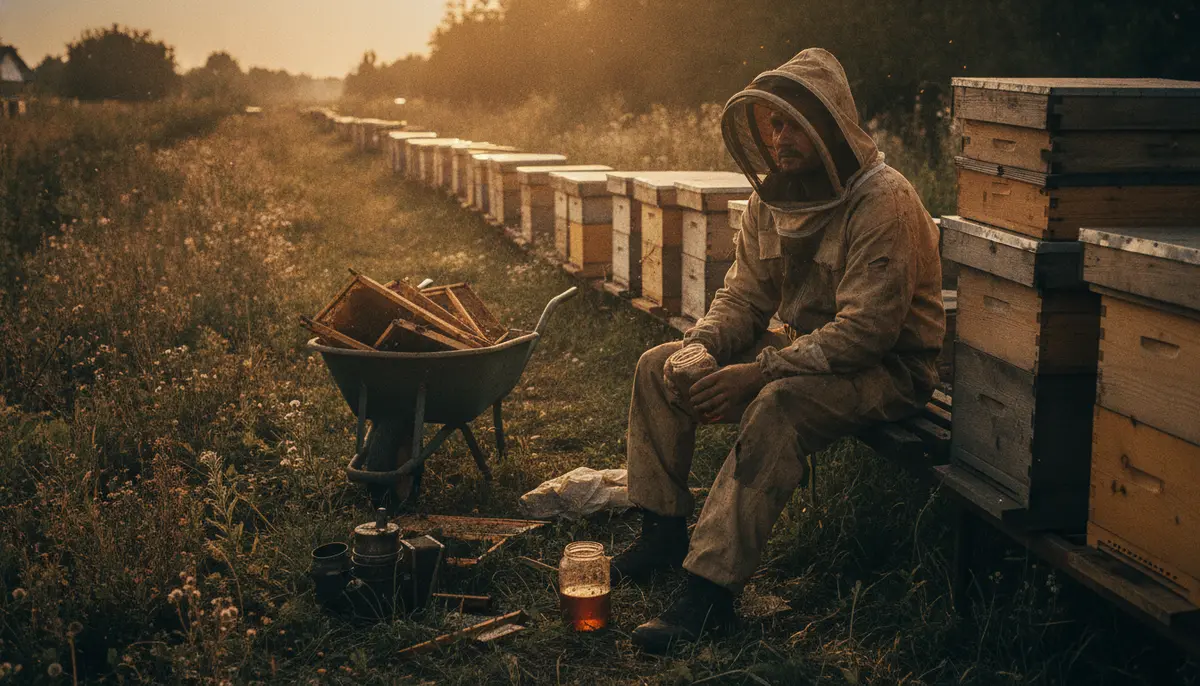
The Beekeeping Marathon: Why Backyard Apiaries Are a True War of Endurance
There is a certain prestige associated with the "26.2" bumper sticker. It is a cryptic shorthand for a specific kind of person—someone who has willingly subjected themselves to months of grueling preparation, early morning runs, and the sheer physical agony of the pavement. As Stephen Bishop notes, many of us look at those stickers with a quiet envy, not necessarily for the sticker itself, but for the grit it represents.
In the world of the apiary, we may not have a standard bumper sticker to celebrate a successful season, but perhaps we should. Beekeeping is rarely the serene, meditative hobby depicted in lifestyle magazines. Instead, it is a war of endurance. It is a long-distance race where the finish line is always moving, and the obstacles include everything from microscopic parasites to the blistering mid-August sun.
To succeed in beekeeping, one must stop thinking like a sprinter and start thinking like a marathoner.
The Marathon Mindset: Beyond the First Inspection
The excitement of a new beekeeper is infectious. When the "nuc" (nucleus colony) or package arrives in the spring, the adrenaline is high. The sun is shining, the dandelions are blooming, and the bees are gentle. This is the first mile of the marathon, where every runner feels invincible.
However, the reality of the "war of endurance" sets in around July. This is when the initial novelty wears off and the true work begins. A marathoner knows that the race doesn't actually start until mile 20; for a beekeeper, the "race" truly begins when the nectar flow slows, the temperatures climb into the 90s, and the hive population reaches its peak.
Navigating the First Year: A Comprehensive Guide to Transitioning from Neophyte to Confident Beekeeper is an essential roadmap for this transition. It highlights that the shift from a "neophyte" to a "beekeeper" happens in those moments of struggle—when you are tired, sweaty, and facing a difficult hive decision.
The Training Phase: Education as Your Base Miles
No one wakes up and runs 26.2 miles without a base. In beekeeping, your "base miles" are the hours spent in books, at local bee club meetings, and watching experienced mentors.
The "suffering" Bishop mentions in the training process is mirrored in the steep learning curve of apiculture. It involves the frustration of failing to find a queen, the confusion of reading conflicting advice on mite treatments, and the literal pain of the occasional sting.
Building Your Knowledge Base
To build endurance, you must understand the biology of the superorganism you are managing. This means:
- Understanding Phenology: Knowing which plants bloom when and how weather patterns affect nectar secretion.
- Pest Cycles: Recognizing that Varroa mite populations grow exponentially, often peaking just as the bees are trying to raise their "winter" generation.
- Equipment Mastery: Learning the nuances of your gear before you are standing in the heat with 60,000 defensive bees.
For those just starting their "training," choosing the right equipment can prevent early burnout. Best Beginner Beekeeping Kits of 2024: Start Your Backyard Apiary with Confidence provides a solid foundation for selecting gear that won't fail you at mile ten.
The Physical Toll: Managing the Heavy Lift
If beekeeping is a war of endurance, then the honey super is the heavy pack you must carry. A deep 10-frame super full of honey can weigh upwards of 80 pounds. During a heavy nectar flow, a single hive might have three or four of these stacked high.
The physical demand of lifting, inspecting, and harvesting is where many hobbyists hit "the wall." To survive the season, you must prioritize ergonomics. This includes using your legs to lift, utilizing hive stands that bring the work to a comfortable waist height, and knowing when to ask for help.
When the humidity is high and you are encased in a heavy canvas suit, the physical strain is amplified. Investing in high-quality, breathable protective gear is not a luxury; it is a necessity for endurance.
The Invisible Opponents: Pests and Pathogens
In a marathon, you might face a sudden headwind or a steep hill. In the apiary, your headwinds are Varroa mites, Small Hive Beetles, and the looming threat of emerging diseases.
Stephen Bishop’s "war of endurance" is most evident in the constant vigilance required for mite management. It is a relentless cycle of testing, treating, and re-testing. If you let your guard down for even a few weeks in late summer, the colony’s health can collapse before winter arrives.
Furthermore, beekeepers must now look toward future threats that could redefine the "race." The potential arrival of new parasites requires us to stay informed and adaptable. For a deep dive into these emerging challenges, see Tropilaelaps Redux: Preparing for the Next Great Threat to American Beekeeping.
Mental Fortitude: Recovering from the "Wall"
Every marathoner experiences a moment where their body screams at them to stop. Beekeepers experience this, too—usually after a hive loss or a particularly defensive colony encounter.
The mental endurance required to scrape off the propolis and head back into the yard after a failure is what separates the long-term beekeeper from the one-season hobbyist. Resilience in this field comes from understanding that bees are a part of nature, and nature is often indifferent to our plans.
Strategies for Mental Resilience
- Community Support: Don't keep bees in a vacuum. Join a local association to share the "suffering" and the successes.
- Record Keeping: When you feel like you aren't making progress, look back at your hive logs. Seeing how much you've learned can provide the second wind you need.
- Proper Tooling: Nothing drains mental energy faster than struggling with substandard equipment. Using the right tool for the job keeps frustration at bay.
Equipping for the Long-Distance Journey
Just as a runner carefully selects their shoes to prevent injury over long distances, a beekeeper must select tools that reduce friction in their workflow. The goal is to make the necessary tasks as efficient as possible so that the "war of endurance" doesn't become a war of attrition.
Essential tools like high-quality smokers that stay lit, frame grips that save your fingers, and specialized brushes are the "running shoes" of the apiary. Without them, you are simply making a difficult task harder.
The Reward at the Finish Line
So, why do we do it? Why subject ourselves to the heat, the heavy lifting, and the constant battle against pests?
For the marathoner, the reward is the medal and the internal knowledge that they conquered the distance. For the beekeeper, the reward is multifaceted. It is the liquid gold of the honey harvest, yes, but it is also the profound connection to the natural world. It is the sight of a queen laying a perfect frame of brood, the smell of curing nectar on a warm evening, and the satisfaction of seeing a colony emerge strong from the cold of winter.
The "26.2" of beekeeping isn't a distance; it's a cycle of seasons. It’s the endurance to keep showing up for your bees, even when the "race" gets tough. When you finally sit down with a jar of honey from your own hives, you’ll know that you didn't just stumble upon it—you earned it through a war of endurance.