
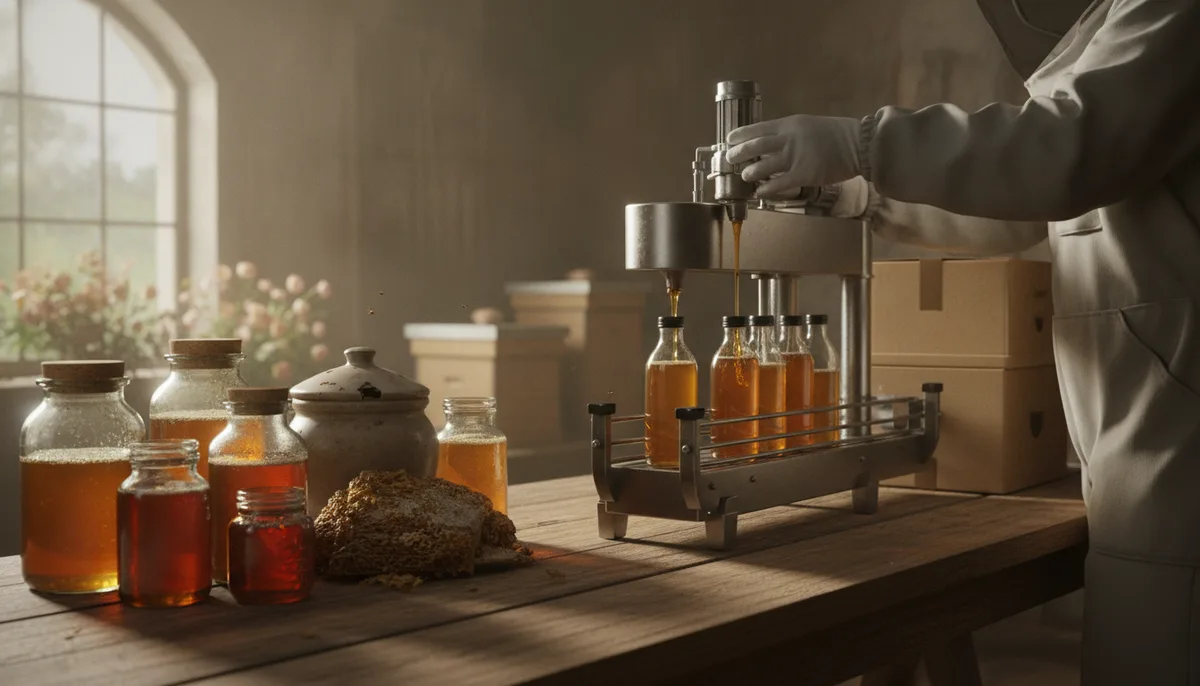
The Art of the Honey Harvest: A History of Vintage Jars and Modern Bottling
As the golden rod fades and the temperatures begin to dip, beekeepers across the country find themselves in the most rewarding phase of the calendar: the harvest. For many, the hard work of the summer—managing swarms, checking for mites, and ensuring the health of the colony—culminates in the rhythmic hum of the extractor. But once the honey is out of the comb, a new set of decisions begins. How we package our "liquid gold" is not just a matter of utility; it is a nod to a long history of craftsmanship and a crucial step in presenting our hard work to the world.
The transition from the hive to the kitchen table is a journey that has changed significantly over the last 150 years. While modern beekeepers have access to lightweight plastics and precision-engineered seals, there is a growing movement to return to the roots of the craft, specifically through the use of heritage-style glassware.
The Evolution of Honey Storage: From Bulk to Boutique
In the early days of American beekeeping, honey was rarely found in the neat, 12-ounce bears we see on grocery shelves today. It was a bulk commodity, often sold in large crocks, heavy tin cans, or even primitive wooden barrels. Consumers would bring their own containers to a local farm or market to be filled from a larger vessel.
This changed as the 19th century progressed and the "Golden Age of Beekeeping" took hold. Innovations like the moveable-frame hive allowed for larger, more consistent harvests. As beekeepers began to produce more honey than their immediate neighbors could consume, the need for standardized, shippable, and attractive packaging became clear.
The shift to glass was revolutionary. Unlike opaque tins or stoneware, glass allowed the consumer to see the product. The clarity, the hue—ranging from water-white clover to deep, robust buckwheat—and the absence of debris became selling points. If you are just starting your journey into this rewarding hobby, understanding the final presentation is as vital as the initial setup. For more on the early stages of the craft, see our guide on the Best Beginner Beekeeping Kits of 2024: Start Your Backyard Apiary with Confidence.
The Legacy of the Muth Jar
Among the most storied pieces of apiary history is the Muth jar. Developed by Charles (Chas.) Muth of Cincinnati, Ohio, in the late 1800s, these jars represent one of the first truly specialized containers designed specifically for honey.
Charles Muth was a prominent figure in the beekeeping community, operating a successful supply business. He recognized that honey deserved a vessel that reflected its value. The original Muth jars were distinctively square, a shape that made them easy to pack into crates for shipping without wasting space. They were typically made of flint glass and featured beautiful embossed designs, often depicting a straw skep hive and floral motifs.
The closure was equally iconic: a simple cork. While modern lids offer a more airtight seal, the aesthetic of the cork-topped Muth jar remains a favorite for artisanal beekeepers who want their product to stand out at a farmer's market.
Today, finding an original 19th-century Muth jar is a prize for any collector. However, the design was so successful that reproductions are widely available today, allowing modern beekeepers to bottle their honey with the same Victorian elegance that Muth championed over a century ago.
Why Glass Remains the Gold Standard
While food-grade plastic (PET) jars are popular for their shatter-resistance and lower shipping costs, glass remains the preferred choice for many hobbyists and professional apiarists alike. There are several reasons why glass, particularly heritage-style jars, continues to dominate the high-end honey market:
- Impermeability: Glass is non-porous. It does not absorb odors and, more importantly, it provides a superior barrier against moisture. Since honey is hygroscopic (it absorbs moisture from the air), a tight-sealing glass jar is essential for preventing fermentation.
- Heat Resistance: If your honey eventually crystallizes—a natural process for high-quality, raw honey—glass jars can be safely placed in a warm water bath to reliquefy the contents. Plastic jars can warp or leach chemicals if subjected to the same heat.
- Visual Appeal: Nothing showcases the clarity of a well-filtered harvest like glass. Before you reach the bottling stage, you must ensure your extraction process is as clean as possible. Using high-quality equipment is key; you can explore options in our review of the Best Honey Extractors for Small Scale Harvests: A Backyard Beekeeper’s Guide.
Selecting the Right Jars for Your Harvest
When choosing bottles for your season's yield, consider your end goal. Are you selling your honey, giving it as gifts, or simply storing it for family use?
The Classic Queenline Jar
The Queenline jar is perhaps the most recognizable honey container in the world. Its "waisted" shape and ribbed sides are designed to catch the light, making the honey inside glow. It is the modern descendant of the specialized glass movement started by people like Charles Muth.
Hexagonal Jars
Hexagonal (six-sided) jars are a favorite for gift-giving. The shape evokes the geometry of the honeycomb itself. These jars often use "twist-off" gold metal lids which provide an excellent vacuum seal, ensuring the honey stays fresh for years.
Mason Jars
For the backyard beekeeper, the humble Mason jar is often the most practical choice. They are inexpensive, readily available, and the wide mouth makes them easy to fill. While they lack the "boutique" feel of a Muth or Queenline jar, they are incredibly effective for long-term storage.
Best Practices for Successful Bottling
Bottling honey is more than just pouring liquid into a jar. To ensure your honey stays delicious and looks professional, follow these essential steps:
Check Moisture Content
Before bottling, it is crucial to ensure your honey has a moisture content below 18.6%. Anything higher can lead to fermentation, which will ruin your entire harvest. A simple tool called a refractometer can give you an instant, accurate reading.
Temperature Matters
Honey flows much better when it is slightly warm. Aim for a temperature around 90°F to 100°F (32°C to 38°C). This allows the honey to move through your bottling tank valve easily and helps air bubbles rise to the surface faster, resulting in a clearer jar.
The "Settling" Period
After extracting and before bottling, let your honey sit in a settling tank or a food-grade bucket for 24 to 48 hours. This allows the tiny air bubbles and any remaining microscopic wax particles to rise to the top. You can then skim the foam off the surface, ensuring that every jar you fill is crystal clear. This attention to detail is what separates a neophyte from a seasoned pro. For more tips on mastering these skills, check out Navigating the First Year: A Comprehensive Guide to Transitioning from Neophyte to Confident Beekeeper.
The Collector’s Corner: Identifying Vintage Glass
For those who have caught the "collector's bug," hunting for old honey jars can be a fascinating side-hobby to beekeeping. When looking at antique shops or estate sales, look for these markers of age:
- Bubbles in the Glass: Older glass often contains small air bubbles (seeds) trapped during the manufacturing process.
- Pontil Marks: A rough scar on the bottom of the jar indicates it was hand-blown.
- Color Tints: Early glass often has a slight aqua, green, or purple tint due to impurities in the sand or the reaction of manganese to sunlight over decades.
- Embossing: Look for names like "Muth," "Root," or "Dadant," which were the titans of the early American beekeeping industry.
Conclusion: A Vessel Worthy of the Work
The honey season may be coming to a close, but the story of your harvest is just beginning. Whether you choose a classic Mason jar or a decorative reproduction of a Charles Muth original, remember that the container is a tribute to the thousands of miles your bees flew to create its contents.
By choosing high-quality glassware and following proper bottling techniques, you preserve the integrity of your honey and honor the long tradition of the apiarists who came before us. As you label your jars and line them up on the shelf, take a moment to appreciate the "liquid gold" and the history that helped bring it to your table.