
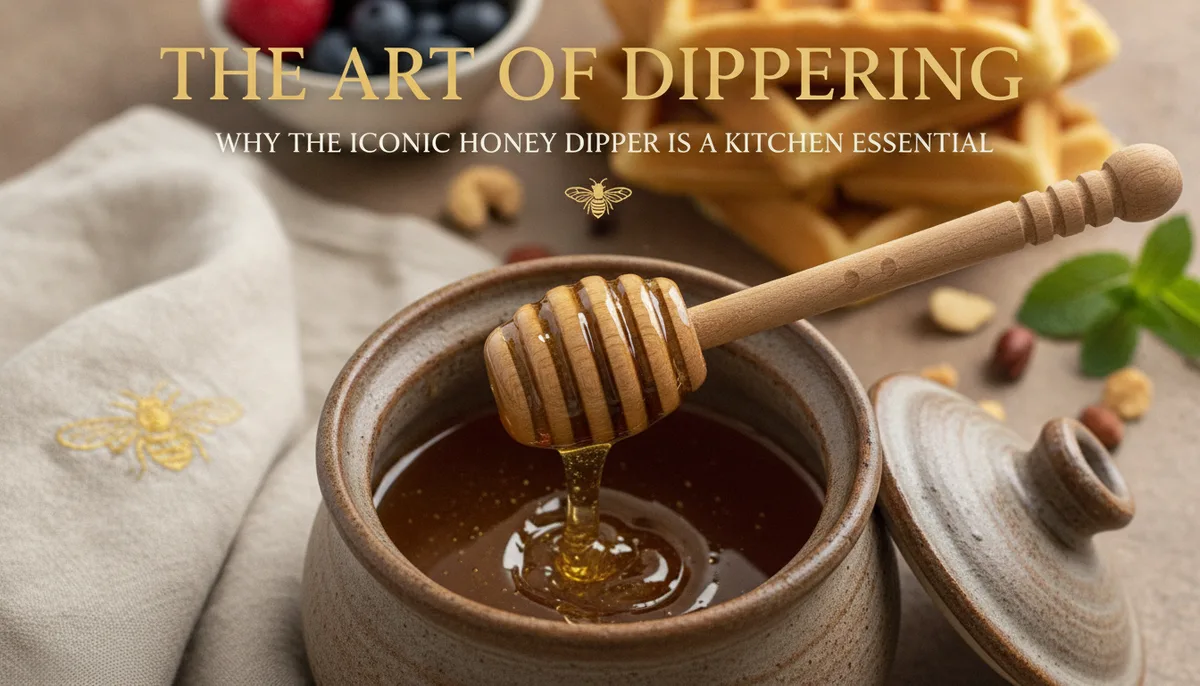
The Art of Dippering: Why the Iconic Honey Dipper is a Kitchen Essential
Honey is often described as "liquid gold," a substance so precious and complex that it deserves more than a standard kitchen spoon. If you have ever tried to transfer honey from a jar to a piece of toast using a teaspoon, you are likely familiar with the inevitable sticky trail left across the counter. This is where the honey dipper—a tool that looks more like a magic wand than a utensil—comes into play.
The honey dipper is an exercise in functional art. While it may seem like a "sweetly strange" relic of the past, its design is rooted in clever physics. To truly appreciate the art of dippering, one must understand the relationship between the tool’s unique shape and the viscous nature of the honey itself.
The Anatomy of a Honey Dipper: Form Meets Function
At first glance, a honey dipper (sometimes called a honey wand or honey muller) consists of a handle and a bulbous head featuring deep, horizontal grooves. These grooves are not merely decorative; they are the engineering heart of the tool.
When you submerge the head into a jar of honey, the liquid fills the spaces between the ridges. Because honey is highly viscous and possesses significant surface tension, it clings to these grooves. As long as you keep the dipper rotating horizontally, the honey remains trapped within the head. It is only when you stop the rotation and hold the dipper vertically that gravity overcomes the surface tension, allowing the honey to cascade in a perfect, controlled stream.
For those who have recently transitioned from hobbyist to producer, seeing the fruits of your labor dispensed so elegantly is the ultimate reward. If you are still in the early stages of your journey, you might find our guide on Essential Beekeeping Tools Every Newbie Needs: Beyond the Hive and Suit helpful for understanding the full spectrum of equipment required to get honey from the comb to the table.
The Physics of the Drizzle: Why Dippering Works
The "secret" to the honey dipper lies in the fluid dynamics of honey. Honey is a Newtonian fluid with high viscosity, meaning it resists flow. When you use a flat spoon, the honey has a large surface area from which to slide off, often leading to "tails" of honey that stick to the rim of the jar.
The honey dipper solves this through:
- Increased Surface Area: The multiple discs or grooves provide a massive amount of surface area for the honey to grip.
- Surface Tension: The honey wants to "stick" to itself and the wood. The narrow gaps between the fins of the dipper create enough tension to hold the honey against the pull of gravity.
- Rotational Force: By twirling the handle, you are essentially using a mild centrifugal force to keep the honey coiled around the head.
Mastering the "Art of Dippering"
Dippering is a tactile ritual that transforms a simple breakfast into a special occasion. To master the technique, follow these steps:
The Vertical Dip
Submerge the head of the dipper completely into the honey. Do not rush; let the honey seep into every groove.
The Horizontal Twirl
As you lift the dipper out of the jar, immediately turn it to a horizontal position. Begin twirling the handle between your thumb and forefingers. This constant rotation is what prevents the honey from dripping onto your table or the side of the jar.
The Controlled Release
Move the dipper over your tea, yogurt, or biscuit while continuing to twirl. Once you are positioned correctly, stop the rotation and tilt the head downward. The honey will begin to flow in a steady, thin ribbon, allowing for precise placement that a spoon simply cannot replicate.
The Clean Break
When you have enough honey, give the dipper one quick, final twirl and return it to the jar or a dedicated rest. This "snaps" the stream of honey, preventing long, sticky threads.
Choosing the Right Material for Your Dipper
While the classic honey dipper is made of wood, modern versions come in various materials, each offering different benefits.
- Olive Wood: Highly prized for its density and stunning marbled grain. Olive wood is naturally oily, which helps it resist staining and moisture.
- Beech or Maple: Common, durable hardwoods that are affordable and functional.
- Silicone: A modern alternative that is dishwasher safe. While it lacks the traditional aesthetic, it is excellent for those who prioritize ease of cleaning.
- Glass: Often sold as part of a "honey pot" set. Glass dippers are beautiful and non-reactive, though they can be fragile.
If you are harvesting your own honey using the Best Honey Extractors for Small Scale Harvests: A Backyard Beekeeper’s Guide, pairing your fresh-spun honey with a high-quality wooden dipper is the best way to showcase the clarity and color of your harvest.
decorative glass honey pot with dipper
Why the Honey Dipper is the Ultimate Gift for Honey Lovers
The honey dipper is more than just a tool; it is a symbol of the beekeeping craft. When gifting a jar of local honey, including a wooden dipper elevates the gesture from a simple food item to a curated experience. It encourages the recipient to slow down and enjoy the sensory process of "dippering."
For beekeepers, offering a dipper alongside your honey at farmers' markets can increase the perceived value of your product. It tells the story of honey as a gourmet, artisanal product rather than a commodity.
Caring for Your Tool
To ensure your wooden honey dipper lasts for years, it requires a small amount of maintenance. Because honey is naturally antimicrobial and has a low moisture content, the dipper doesn't need aggressive scrubbing.
- Avoid the Dishwasher: The intense heat and chemicals will strip the natural oils from the wood, leading to cracking.
- Hand Wash Only: Use warm water and a drop of mild soap. Rinse thoroughly and pat dry immediately.
- Seasoning: If the wood begins to look parched or "fuzzy," lightly sand it with high-grit sandpaper and apply a coat of food-grade mineral oil or beeswax cream. This restores the luster and creates a barrier against moisture.
The Ritual of the Harvest
There is a profound connection between the work of the bees and the use of the dipper. A single honeybee may only produce 1/12th of a teaspoon of honey in her entire lifetime. When we use a tool like the honey dipper, we are treating that labor with the respect it deserves. We aren't just "pouring" honey; we are carefully selecting and placing it.
Whether you are a seasoned beekeeper or someone who simply enjoys the flavor of a late-summer wildflower honey, the art of dippering adds a layer of mindfulness to your kitchen. It is a reminder that some of the best things in life—much like the flow of honey—should not be rushed.