
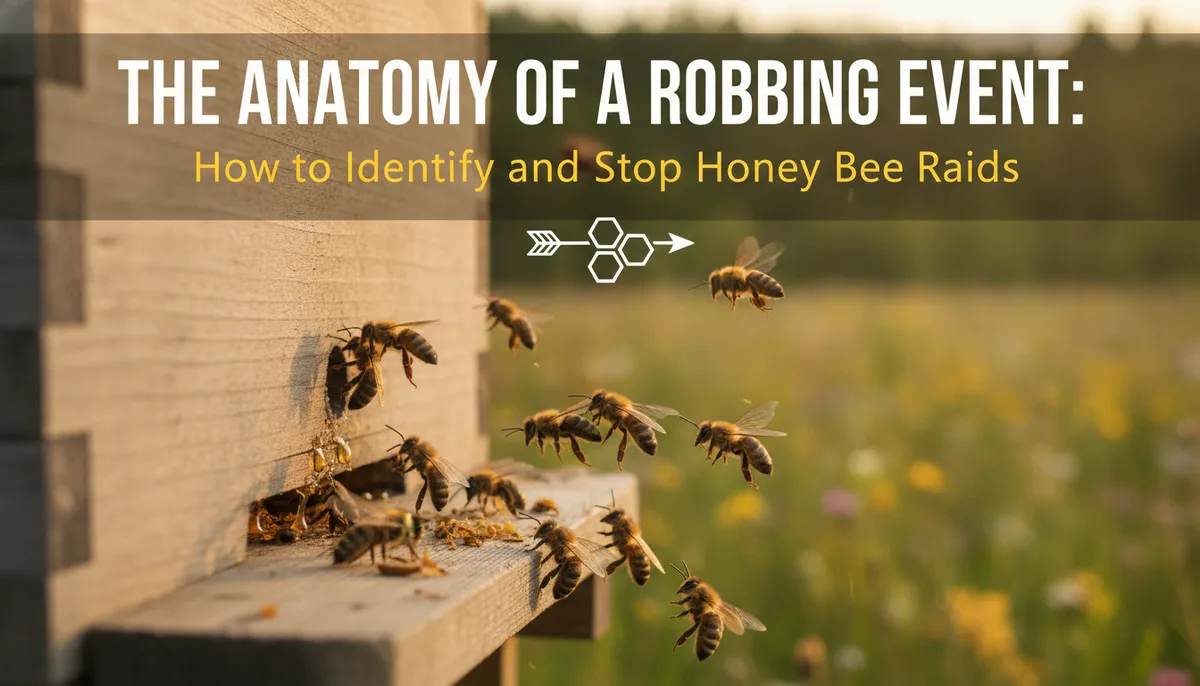
The Anatomy of a Robbing Event: How to Identify and Stop Honey Bee Raids
Honey bees are frequently hailed as nature’s model insects. They are the architects of the meadow, the tireless pollinators of our orchards, and the creators of one of nature’s most perfect foods. In a healthy environment, we see them working in harmony as a single "superorganism," where thousands of individual bees act with a collective intelligence for the good of the hive.
However, there is a darker side to this social structure that every beekeeper must eventually confront: the robbing event. While we prefer to view bees through the lens of peaceful cooperation, they are also supreme opportunists. When resources become scarce, the very survival instinct that makes them successful can turn them into aggressive raiders. Understanding the anatomy of a robbing event is not just a matter of biological curiosity—it is a critical skill for navigating the first year and ensuring your apiary survives the season.
The Biology of Scarcity: Why Good Bees Go Bad
To understand robbing, we must first understand the honey bee’s relationship with sugar. A colony requires a massive amount of carbohydrates to maintain the brood nest and survive the winter. During a "nectar flow," when flowers are abundant, bees are too busy foraging in the field to bother with their neighbors.
A robbing event is almost always preceded by a nectar dearth—a period where blooming plants stop producing nectar due to heat, drought, or seasonal shifts. In this state of scarcity, the scout bees’ mission changes. They are no longer looking for clover or lavender; they are looking for any concentrated source of sugar.
When a scout bee discovers a weak colony, an improperly sealed hive, or honey spilled by a beekeeper, she returns to her home hive and performs a recruitment dance. But this dance doesn't point to a flower patch; it points to a neighboring hive. Within minutes, the "harmony" of the apiary is replaced by a desperate, violent frenzy.
Identifying the Chaos: Robbing vs. Orientation Flights
For the beginner beekeeper, the sight of hundreds of bees swarming around the front of a hive can be confusing. Is this a sign of a healthy, growing colony, or is it a massacre in progress? Distinguishing between orientation flights and a robbing event is the most important diagnostic skill you can develop.
Orientation Flights: The Afternoon Practice
Orientation flights usually occur on warm, sunny afternoons. These are young bees taking their first flights to memorize the location of their home.
- Behavior: Bees hover in front of the hive, often facing the entrance, moving in gentle figure-eight patterns.
- Atmosphere: The vibe is calm and organized.
- Duration: These flights typically last for 20 to 30 minutes and then subside.
The Robbing Event: A State of War
Robbing looks and sounds fundamentally different. It is chaotic and high-pitched.
- The "Zap" Flight: Robbing bees don't hover; they dart. They fly with a zig-zagging, nervous energy, searching for any crack or crevice to enter the hive.
- Combat at the Entrance: You will see guard bees grappling with intruders on the landing board. They will tumble off the hive in pairs, stinging and biting one another.
- The Appearance of the Bees: Robbing bees often look "shiny" or greasy because they have lost their hair during the struggle to get in and out of tight spaces.
- The Exit Strategy: A bee leaving a hive after a successful robbery is heavy with honey. They often have difficulty taking off, crawling up the front of the hive wall to get enough lift to fly home.
The Anatomy of an Attack: What Happens Inside the Hive
Once the defenses of a colony are breached, the anatomy of the event shifts from the entrance to the interior. The primary goal of the robbers is to rip open capped honey cells.
In a natural foraging scenario, bees are delicate with wax. In a robbing frenzy, they are destructive. They use their mandibles to tear the wax cappings off the frames, leaving behind jagged, "chewed" edges that look like sawdust on the bottom board.
The stress of the event often leads to the death of the queen. Robbers may kill her, or the frantic resident bees may accidentally "ball" her in their confusion. Once the queen is gone and the food stores are depleted, the colony has no future. Furthermore, robbing is a "superspreader" event. If the hive being robbed is weak because of Varroa mites or diseases like American Foulbrood, the robbers will carry those pathogens back to their own healthy colony, potentially collapsing the entire apiary.
Prevention Strategies: Protecting Your Apiary
The best way to manage a robbing event is to ensure it never starts. This requires a proactive approach to hive security, especially during the late summer months.
1. Entrance Management
A large entrance is easy for a strong colony to defend during a nectar flow, but it is a liability during a dearth. Using an entrance reducer limits the space the guard bees need to patrol.
For colonies that are particularly vulnerable, a robbing screen is a superior tool. These devices use a "mesh porch" system that confuses the robbers (who follow the scent of honey directly to the mesh) while allowing the resident bees to enter and exit through a hidden top opening. You can find these and other essential beekeeping tools that help manage hive traffic.
2. Feeding Hygiene
Feeding is the most common cause of "beekeeper-induced" robbing. If you are using an entrance feeder (Boardman feeder), the scent of the syrup is right at the door, inviting every scout in the neighborhood.
- Use Internal Feeders: Transition to top feeders or frame feeders that keep the syrup deep inside the hive.
- Clean Up Spills: Even a few drops of syrup or honey on the ground can trigger a scouting frenzy.
- Feed at Dusk: If you must feed, do it late in the day when bee flight is slowing down. This gives the colony time to organize the syrup before the scouts arrive the next morning.
Emergency Intervention: How to Stop an Active Robbing Event
If you walk into your apiary and realize a robbing event is in full swing, you must act immediately. Every minute that passes increases the likelihood of the colony's total collapse.
The Wet Sheet Method
This is an old but highly effective beekeeper’s trick. Soak a bedsheet in water and drape it completely over the hive being robbed. The wet fabric does several things:
- Masks the Scent: It helps contain the smell of honey that is drawing the robbers.
- Creates a Physical Barrier: The robbers cannot easily find the entrance through the heavy, wet folds.
- Allows Ventilation: Unlike closing the hive with a solid board, the sheet allows air to pass through, preventing the colony from overheating in their panic.
Closing the Hive
If the robbing is severe, you may need to close the entrance entirely using a screen (not a solid plug, as they need air). If you do this, you must also close the entrance of the robbing hive if you can identify it, or move the victim hive several miles away. Note that simply closing the victim hive while leaving the robbers outside often results in the robbers hanging around for days, waiting for the door to reopen.
Assessing the Damage
Once the event has subsided, you must inspect the hive. Check for:
- Queen Presence: Look for the queen or fresh eggs.
- Food Stores: If they are "robbed out," you must begin emergency feeding immediately.
- Debris: Clean the bottom board of the wax "sawdust" and dead bees to prevent pests like Small Hive Beetles from moving in.
High-accuracy digital hive scale for monitoring weight loss
Maintaining the Balance
Beekeeping is a constant exercise in balance. We strive to provide our bees with the best environment possible, but we must also respect their nature as wild animals. A robbing event is a reminder that the "harmony" we see in the hive is a hard-won state, maintained only as long as resources allow.
By understanding the triggers and signs of robbing, you can step in as a steward of your apiary. Whether it’s through the use of beginner-friendly kits that include proper entrance reducers or simply being more mindful during your late-season inspections, your intervention can be the difference between a thriving colony and an empty box. Stay vigilant, watch the flight patterns at the entrance, and always be prepared to defend the bees that work so hard for you.