
Feeding Bees in Early Spring: What to Use to Boost Your Colony
Affiliate Disclosure: This post contains affiliate links. If you purchase through these links, I may earn a small commission at no extra cost to you, which helps keep our hive buzzing!
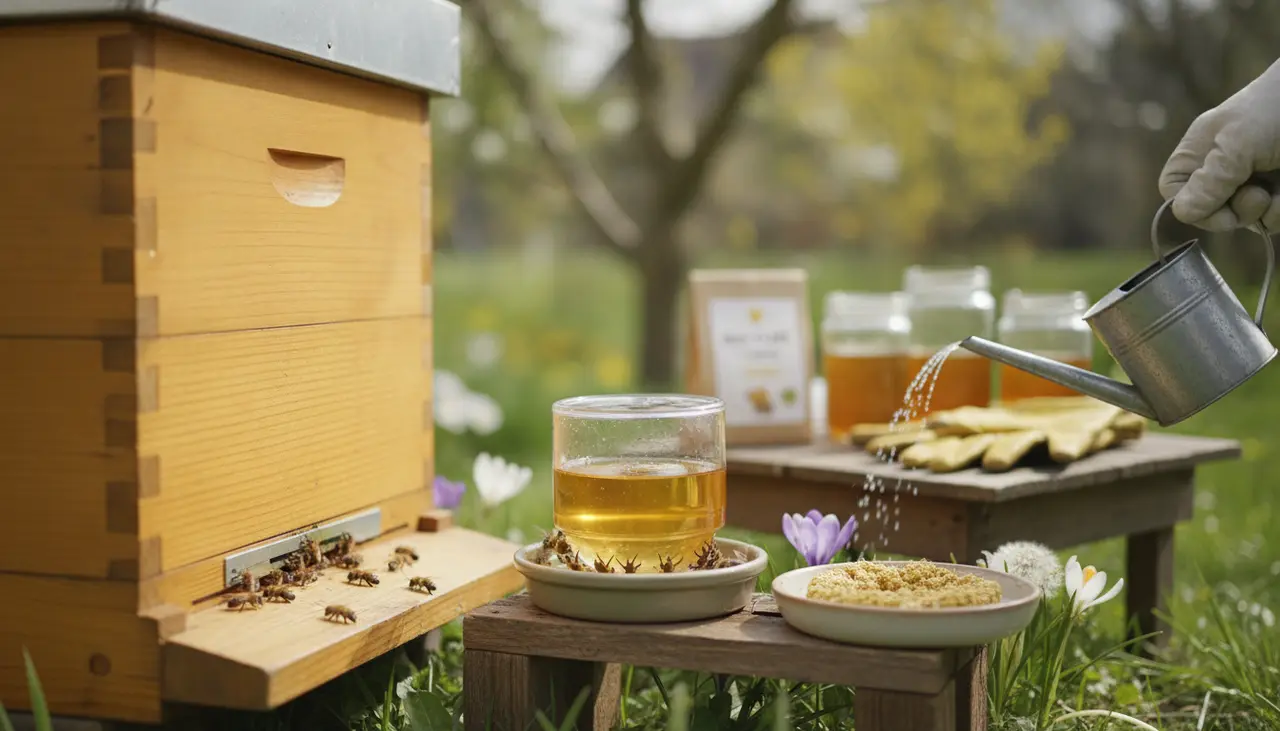
In early spring, feeding your bees is about providing a "bridge" between their dwindling winter stores and the first major nectar flow. The best approach is to use a 1:1 sugar syrup ratio (one part sugar to one part water) to stimulate the queen to lay eggs, combined with pollen patties to provide the protein necessary for raising new brood.
By mimicking the arrival of nectar, you encourage the colony to expand its population just in time to take full advantage of the spring blooms. However, timing is everything; you want to start feeding when temperatures are consistently above 50°F (10°C) so the bees can break cluster and consume the liquid without chilling the hive.
Is This Guide for You?
If you are a hobbyist beekeeper who has successfully overwintered a colony—or if you are a beginner preparing for your first spring—this guide is designed for you. We aren't looking for industrial-scale solutions; we are looking for practical, manageable ways to ensure your "girls" are healthy, fed, and ready to grow as the days get longer.
Why Spring Feeding Matters
Early spring is actually the most dangerous time for a honeybee colony. As the queen begins to ramp up brood production, the colony’s energy requirements skyrocket. If the weather is too cold for foraging or if the flowers haven't quite opened yet, a colony can starve even though spring has technically arrived.
When you are navigating the first year of beekeeping, understanding the "Starvation Gap" is one of the most vital lessons you will learn.
Choosing the Right Feeder for Spring
Not all feeders are created equal. In the spring, you want a feeder that is easy for the bees to access without losing too much hive heat.
| Feeder Type | Best For | Pros | Cons |
|---|---|---|---|
| Frame Feeder | Cold climates / Small colonies | Sits inside the hive near the cluster; stays warm. | Can lead to bee drowning if not used with a ladder/float. |
| Top Feeder | High-volume feeding | Large capacity; easy to refill without opening the brood nest. | Requires an extra hive body or specialized rim. |
| Entrance Feeder | Monitoring intake | Easy to see when it's empty from outside the hive. | Can trigger "robbing" from other colonies; syrup gets cold. |
Frame Feeders (The Warm Choice)
Frame feeders (or division board feeders) replace one of your wooden frames inside the brood box. Because they sit right next to the bees, the syrup stays at hive temperature. This is fantastic for those fickle spring weeks where it's sunny one day and snowing the next.
Top Feeders (The "Set It and Forget It" Choice)
If you have a busy schedule and can’t check your hives every two days, a top feeder is a lifesaver. These sit above the inner cover. They hold a large volume of syrup—often up to two gallons—which is perfect for a hungry, growing colony. When looking for essential beekeeping tools every newbie needs, a reliable top feeder is often at the top of the list for ease of use.
The Recipe: 1:1 Spring Syrup
In the fall, we feed a thick 2:1 syrup to help bees store "honey" for winter. In the spring, we want the opposite. We want a thin, watery syrup that mimics nectar.
How to make it:
- Measure 4 cups of white granulated sugar.
- Measure 4 cups of hot water (not boiling).
- Stir until the sugar is completely dissolved.
- Let it cool to room temperature before adding it to your feeder.
Pro-Tip: Avoid using brown sugar, molasses, or raw sugar. These contain solids that honeybees cannot digest, which can cause dysentery in the hive.
Protein: The Secret Ingredient
Sugar syrup provides the "fuel" (carbohydrates), but bees need "building blocks" (protein) to grow new bees. If your area hasn't seen its first pollen-heavy blooms (like dandelions or maples), you should consider a pollen patty.
Place a small patty directly on top of the frames where the bees are most active. The bees will consume this to create "bee milk" or royal jelly to feed the developing larvae.
Common Beginner Mistakes to Avoid
- Feeding too early: If you provide liquid syrup while it is still freezing at night, you can increase the humidity in the hive to dangerous levels. Wait until the "deep freeze" is over.
- Neglecting the "Robbing" risk: In early spring, food is scarce. If you use an entrance feeder, the smell of syrup might attract stronger colonies from miles away to come and steal from your hive. If you see "fighting" at the entrance, switch to an internal feeder immediately.
- Forgetting to clean: Sugar syrup can ferment and grow mold in the sun. If the syrup smells sour or looks cloudy, dump it out, scrub the feeder, and start fresh.
Spring Feeding FAQ
How long should I keep feeding? Generally, you should stop feeding as soon as the "major nectar flow" begins. You'll know it's time when the bees stop taking the syrup from the feeder because they prefer the real thing from the flowers.
Will feeding syrup ruin my honey? If you leave the feeder on while you have your honey supers (the boxes where you harvest honey) on the hive, the bees will store the syrup in those frames. To ensure pure honey, always remove feeders before adding your honey supers.
Do I need to add essential oils? Many hobbyists like to add a drop of lemongrass or spearmint oil (or commercial products like Honey B Healthy) to their syrup. This can help stimulate feeding and may have some antibacterial benefits, but it’s not strictly necessary for a healthy hive.
Next Steps for Your Apiary
Once your bees are fed and the population is booming, your next job is to make sure they have enough room to grow! Keep an eye on your brood box—if it’s 80% full of bees and brood, it might be time to add your next box.
Feeding in the spring is one of the most rewarding parts of the hobby. Watching the colony transform from a quiet winter cluster into a buzzing, vibrant force of nature is truly magical. Stay observant, keep those feeders full, and you'll be set for a fantastic honey season.