
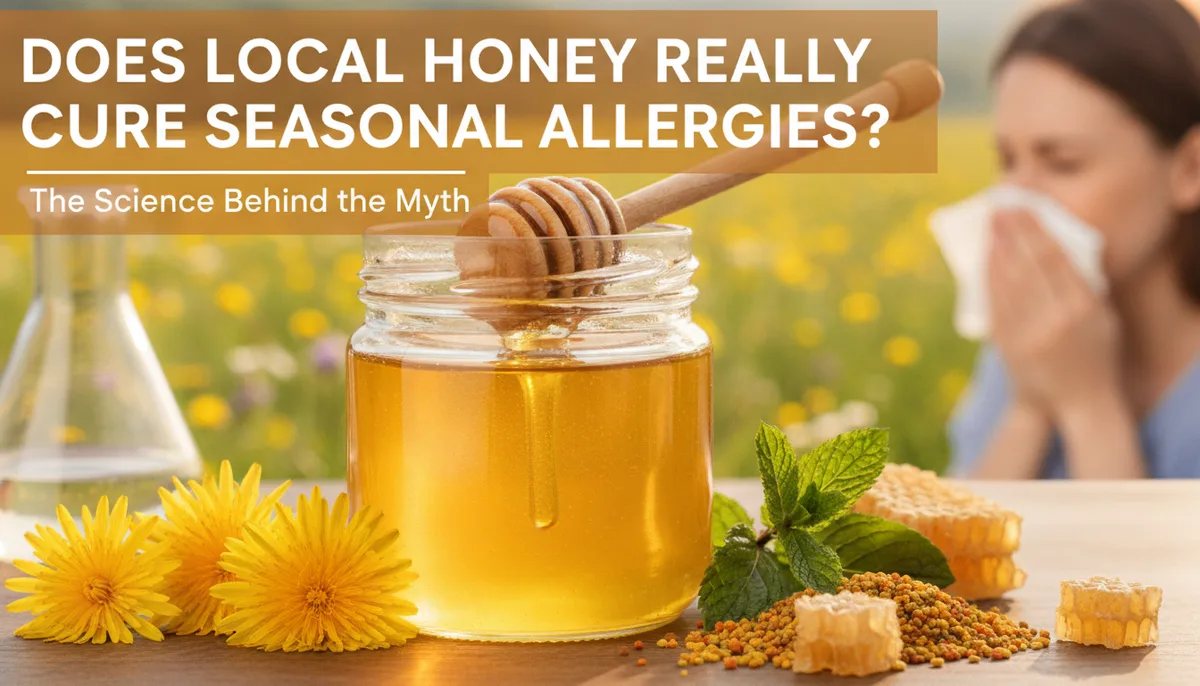
Does Local Honey Really Cure Seasonal Allergies? The Science Behind the Myth
For decades, one of the most persistent pieces of "folk wisdom" in the health and beekeeping communities has been the idea that a spoonful of local honey can cure seasonal allergies. The logic seems sound on the surface: bees collect pollen, that pollen ends up in the honey, and by consuming it, you are essentially "vaccinating" yourself against the local environment.
It is a romantic notion—the idea that the very environment causing us distress also provides the cure through the hard work of the honey bee. However, when we strip away the sentimentality and look at the botanical and biological realities, the "honey for allergies" theory begins to crumble. For those Navigating the First Year: A Comprehensive Guide to Transitioning from Neophyte to Confident Beekeeper, understanding the truth behind these claims is essential for providing accurate information to customers and friends.
The Pollen Problem: Not All Dust is Created Equal
To understand why honey is largely ineffective for seasonal allergies, we must first look at the types of pollen that exist in nature. Not all pollen is the same, and the pollen that makes you sneeze is rarely the pollen found in your honey jar.
Entomophilous vs. Anemophilous Pollen
Plants have evolved different ways of moving their genetic material.
- Entomophilous Pollen: This is "insect-loving" pollen. It is heavy, sticky, and full of protein. It is designed to cling to the legs and bodies of bees, butterflies, and other pollinators. Because it is heavy, it does not float in the air.
- Anemophilous Pollen: This is "wind-loving" pollen. This is the culprit behind your itchy eyes and runny nose. It is produced by grasses, weeds (like ragweed), and many trees (like oak or cedar). This pollen is incredibly light and designed to be carried for miles by the slightest breeze.
Bees are attracted to bright, nectar-producing flowers. These flowers produce the heavy, sticky entomophilous pollen. Since bees rarely visit wind-pollinated plants (which usually lack showy flowers or nectar), the specific pollens that trigger hay fever are almost never present in honey in any significant quantity.
The Missing Link in the Honey Jar
Because seasonal allergies are almost exclusively triggered by wind-borne pollens, and honey is primarily composed of nectar from insect-pollinated flowers, there is a fundamental disconnect. When you eat local honey, you are consuming pollen from clover, blackberries, or fruit trees—pollens that almost never cause allergic rhinitis. You are not, however, consuming the ragweed or oak pollen that is actually making you miserable.
raw local wildflower honey
The Immunotherapy Fallacy: Why Honey Isn't a Vaccine
The core argument for honey as an allergy treatment is based on the principle of immunotherapy. In clinical allergy shots, a doctor injects tiny, controlled amounts of a specific allergen into a patient to desensitize their immune system over time.
While the theory behind honey is similar, it fails in three critical areas:
1. Lack of Standardization
For immunotherapy to work, the dosage must be precise and consistent. Honey is a natural product that varies wildly from hive to hive and season to season. One jar might have a trace amount of a certain pollen, while the next jar from the same beekeeper has none. There is no way to regulate the "dose" you are receiving.
2. The Wrong Delivery Method
Allergy shots are typically injected or administered sublingually (under the tongue) in a way that bypasses the digestive system's harsh environment. When you eat honey, the proteins in the pollen are subjected to stomach acid and digestive enzymes, which can break down the very allergens that are supposed to be "training" your immune system.
3. The Quantity Issue
Even if honey did contain the correct type of pollen, the concentration is usually far too low to trigger an immune response that leads to desensitization. You would likely have to consume massive, unhealthy amounts of sugar (honey) to get even a fraction of the allergen found in a single medical dose.
What the Research Actually Says
When we move away from anecdotes and toward peer-reviewed science, the evidence for honey as an allergy treatment is remarkably thin.
Several studies have attempted to prove the link, but most have failed to show a statistically significant difference between honey and a placebo. In one famous study conducted by the University of Connecticut, researchers divided allergy sufferers into three groups: one group ate local unpasteurized honey, one ate nationally distributed pasteurized honey, and one ate a corn syrup "placebo" flavored like honey.
The results were clear: none of the groups reported a significant reduction in symptoms compared to the others. The group eating the corn syrup felt just as much (or as little) relief as the group eating the "medicinal" local honey.
If you are looking to produce your own honey to test these theories yourself, starting with the right equipment is key. Check out the Best Beginner Beekeeping Kits of 2024: Start Your Backyard Apiary with Confidence to get your hive established correctly.
The Power of the Placebo and the "Local" Allure
If the science doesn't support it, why do so many people swear it works? There are several psychological and physiological reasons for the persistence of this myth.
The Placebo Effect
The placebo effect is a powerful phenomenon. If a person believes that a local, natural remedy will help them, they are much more likely to perceive a reduction in symptoms. Because allergies fluctuate based on weather, rain, and daily pollen counts, it is easy for a person to attribute a "good day" to the honey they ate that morning, even if the real cause was a light rain that washed the pollen out of the air.
Soothing the Symptoms, Not the Cause
Honey is an excellent demulcent. It coats the throat and can significantly reduce coughing and irritation. Many people with seasonal allergies suffer from post-nasal drip, which leads to a sore throat and a persistent cough. When they take honey, their throat feels better and their cough subsides. They may interpret this symptomatic relief as a "cure" for their allergies, even though their immune system is still overreacting to the pollen in the air.
The "Natural" Bias
There is a strong cultural trend toward "natural" and "local" products. We want to believe that our local environment provides for us. This bias makes us more likely to share success stories and ignore the times the remedy failed, leading to a skewed public perception of honey's efficacy.
Safe Ways to Enjoy Honey (And When to See a Doctor)
While honey may not be the allergy miracle many hope for, it remains a healthy and delicious alternative to refined sugars, provided it is used correctly.
Who Should Avoid Honey?
- Infants: Never give honey (raw or otherwise) to children under one year old due to the risk of botulism.
- Severe Allergy Sufferers: In rare cases, people with extreme sensitivities to specific pollens can have an anaphylactic reaction to raw honey. If you have a history of severe allergic reactions, consult an allergist before using honey as a supplement.
- Diabetics: Honey is still sugar. It will spike blood glucose levels and should be consumed with the same caution as any other sweetener.
Real Allergy Solutions
If your seasonal allergies are interfering with your quality of life, it is better to rely on proven methods:
- HEPA Filters: Use high-quality air filters in your home to remove wind-borne pollen.
- Nasal Saline Rinses: Physically washing the pollen out of your nasal passages is often more effective than any oral supplement.
- Consult an Allergist: Professional testing can identify exactly which pollens are triggering your symptoms, allowing for targeted treatment.
Conclusion: Appreciating Honey for What It Is
Honey is a miracle of nature. It is a complex substance filled with antioxidants, enzymes, and unique flavor profiles that reflect the landscape from which it came. It is a world-class cough suppressant and a staple of the sustainable kitchen.
However, we do a disservice to the bees and the craft of beekeeping when we assign "magical" properties to honey that aren't supported by science. By understanding the botanical difference between the pollen in the hive and the pollen in the air, we can appreciate honey for its true benefits without spreading misinformation.
Whether you are harvesting your own crop with the Best Honey Extractors for Small Scale Harvests: A Backyard Beekeeper’s Guide or buying from a local farm, enjoy honey for its flavor and its history—just keep your antihistamines handy during ragweed season.