
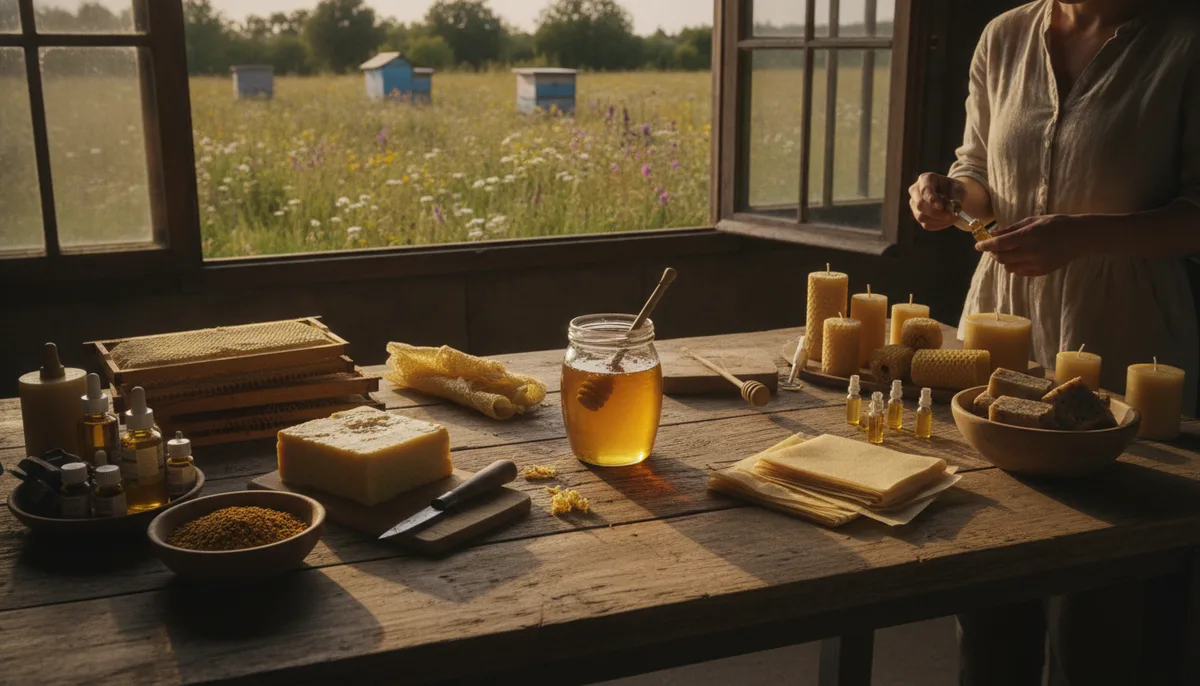
Beyond the Honey Jar: Unlocking the Full Potential of Your Hive’s Bounty
For many aspiring apiarists, the journey begins with a single, golden image: a row of amber jars gleaming in the sunlight on a pantry shelf. It is the quintessential reward for a season of hard work, stings, and stewardship. However, as one moves through Navigating the First Year: A Comprehensive Guide to Transitioning from Neophyte to Confident Beekeeper, a profound realization often sets in. The honey bee is not merely a honey machine; it is a master chemist, an architect, and a provider of a diverse array of biological treasures.
While honey remains the primary focus for most, the experienced beekeeper eventually learns that the hive is a zero-waste ecosystem. Every substance produced within those wooden walls—from the structural wax to the medicinal propolis—has a practical application in the home, the kitchen, or the garden. Moving beyond the honey jar allows you to fully honor the labor of your bees while discovering a more sustainable, self-sufficient lifestyle.
The Culinary Alchemist: Elevating the Kitchen with Honey
Honey is far more than a simple sweetener to be stirred into tea. It is a complex ingredient with a profile that varies wildly depending on the floral source. A mild clover honey offers a different culinary experience than the deep, malty notes of buckwheat or the citrusy tang of orange blossom.
Master the Art of Sugar Substitution
When you begin using your harvest in baking, you must account for honey’s unique chemistry. Honey is hygroscopic, meaning it attracts and holds moisture. As a general rule of thumb, you can replace sugar with honey using a ratio of one cup of honey for every one and one-quarter cups of sugar.
Because of honey's liquid state, you should slightly reduce the other liquid ingredients in your recipe (such as milk or water) to maintain the proper consistency. This substitution works exceptionally well in homemade breads, where honey provides a softer crumb and a longer shelf life, as well as in granola and oatmeal.
Signature Hive-to-Table Recipes
If you are looking to showcase your harvest at the next family gathering, consider these staples that move beyond the basic drizzle:
- Whipped Honey Butter: This is perhaps the simplest way to elevate a meal. Mix one cup of softened butter with ¼ cup of honey. Whip the ingredients together until light and airy. It is a revelation when spread on warm cornbread or morning biscuits.
- The Ultimate Honey Mustard: Forget store-bought dressings. Combine ¼ cup of honey with 2 tablespoons of your favorite coarse mustard. Add 2 tablespoons of apple cider vinegar and ½ cup of olive oil. Whisk thoroughly and refrigerate. This serves as an excellent glaze for roasted vegetables or a vibrant salad dressing.
- The Savory Honey Marinade: Honey’s sugars caramelize beautifully under heat. For a versatile marinade for chicken or pork, mix ⅓ cup of honey with three crushed cloves of garlic and ¼ cup of soy sauce.
The Natural Apothecary: Honey’s Role in Wellness
Long before the advent of modern refrigeration or synthetic ointments, honey was a cornerstone of the human medicine chest. Its longevity is legendary; archaeologists have unearthed containers of honey in ancient tombs that, despite being thousands of years old, remain technically edible.
Why Honey Preserves
The secret to honey’s "immortality" lies in its physical properties. It has an exceptionally low moisture content and a naturally acidic pH level. This combination creates a hostile environment for most microorganisms, which require moisture and a neutral pH to thrive.
Minor Skin Applications
In a domestic setting, these same properties make honey a useful tool for minor skin care. Many beekeepers use raw honey on bandages for minor cuts, scrapes, or small burns. In many personal experiences, it performs as well as commercial salves by providing a protective barrier and maintaining a moist environment conducive to healing.
However, it is vital to distinguish between backyard honey and medical-grade products. While raw honey is fascinating for home use, any significant wound or burn should be evaluated by a healthcare professional. For those interested in standardized care, Activon Medical Grade Manuka Hon... is often used in clinical settings for its consistent antibacterial markers.
The Beekeeper’s Secret Garden
The relationship between bees and the garden is a two-way street. While the bees gather nectar from your flowers, the products of the hive can be returned to the soil to help your garden thrive.
A Natural Rooting Hormone
If you enjoy propagating your own plants from cuttings, you might be surprised to find that honey is an excellent rooting aid. Before placing a fresh cutting into your rooting medium (like soil or vermiculite), dip the cut end into a small amount of honey. The honey serves two purposes: it seals the "wound" of the plant to keep it moist, and its antibacterial properties help prevent the cutting from rotting before it can establish its own root system.
Managing Pests with Hive Waste
Even the "waste" from your honey processing can be put to work. Residual honey that is too dark or contains too much wax debris for bottling can be used to create effective traps for wasps and yellow jackets.
To create a simple trap, take a two-liter plastic soda bottle and cut it around the circumference where the curve of the top meets the straight side. In the bottom portion, add:
- One banana peel
- One cup of vinegar
- A generous dollop of waste honey or sugar-water residue
Invert the top of the bottle (the funnel part) and place it back into the bottom. The pests are attracted to the scent of the fermenting fruit and honey but are unable to navigate back out of the funnel.
Beeswax: The Architecture of the Hive
Once the honey is extracted, beekeepers are often left with a significant amount of "cappings"—the thin layer of wax bees use to seal the honey cells. This wax is a precious commodity that requires Essential Beekeeping Tools Every Newbie Needs: Beyond the Hive and Suit to process efficiently, such as a wax melter or a fine-mesh straining system.
From Hive to Home Decor
Beeswax is a versatile material that can be transformed into a variety of high-value products:
- Clean-Burning Candles: Unlike paraffin candles, which are petroleum-based, beeswax candles are natural and produce a subtle honey scent. They also have a higher melting point, meaning they burn longer and drip less.
- Furniture Polish: A traditional mix of melted beeswax and mineral oil (or olive oil) creates a food-safe polish that revitalizes wood and provides a beautiful, natural sheen.
- Cosmetic Applications: Beeswax is the "body" of many natural lip balms, lotions, and solid perfumes. It provides a protective barrier for the skin while allowing it to breathe.
Understanding the Full Spectrum of Hive Products
As you grow in your craft, you may begin to explore the more specialized products of the hive. These require a bit more finesse to harvest but offer unique benefits.
Propolis: The Bee Glue
Propolis is a resinous mixture that bees collect from tree buds. They use it to seal cracks and disinfect the hive. Often referred to as "bee glue," it is highly antimicrobial. Many beekeepers harvest propolis by using specialized screens, later turning it into tinctures or throat sprays.
Pollen and Royal Jelly
Bee pollen is often collected using a trap at the hive entrance. It is considered a "superfood" by many due to its high protein and vitamin content. Royal jelly, the substance fed to larvae and the queen, is even more specialized and is prized in the cosmetic and supplement industries for its purported anti-aging properties.
The Science of the Solid: Storing Your Harvest
A common concern for new beekeepers is seeing their liquid gold turn into a gritty, solid mass. This is not a sign of spoilage, but a natural chemical process. Understanding The Science of the Solid: Understanding Honey Crystallization and Critical Winter Hive Maintenance is essential for any beekeeper who wants to utilize their honey year-round.
Crystallized honey is actually preferred for making "creamed honey"—a spreadable, smooth version of honey that doesn't drip off your toast. By controlling the crystallization process, you can create a gourmet product that often sells for a premium at local markets.
The Zero-Waste Hive
The shift from being a "honey harvester" to a "hive steward" is a significant milestone in a beekeeper's life. It represents a deeper connection to the biology of the Apis mellifera and a greater respect for the immense effort they put into every gram of wax and drop of nectar.
Whether you are whipping up a batch of honey mustard for a summer barbecue, healing a garden cutting with a dab of honey, or lighting a beeswax candle on a cold winter night, you are participating in a tradition that spans millennia. The honey jar is just the beginning; the true bounty of the hive is limited only by your curiosity and creativity.