
Beyond the Clover: Lessons in Forage Resilience and the Wildflower Pivot
The Anatomy of a Failed Season
In the world of commercial and hobbyist beekeeping, there is a specific kind of silence that settles over a field when the expected bloom fails to materialize. For Kara Brook Brown, that silence arrived in May on a forty-acre block on Maryland’s Eastern Shore. For nearly two decades, this land had been the reliable engine of her honey production, anchored by a robust stand of clover.
Clover is more than just a ground cover; it is the financial and biological anchor of the season. In a standard year, this single crop provides the heaviest summer flow, often yielding between 100 and 150 pounds of premium honey per hive. When that stand fails—not just coming in thin or slow, but failing entirely—the arithmetic of the apiary becomes grim.
The failure of a primary nectar source forces a beekeeper to confront the volatility of nature. Whether it is the result of erratic weather patterns or local wildlife interference, a lost anchor crop can jeopardize the entire year's harvest. However, as this season proved, the difference between a total loss and a surprising recovery often lies in the diversity of the landscape and the resilience of the surrounding ecosystem.
Growing the Bloom: The Strategy of Stationary Beekeeping
Most large-scale beekeeping operations are migratory; they chase the bloom across state lines, moving hives from almond groves to orange blossoms. The philosophy at Hive & Honey is different. By farming 102 acres specifically for the bees, the operation focuses on "growing the bloom" rather than chasing it.
This stationary approach requires a deep commitment to land management. Approximately 40 acres are seeded annually to ensure a continuous succession of nectar and pollen. This strategy offers several advantages:
- Reduced Stress: Bees are not subjected to the physical toll of long-distance transport.
- Chemical Control: By managing the land themselves, beekeepers can ensure a chemical-free environment, which is vital for colony health.
- Flavor Profiles: Beekeepers can curate specific floral sources to create unique, site-specific honey varieties.
Transitioning to this level of land management is a steep learning curve. For those just starting, Navigating the First Year: A Comprehensive Guide to Transitioning from Neophyte to Confident Beekeeper provides essential context for the long-term commitment required to manage both bees and their environment.
The Seed Selection: Balancing Flavor and Growth
The mix of forage on the farm has evolved through years of trial and error. Every plant added to the rotation must be evaluated not just for its attractiveness to bees, but for its impact on the final product—the honey.
The Clover Backbone
Dutch white and yellow clovers remain the gold standard for high-volume production. They produce a mild, light honey that is a perennial favorite. Crimson clover is often used as a winter cover, providing an early spring burst of color and nutrition. However, as the recent season showed, clover is sensitive to the "Canada goose tax"—migrating geese can easily strip a field of half its seed before it has a chance to germinate.
Buckwheat and Bee Balm
Buckwheat is a valuable tool because it establishes rapidly, but it comes with a caveat. It produces a very dark, robust honey with a flavor profile similar to molasses. While some connoisseurs seek it out, it can be polarizing for the average consumer. Bee balm (Monarda), on the other hand, is a farm favorite. It is a hardy perennial that stretches across the property, blooming late into the season when other sources might be drying up.
The Cautionary Tale of Mustard
Diversity is important, but not all blooms are beneficial. Two years of experimenting with mustard revealed a significant drawback. While the bees thrived on it and the plant was highly resilient, it began to take over the fields by the third year. More importantly, it negatively impacted the flavor of the honey. This highlights the importance of researching every component of a seed mix before sowing.
For those looking to establish their own pollinator habitats, starting with high-quality, regionally appropriate seeds is critical.
Environmental Variables and the "Geese Tax"
Even with the best planning, the beekeeper is at the mercy of the elements. The failure of the clover stand in Maryland was a perfect storm of environmental factors.
First, the "Canada goose migration" acts as a natural hurdle. Overseeding is a requirement to account for the heavy grazing of migratory birds. Second, the weather in the spring was uncharacteristically volatile. Early heat waves were followed by as many as four hard freezes. This fluctuation can confuse the germination cycle, causing seeds to sprout prematurely only to be killed by a sudden drop in temperature.
Understanding these patterns is essential for any apiary manager. The relationship between flight activity and weather is nuanced; for instance, sudden temperature drops don't just kill plants—they keep bees grounded during critical forage windows. For a deeper look at these dynamics, see Weather to Fly: Understanding Meteorological Impacts on Honey Bee Activity.
Chemical-Free Land Management and Equipment
Maintaining 102 acres without the use of conventional herbicides or GMO seeds is an expensive and labor-intensive endeavor. In the Chesapeake region, "no-till" farming is the standard to protect the watershed, but weed control in a chemical-free system can cost three to five times more than conventional methods.
Because local contract farmers are often unwilling to work with non-GMO, chemical-free protocols, the farm had to invest in its own equipment. This includes tractors, seeders, and mowers capable of managing large acreage. This level of investment shifts the operation from "beekeeping" into the realm of "agronomy." To monitor the health of the soil and ensure the best start for your forage, a reliable soil testing kit is an indispensable tool.
The Wildflower Pivot: Resilience Through Diversity
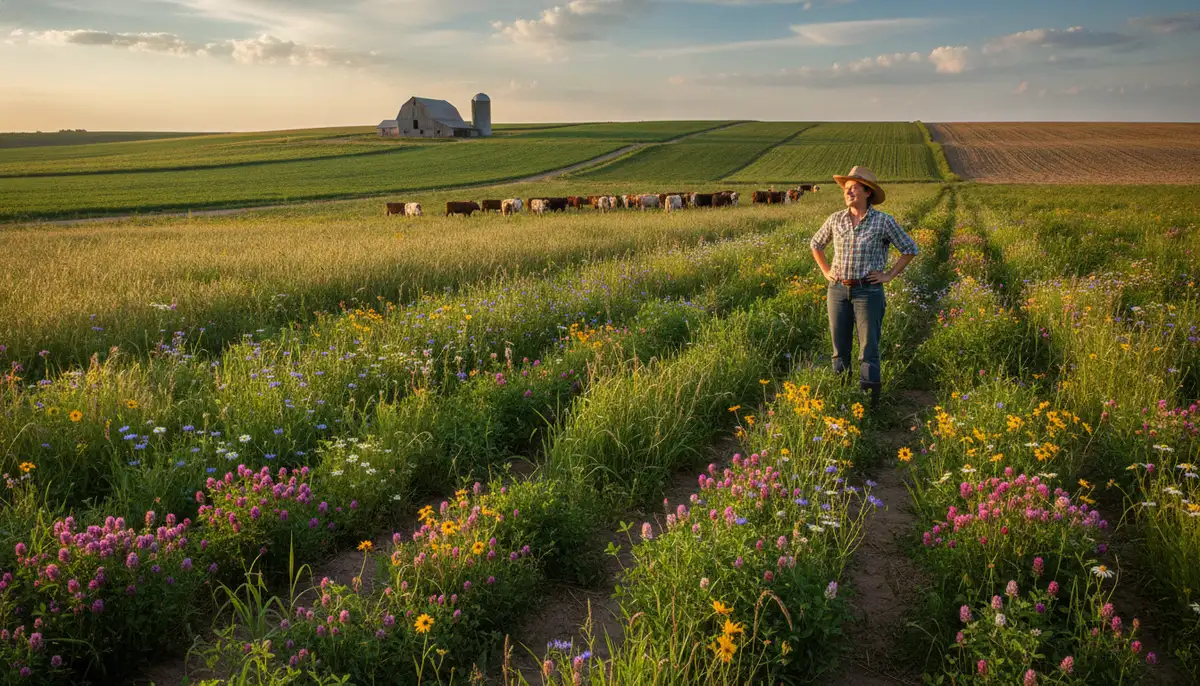
When the clover failed, the season looked like a financial disaster. However, nature provided a "plan B" in the form of indigenous wildflowers.
The same weather that destroyed the clover—intense heat followed by torrential thunderstorms—created the perfect conditions for a wildflower explosion. Because the farm had worked with consulting ecologists like Jeff Wolinski to build diverse wildflower sections, the infrastructure for a secondary flow was already in place.
Sections of the farm that were designed to hold water or featured sturdy indigenous regional flowers began to bloom and rebloom with every storm. Even non-native experiments, like borage, which usually fade after a week, stayed in bloom for a month. The result was a honey crop that was different from the usual clover-heavy harvest but equally valuable. This "wildflower pivot" saved the season, proving that ecological diversity is the best insurance policy a beekeeper can have.
Lessons for the Modern Apiary
The year the clover didn’t come taught several vital lessons for beekeepers at any scale:
- Diversify Your Forage: Relying on a single "anchor crop" is a risk. By planting a mix of perennials, annuals, and indigenous wildflowers, you create a buffer against crop-specific failures.
- Observe and Adapt: The ability to pivot requires an understanding of your land's specific ecology. This means knowing which areas hold water, which are prone to frost, and how local wildlife interacts with your plantings.
- Invest in the Long Term: Whether it's buying your own equipment or investing in a multi-year wildflower restoration project, the most resilient apiaries are those that treat the land as a partner rather than just a platform.
As the climate becomes increasingly unpredictable, the "wildflower pivot" will likely become a more common necessity. By growing the bloom and fostering a diverse landscape, beekeepers can ensure that even when the clover fails, the hives—and the harvest—will survive.