
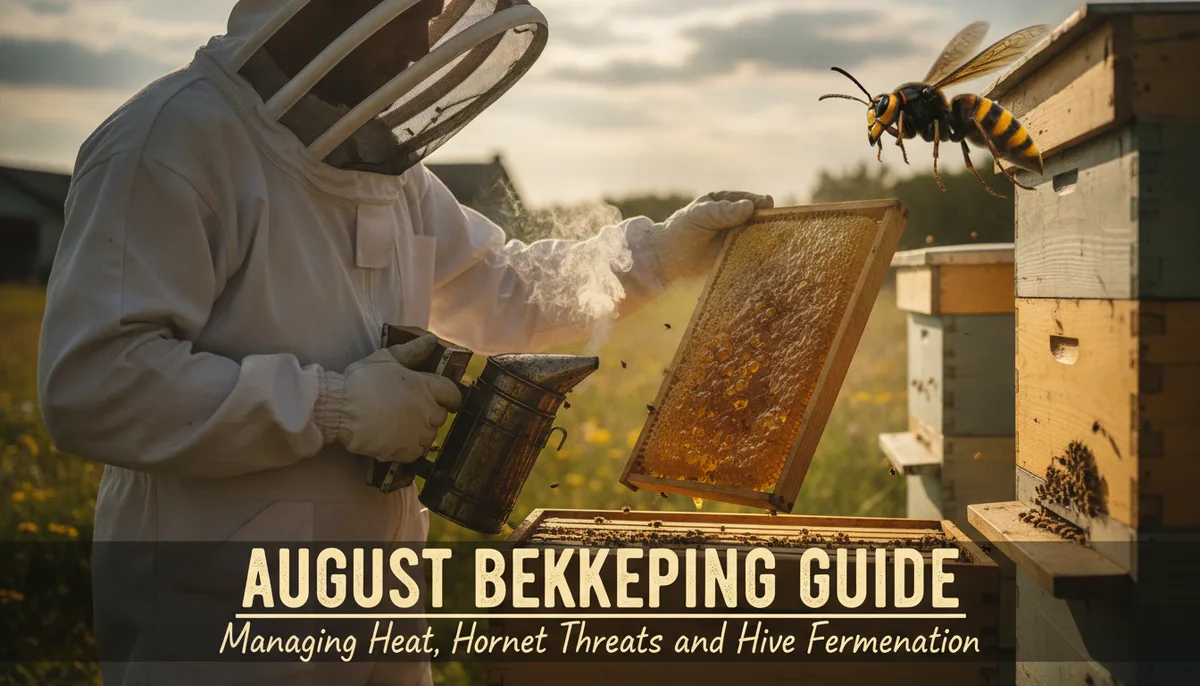
August Beekeeping Guide: Managing Heat, Hornet Threats, and Hive Fermentation
August is often referred to as the "pivot month" in the beekeeping calendar. While the sun remains high and the temperatures often reach their annual peak, the internal dynamics of the honey bee colony are already beginning to shift toward winter preparation. This transition period requires a delicate balance of intervention and observation.
Drawing from the latest insights in the August 2026 issue of the American Bee Journal, we explore the critical themes of summer management: from the tactical necessity of heat mitigation to the looming threat of invasive predators and the biological wonder of hive fermentation.
Staying Cool: The Art of Summer Inspections
As Tara Chapman highlights in her recent work, August inspections are a test of endurance for both the bees and the beekeeper. When the ambient temperature climbs, the colony's primary focus shifts from foraging to climate control. Bees utilize a process called evaporative cooling, where they spread water across the combs and fan their wings to lower the internal temperature.
For the beekeeper, performing a full breakdown of the hive in 95°F weather can be counterproductive if not handled with care.
Practical Strategies for Heat Management
To maintain hive health without causing heat stroke, consider the following:
- Timing is Everything: Aim to open your hives at the break of dawn. By 10:00 AM, most regions are already too hot for a comfortable deep-dive inspection.
- Hydration Stations: If your bees have to fly half a mile for water, they are burning energy that should be spent on cooling. Place a watering hole with landing stones or floating corks within 20 feet of the apiary.
- Ventilation vs. Insulation: While many beekeepers open the top notch for ventilation, modern research suggests that high-R-value insulation on the hive cover can actually keep the hive cooler by blocking the sun's radiant heat, much like an insulated attic in a home.
If you are still finding your footing with these seasonal shifts, Navigating the First Year: A Comprehensive Guide to Transitioning from Neophyte to Confident Beekeeper offers a roadmap for understanding these environmental stressors.
ventilated beekeeping suit with 3D mesh
The Hornet Threat: Why Action is Required Now
Randy Oliver has issued a clarion call regarding the "Hornet Situation." While American beekeepers have spent decades focused almost exclusively on the Varroa destructor mite, a new predator is demanding our attention: the Yellow-legged hornet (Vespa velutina) and the potential arrival of the Northern Giant Hornet.
These predators do not just kill individual bees; they can "lock down" a hive. When hornets hover at the entrance, foragers become too intimidated to leave, leading to a "foraging paralysis" that can starve a colony even during a nectar flow.
Monitoring and Defense
Community-wide monitoring is the only way to prevent these invasive species from establishing a permanent foothold. Beekeepers are encouraged to:
- Install Monitoring Traps: Use specialized traps that allow smaller native insects to escape while capturing larger hornets.
- Entrance Guards: In areas where hornets are confirmed, entrance reducers or "muzzles" can provide a physical barrier that allows bees to exit while preventing hornets from entering.
This emerging crisis mirrors other biological threats we've faced. For a deeper look at how international pests impact domestic beekeeping, see our analysis on Tropilaelaps Redux: Preparing for the Next Great Threat to American Beekeeping.
The Classroom: Beekeeping Basics with Jamie Ellis
Education is the beekeeper's strongest tool. Jamie Ellis continues to emphasize the "Classroom" approach, which focuses on the fundamental biology of the honey bee. In August, the "basics" involve understanding the production of "winter bees."
The bees being raised in late August and September are physiologically different from the "summer bees" that forage in June. These winter bees have larger fat bodies (vitellogenin stores) which allow them to live for six months rather than six weeks. If Varroa mite levels are high in August, these winter bees will be born compromised, leading to the dreaded "late autumn collapse."
Sourdough and the Hive: The Science of Lactic Fermentation
One of the more fascinating intersections of culinary art and apiculture is the role of lactic fermentation. Graham Kingham explores how the same principles that give sourdough its tang are at work inside the honeycomb.
When bees bring pollen back to the hive, they don't eat it raw. They pack it into cells, mix it with a small amount of honey and glandular secretions, and allow it to ferment. This produce is known as "bee bread."
Why Fermentation Matters
- Preservation: The lactic acid produced by beneficial bacteria lowers the pH of the pollen, preventing spoilage and the growth of harmful fungi.
- Bioavailability: Fermentation breaks down the tough outer shell (exine) of the pollen grain, making the proteins and lipids inside more accessible to the bees' digestive systems.
- Probiotic Health: A healthy hive is a microbial ecosystem. Just as humans use sourdough to improve gut health, bees rely on these microbes to maintain their immune systems.
sourdough starter kit with glass jar and thermometer
The Economics of the Apiary: At What Price?
As part of "The Curious Beekeeper" series, the industry is currently grappling with the rising costs of equipment, fuel, and treatments. Many hobbyists and sideliners hesitate to raise their prices, fearing they will lose customers. However, underpricing honey devalues the labor-intensive nature of beekeeping and the ecological service bees provide.
Factors to Consider in Your Pricing Strategy:
- The Cost of Loss: Are you factoring in the 30-40% annual colony loss that is now standard in the industry? Your honey sales must cover the cost of replacing those packages or nucs.
- Specialization: Honey that is raw, local, and varietal (like Sourwood or Clover) commands a premium over "wildflower" blends.
- Value-Added Products: August is the perfect time to begin planning for beeswax candles, propolis tinctures, and fermented honey garlic, which often have higher profit margins than jars of honey alone.
A Bee in the Ear: Lessons in Observation
Peter Sieling’s "A Bee in the Ear" reminds us that beekeeping is as much about listening and feeling as it is about technical management. An August hive has a specific sound—a low, steady hum of thousands of wings fanning for ventilation. A high-pitched, frantic whine can indicate queenlessness or a severe water shortage.
As you move through your apiary this month, take a moment to stand still. Observe the orientation flights of the young bees in the afternoon. Watch for the "washboarding" behavior on the front of the hive, a rhythmic movement that scientists still don't fully understand but which signals a cohesive, healthy colony.
Conclusion: Preparing for the Final Stretch
August beekeeping is not for the faint of heart. It requires physical stamina to work in the heat and the mental foresight to prepare for a winter that is still months away. By focusing on heat mitigation, staying vigilant against invasive hornets, and respecting the complex microbial life within the hive, you set your colonies up for success.
The lessons from the August 2026 American Bee Journal remind us that we are not just "keepers" of bees, but stewards of a complex biological system that requires our constant learning and adaptation.