
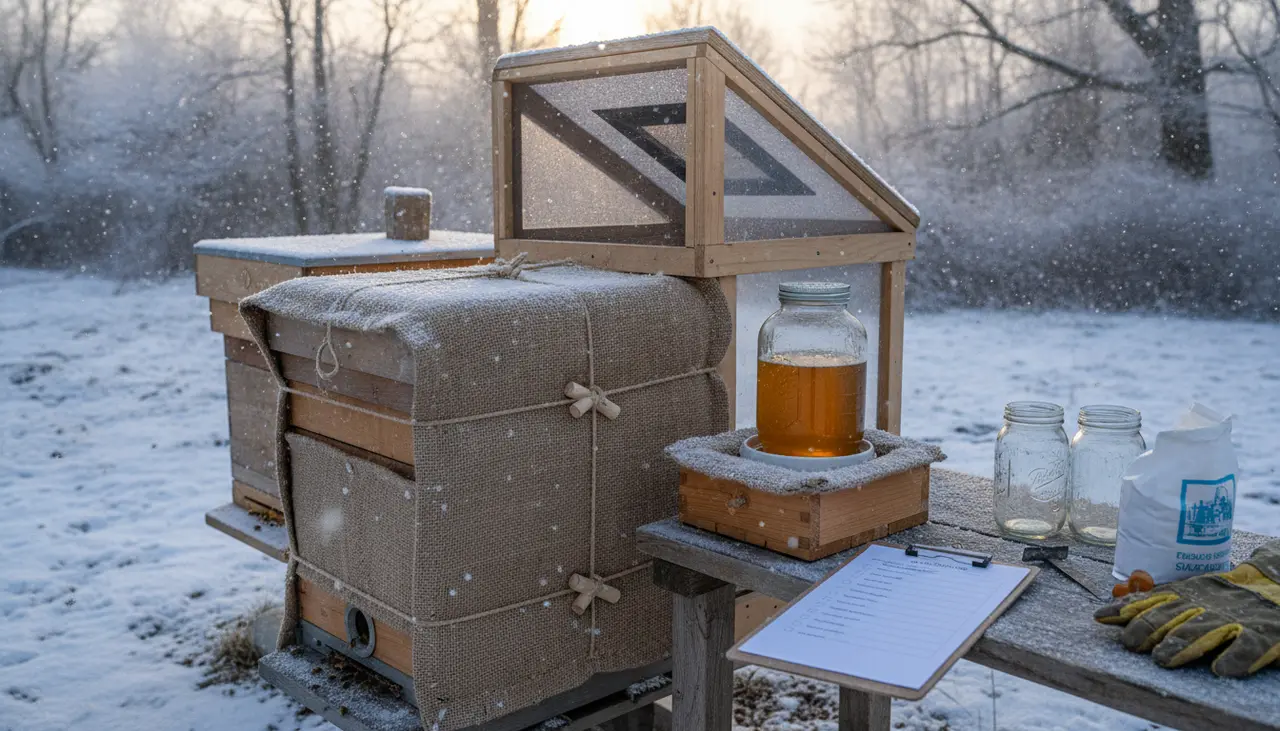
Winterizing Your Hive: A Checklist for Success
Disclosure: This post contains affiliate links. If you make a purchase through these links, we may earn a small commission at no extra cost to you. We only recommend gear that meets the standards of the backyard beekeeping community.
To winterize bees effectively, you must focus on three pillars: moisture control, adequate food stores, and wind protection. This involves ensuring the colony has at least 60–80 pounds of honey (for northern climates), applying insulation or hive wraps to retain heat, and providing upper ventilation to prevent condensation from dripping onto the cluster.
Successfully overwintering a hive is less about keeping the bees "warm" and more about keeping them dry and fed. By reducing the internal volume of the hive and protecting the entrance from pests, you give your colony the best chance of emerging strong in the spring.
A Note for the First-Year Beekeeper
If you are approaching your very first winter, it is completely normal to feel a bit of "winter anxiety." We’ve all been there—peering at the hive on a snowy day, wondering if the girls are okay in there. This guide is designed for hobbyists who want to take practical, manageable steps to support their bees without needing a degree in entomology. If you are still getting your bearings, you might find our guide on Navigating the First Year: A Comprehensive Guide to Transitioning from Neophyte to Confident Beekeeper helpful for context on the full seasonal cycle.
The Winterization Strategy: Insulation and Feeding
When deciding how to winterize bees, you need to choose the tools that fit your local climate. A beekeeper in Georgia has very different needs than one in Maine.
Comparison: Winter Feeding Methods
| Feeder Type | Best For | Pros | Cons |
|---|---|---|---|
| Candy Board | Emergency winter stores | Provides food and absorbs moisture | Requires a shim or extra rim |
| Fondant/Sugar Bricks | Late winter "top-offs" | Easy to apply without opening the hive long | Can be expensive to buy pre-made |
| Frame Feeder | Early autumn buildup | High capacity | Requires opening the brood box; risk of drowning if not used with floats |
| Top Bar/Bucket Feeder | Bulk feeding in fall | Minimal disturbance | Not usable once temperatures drop below 50°F (10°C) |
Step-by-Step: Your Winterization Checklist
1. Address the Mite Load
Before the cold sets in, your most important task is ensuring your "winter bees" (the ones born in late autumn) are healthy. This means treating for Varroa mites. If the mite load is too high, the colony will be too weak to vibrate and generate heat. Check your levels early and treat according to your preferred method, whether that’s Oxalic Acid or Formic Pro.
2. Assess Food Stores
Open your Langstroth hive one last time on a warm fall day. A standard double-deep setup should feel heavy—like it’s glued to the ground. If it feels light, you need to feed 2:1 sugar syrup immediately while the bees are still taking liquid. Once it stays consistently below 50°F, switch to solid food like sugar boards or fondant.
3. Install Hive Insulation and Wraps
While bees are excellent at heating their cluster, a little help goes a long way.
- Best for extreme cold: The Bee Cozy Winter Hive Wrap is a community favorite. It’s a slip-on UV-protected plastic wrap with fiberglass insulation that mimics a hollow tree.
- Best for moisture control: A Moisture Quilt or Vivaldi Board. These sit on top of the hive and use cedar chips to soak up the rising steam from the bees' breath, preventing "cold rain" from falling on the cluster.
4. Reduce the Entrance and Add Mouse Guards
As the weather cools, mice look for a warm place to stay—and a beehive full of wax and honey is a luxury hotel. Install a metal mouse guard. Unlike wooden entrance reducers, mice cannot chew through the metal. Ensure the holes are large enough for bees to perform "cleansing flights" on sunny days but small enough to keep rodents out.
5. Provide a Windbreak
If your apiary is in a wide-open space, the wind can suck heat right out of the hive. A simple snow fence, a stack of hay bales, or even a piece of plywood leaned against the windward side can make a massive difference in the colony's energy expenditure.
Common Beginner Mistakes to Prevent
- Harvesting too much honey: In your first year, it’s tempting to take every drop. However, it is often safer to leave the honey for the bees to ensure they don't starve. If you're looking to upgrade your setup for next year's harvest, check out the Best Beginner Beekeeping Kits of 2024: Start Your Backyard Apiary with Confidence to see which kits offer the best winter-ready components.
- Opening the hive in winter: Unless it is a true emergency (like adding food on a 45°F day), keep the lid closed. Breaking the propolis seal that the bees have carefully crafted to "winterize" their home lets out precious heat.
- Forgetting the "Dead Man's Curve": Many colonies don't die in December; they die in March. This is when the brood starts to grow, and food stores run low. Keep an eye on hive weight as spring approaches.
FAQ: Frequently Asked Questions
Should I wrap my hive if I live in a mild climate? If your temperatures rarely drop below freezing, a heavy wrap might cause the hive to overheat on sunny days, tricking the bees into flying when there is no forage. In mild areas, focus more on moisture control than heavy insulation.
How do I know if my bees are still alive in winter? Don't open the hive! Instead, put your ear to the side of the brood box and give it a gentle tap. You should hear a soft "shhh" sound—that’s the cluster vibrating. You can also look for "yellow spotting" in the snow, which is a great sign that they are taking cleansing flights.
Can I use a heater inside the hive? Generally, no. Electric heaters can interfere with the bees' natural clustering instincts and may cause them to consume their food stores too quickly. Stick to passive insulation and windbreaks.
Final Encouragement
Winterizing is your final act of stewardship for the year. By following this checklist, you are doing your part to respect the hard work your bees have done all summer. Grab a cup of tea, watch the snow fall, and trust that your girls are tucked in tight, waiting for the first dandelions of spring.