
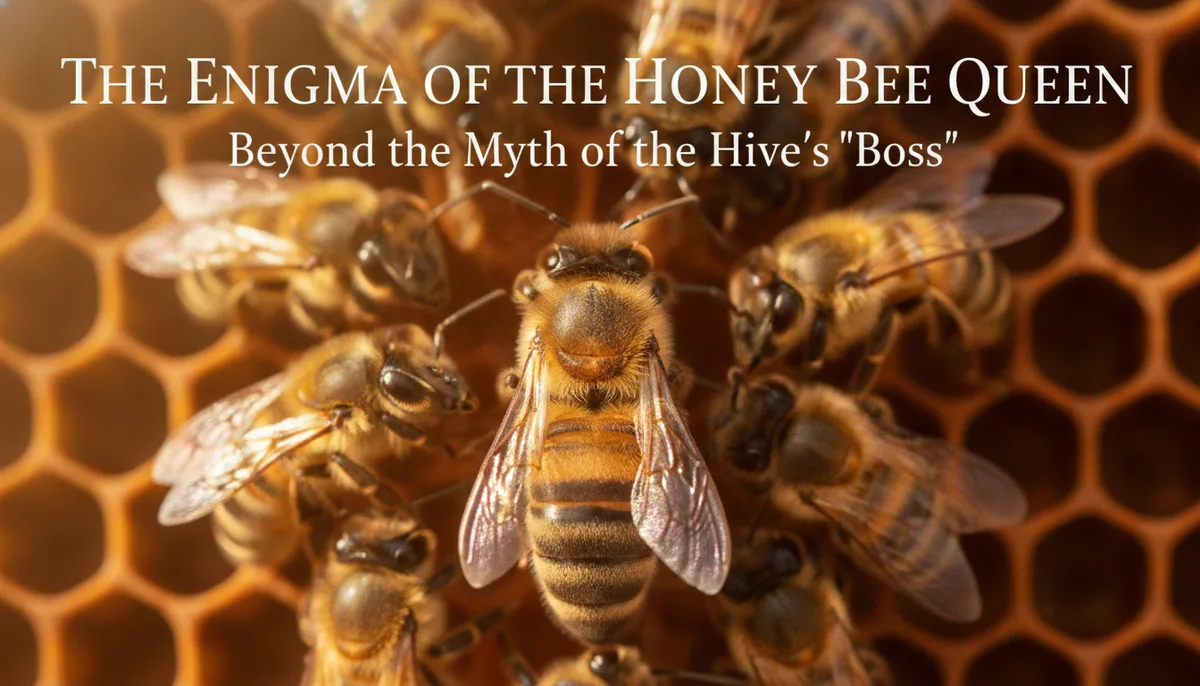
The Enigma of the Honey Bee Queen: Beyond the Myth of the Hive’s "Boss"
The honey bee queen occupies a singular space in the human imagination. To the casual observer, she is the undisputed monarch—a regal figure catered to by a court of loyal subjects, defended at all costs, and endowed with the power to command her colony. Many aspiring beekeepers look at the hive and think that if they had to be a bee, the queen is the obvious choice. She is unique, indispensable, and seemingly lives a life of luxury.
However, as any seasoned apiarist will tell you, the reality of the queen’s existence is far more complex and, in some ways, more clinical than the myths suggest. While she is the heart of the hive’s wellbeing, her life is defined by a "jaded genesis" and a singular, exhausting purpose. To understand the queen is to understand the very mechanics of survival within the colony.
The Jaded Genesis: How a Queen is Born
The life of a queen bee does not begin with a coronation, but with a biological arms race. Every queen’s life starts with an instinctual drive for absolute survival. Unlike worker bees, who are raised in horizontal cells and fed a mix of pollen and nectar (bee bread), a potential queen is raised in a specialized, vertical "queen cell."
From the moment she hatches as a larva, she is submerged in royal jelly—a protein-rich secretion from the hypopharyngeal glands of young nurse bees. This diet is the sole factor that differentiates a queen from a worker. It triggers the development of fully functional ovaries and a larger abdomen, transforming what would have been a sterile worker into a reproductive powerhouse.
But the "jaded" nature of her birth appears the moment she emerges from her waxen cell. Her first official instinct is not to lead, but to eliminate. If other queen cells are present in the hive, the newly emerged virgin queen will use her unbarbed stinger to kill her rivals before they can even hatch. If two queens emerge simultaneously, they engage in a duel to the death. This "survival of the fittest" ensures that only the strongest genetic candidate takes the throne.
The Myth of the "Boss": Ruler or Reproductive Servant?
One of the most common misconceptions for those navigating the first year of beekeeping is that the queen issues orders. In truth, the queen is less of a general and more of a biological anchor.
While she is catered to—groomed, fed, and cleaned by a "retinue" of worker bees—she does not make the day-to-day decisions for the hive. It is the worker bees who decide when it is time to build more comb, when to forage, and most importantly, when the queen herself is no longer fit for service.
The queen’s primary function is reproduction. At the height of the season, a high-quality queen can lay up to 2,000 eggs per day. This is a staggering feat of biology; she often lays more than her own body weight in eggs every 24 hours. Her uniqueness makes her indispensable, but it also makes her a prisoner to the hive's needs. If she fails to maintain the population, the workers will not hesitate to initiate "supersedure"—the process of raising a new queen to replace the old one.
The Chemical Scepter: Pheromones and Governance
If the queen doesn't "talk" to her bees, how does she maintain order? The answer lies in her "chemical scepter"—a complex cocktail of pheromones, most notably the Queen Mandibular Pheromone (QMP).
These pheromones serve several critical functions:
- Suppression: They inhibit the ovaries of worker bees, ensuring the queen remains the sole reproductive female.
- Attraction: They keep the colony cohesive, acting as a chemical "homing beacon" that tells the workers their mother is present and healthy.
- Inhibition: They prevent the workers from building new queen cells.
When a queen is young and vibrant, her pheromone signal is strong, and the hive operates like a well-oiled machine. As she ages and her pheromone production wanes, the workers sense the "silence" and begin to prepare for her successor. This chemical communication is why finding the queen is so vital during inspections; her presence (or lack thereof) tells you everything you need to know about the hive's internal state.
Identifying the Queen: A Practical Guide for Beekeepers
For many beginners, finding the queen among 60,000 buzzing workers feels like finding a needle in a haystack. However, she has distinct physical characteristics that set her apart:
- The Abdomen: Her abdomen is significantly longer and more pointed than that of a worker, extending well past her wings.
- The Thorax: Her thorax (the middle section) is larger, bald, and shiny, whereas workers are often fuzzier.
- The Movement: The queen moves with a purposeful, slow grace. She doesn't zig-zag like workers; she marches across the frame, often followed by a circle of attendants (the retinue).
When conducting an inspection to locate her, it is essential to have the right gear. Working with a calm hand is only possible if you feel protected. Using top-rated bee suits for maximum protection allows you to take your time and focus on the frames without the distraction of defensive bees.
The Mating Flight: A Once-in-a-Lifetime Event
Perhaps the most dramatic moment in a queen's life occurs shortly after she emerges as a virgin. She must leave the safety of the hive for her "nuptial flights."
She flies to a Drone Congregation Area (DCA), a specific spot in the sky where drones (male bees) from various colonies gather. There, she mates with 10 to 20 drones in mid-air. This genetic diversity is crucial; the more drones she mates with, the more resilient and productive her future colony will be.
Once she returns to the hive, she never mates again. She stores the sperm in a specialized organ called a spermatheca, using it to fertilize eggs for the rest of her life—which can last anywhere from two to five years, though modern queens often have shorter lifespans due to environmental stressors.
When the Queen Fails: Understanding Supersedure and Swarming
A beekeeper must be able to distinguish between two critical events: supersedure and swarming.
- Supersedure: This is the hive's way of "firing" a failing queen. They will build a few queen cells (often in the middle of the frame) to replace her because she is old, injured, or failing to produce enough pheromones.
- Swarming: This is colony reproduction. If the hive is too crowded, the workers will build many queen cells (usually along the bottom of the frames). The old queen will take half the colony and leave to find a new home, leaving the "throne" to the first daughter who emerges.
Understanding these behaviors is the difference between a successful season and losing your entire honey crop. If you are just starting out, investing in one of the best beginner beekeeping kits of 2024 can provide you with the tools needed to manage these transitions effectively.
Conclusion: Respecting the Heart of the Hive
The queen bee is a figure of immense biological significance, but she is also a reminder of the harsh efficiency of nature. She is catered to not out of "love," but out of necessity. She is defended because she is the only path to the colony's future.
As beekeepers, our job is to monitor her health, respect her "jaded genesis," and ensure she has the environment she needs to thrive. She may be overrated as a "boss," but as the biological engine of the apiary, her value is truly beyond measure.