
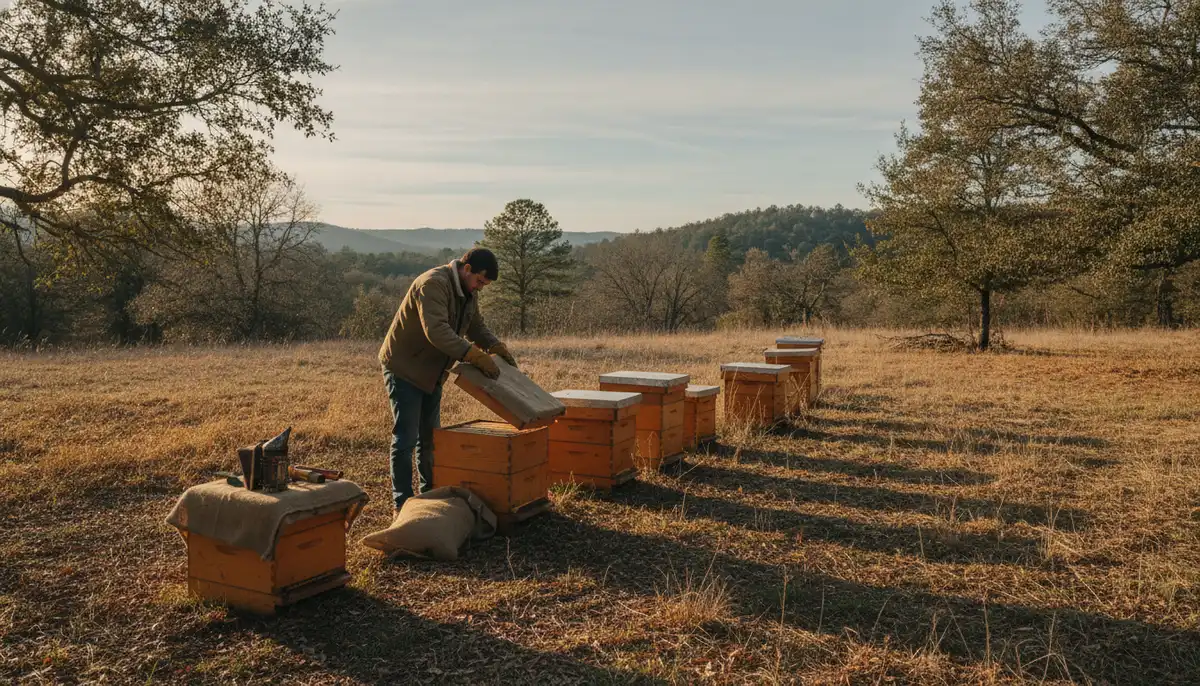
Mastering the Mild: A Comprehensive Guide to Winter Hive Management in the South
My northern friends may get a chuckle out of the title of this article, but I promise, that’s not an oxymoron! Though southern winters are subjectively easier in many ways — insulation of hives isn’t necessary, fewer honey stores are required, and of course, we usually have ample days warm enough for a quick inspection — the lack of a consistent "deep freeze" introduces a specific set of management hurdles.
In the South, the "winter" season is often a volatile mix of 70-degree afternoons followed by 25-degree nights. This thermal rollercoaster keeps the bees active, which in turn means they consume resources at a much faster rate than a colony tightly clustered in a dormant state. To keep your apiary healthy, you must shift your mindset from "setting and forgetting" to "monitoring and reacting."
The Paradox of the Mild Winter
In colder climates, the honey bee colony enters a state of relative stasis. The queen stops laying, the workers form a tight cluster, and energy expenditure is minimized. In the South, however, the bees rarely experience a true, prolonged brood break.
Because the temperatures frequently rise above 55°F, bees will break the cluster to perform cleansing flights or search for non-existent forage. This activity is metabolically expensive. A colony that is active in January is a colony that is burning through its winter pantry. Consequently, the greatest risk to a Southern hive isn't the cold itself—it's starvation during the "false springs" of late January and February.
Understanding how your bees interact with their environment during these months is critical. For a deeper look at how honey itself changes during these periods, you might find our guide on The Science of the Solid: Understanding Honey Crystallization and Critical Winter Hive Maintenance particularly useful.
Calculating and Managing Honey Stores
The rule of thumb for Northern beekeeping is often "one full deep of honey" (approximately 80-100 lbs). In the South, we can often get away with 40-60 lbs. However, weight is a deceptive metric if you aren't checking it frequently.
The Heft Test
The easiest way to monitor stores without opening the hive is the "heft test." By gently lifting the back of the hive from the bottom board, you can gauge the remaining weight. If the hive feels like it's bolted to the ground, they are likely set for the month. If it tips easily with one hand, you are entering the danger zone.
For beekeepers who prefer data over intuition, using a dedicated scale can provide peace of mind during the leanest months.
When to Supplement
If you find a colony is light in December or January, you must intervene. However, the type of feed matters. In the South, we avoid liquid syrup if a cold snap is predicted within the week. Cold syrup can chill the bees, and the added moisture can lead to condensation issues inside the hive. Instead, utilize "mountain camp" feeding (dry granulated sugar on paper) or professionally prepared fondant.
Pest Management: The War Never Ends
One of the few benefits of a harsh Northern winter is the "brood break," which naturally interrupts the reproductive cycle of the Varroa destructor mite. In the South, if the queen keeps laying, the mites keep breeding.
Varroa Monitoring
Do not assume that because it is December, your mite counts are low. If you had a late-season population spike, those mites are now concentrated on a smaller number of winter bees. This can lead to a colony collapse just as the spring buildup should be beginning.
Check your bottom boards for mite drop, or if the weather permits (above 60°F), perform an alcohol wash. If treatment is necessary, ensure you are using a product that is temperature-appropriate. Some treatments require high heat to vaporize, while others can be too volatile if the Southern sun hits the hive too hard.
Small Hive Beetles (SHB)
While Northern beekeepers rarely worry about SHB in the winter, Southern beekeepers must remain vigilant. In zones 8 and 9, hive beetles can remain active within the warmth of the cluster. Ensure your colonies are strong enough to patrol the entire hive space; if a colony has shrunk significantly, consider removing excess empty supers where beetles can hide and breed away from the bees' reach.
Leveraging the Inspection Window
One of the greatest joys of Southern beekeeping is the "Inspection Window." These are the days when the mercury hits that magic 55-60°F mark, the sun is shining, and the wind is calm.
Unlike our Northern counterparts who must wait until April to see their queen, we can often perform "peek-ins" throughout the winter. These should be brief—no more than 5 to 10 minutes. The goal is not a full frame-by-frame teardown, but a targeted assessment:
- Food Position: Are the bees near the top of the frames? If they are at the very top, they may have run out of honey below them and need emergency feeding.
- Cluster Size: Is the colony still covering 4-6 frames, or has it dwindled?
- Queen Rightness: You don't need to see the queen. If you see a small patch of eggs or young larvae, she is active and doing her job.
To make these quick checks efficient, having the right gear ready is essential. You can review the basics in our guide to Essential Beekeeping Tools Every Newbie Needs: Beyond the Hive and Suit.
Ventilation vs. Insulation
In the South, moisture is often a bigger killer than cold. Because our winters are humid, respiration from the bee cluster can rise, hit a cold inner cover, and drip back down onto the bees as ice-cold water. A wet bee is a dead bee.
The Upper Entrance
Providing a small upper entrance or using a notched inner cover allows moist air to escape before it condenses. While you might worry about "letting the heat out," bees are excellent at heating the cluster itself; they do not heat the entire box.
Avoid Wrapping
Avoid the heavy black "winter wraps" used in the North. In the South, these wraps can cause the hive to overheat on a 70-degree January day, leading to excessive activity or even premature swarming preparation. A simple windbreak (like a fence or a line of hay bales) is usually more than enough protection from the elements.
Preparing for the "Early" Spring
In many parts of the South, the first pollen—often from Red Maple or Henbit—starts appearing as early as late January or early February. This is the signal for the colony to explode in growth.
If you haven't prepared your equipment by then, you will be behind the curve. Use the quiet days of December to clean your smokers, repair your veils, and assemble any new frames you'll need for the spring nectar flow. If you are a new beekeeper looking to expand your apiary for the coming season, now is the time to evaluate the Best Beginner Beekeeping Kits of 2024 to ensure you have your hardware ready before the bees start bringing in that first flush of nectar.
Feeding for Buildup
Once you see the first signs of natural pollen, you can begin stimulating the queen with 1:1 sugar syrup (if temperatures are stable). This mimics a nectar flow and encourages the bees to expand the brood nest. Be careful, however; once you start stimulating growth, you must ensure they have enough food to support that growing population if a late frost hits in March.
Conclusion
Winter management in the South is an exercise in balance. It requires a watchful eye that respects the power of a sudden cold snap while taking advantage of the mild days that define our region. By focusing on moisture control, consistent food monitoring, and persistent pest management, you can ensure your colonies emerge from the winter not just surviving, but ready to hit the ground running for the spring honey flow.
Keep your smoker handy and your sugar bags full—spring is closer than you think.