
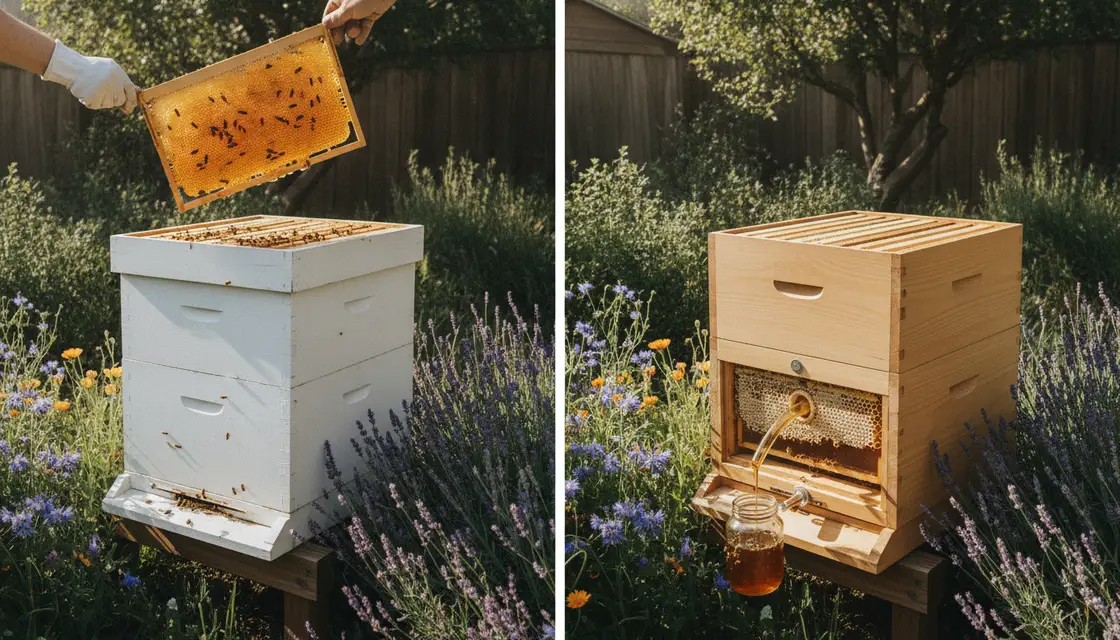
Langstroth vs. Flow Hive: Which is Right for You?
Affiliate Disclosure: This post contains affiliate links. If you purchase through these links, we may earn a small commission at no extra cost to you. We only recommend equipment that meets the standards of the hobbyist beekeeping community.
Choosing between a Langstroth hive and a Flow Hive is one of the first major decisions you’ll face as a new beekeeper. The right choice depends on your budget, your physical ability to lift heavy boxes, and how much you value the traditional process of harvesting beeswax alongside your honey.
In short: The Langstroth hive is the affordable, time-tested industry standard that allows for maximum flexibility and wax production. The Flow Hive is a premium, innovative system designed to make honey extraction effortless and less disruptive to the bees, though it comes with a significantly higher price tag and less beeswax harvest.
Who is This Guide For?
If you are currently browsing through Best Beginner Beekeeping Kits of 2024: Start Your Backyard Apiary with Confidence and feeling overwhelmed by the options, this guide is for you. Whether you’re a backyard hobbyist with a small garden or someone looking to start a modest honey-selling side project, understanding these two hive styles is the first step toward a successful first season.
Comparison at a Glance: Langstroth vs. Flow Hive
| Feature | Langstroth Hive | Flow Hive |
|---|---|---|
| Initial Cost | Low to Moderate ($150 - $300) | High ($600 - $800+) |
| Extraction Method | Centrifugal spinner or crush-and-strain | Manual key turns (honey on tap) |
| Wax Harvest | High (cappings and crushed comb) | Minimal (bees reuse plastic cells) |
| Physical Effort | High (lifting heavy honey supers) | Low (extraction happens in place) |
| Industry Standard | Yes (parts are universally compatible) | Modified Langstroth (uses Flow frames) |
| Bee Disturbance | Significant during harvest | Minimal during harvest |
The Langstroth Hive: The Traditional Favorite
The Langstroth hive, patented in 1851, is the most common hive in the world. It consists of stackable wooden boxes (brood boxes and honey supers) containing removable frames where bees build their comb.
Why We Love It (Pros)
- Affordability: You can get started with a basic Langstroth setup for a fraction of the cost of a Flow Hive.
- Versatility: Since almost every beekeeper uses them, finding replacement parts, nucs (nucleus colonies), or advice is incredibly easy.
- Beeswax Production: If you want to make candles, salves, or lip balms, the Langstroth system provides plenty of wax cappings during the harvest.
The Trade-offs (Cons)
- Heavy Lifting: A full honey super can weigh 40 to 60 pounds. You’ll need a strong back to move these during the harvest.
- Messy Extraction: Traditional extraction requires a honey spinner (centrifuge), uncapping tools, and a dedicated space that will inevitably get sticky.
Best for: The budget-conscious hobbyist, those interested in beeswax crafting, and anyone who wants to learn the "classic" way of beekeeping.
The Flow Hive: The Modern Innovation
The Flow Hive uses a specialized frame with partially formed plastic honeycomb cells. When you turn the "key," the cells split vertically, allowing the honey to flow down into troughs and out of the hive into your jars.
Why We Love It (Pros)
- Easy Extraction: You don't need a centrifuge or a "sticky room." You can literally harvest honey while wearing a t-shirt (though we always recommend your veil!).
- Less Stress for Bees: Because you aren't opening the hive and removing frames to harvest, the colony remains much calmer during the process.
- Observation Windows: Most Flow Hives come with built-in windows, allowing you to peek at your bees' progress without opening the lid.
The Trade-offs (Cons)
- Price: The initial investment is steep. It can be a barrier for those just testing the waters.
- Less Wax: Because the bees reuse the plastic Flow frames, you won't get the sheets of wax cappings that come with traditional harvesting.
- The "Hands-Off" Myth: Some beginners think a Flow Hive means less work. You still must perform regular inspections for Varroa mites and queen health.
Best for: Hobbyists with physical limitations (back or joint issues), those with very limited space for extraction equipment, and "tech-forward" beekeepers who want the most convenient harvest possible.
The Golden Rule: Both Require Management
Regardless of which hive you choose, the biological needs of the bees remain the same. You will still need a smoker, a hive tool, and a high-quality bee suit.
Whether you are using a traditional box or a Flow Hive, you are still responsible for monitoring for Varroa mites, ensuring the queen excluder is positioned correctly, and checking that the bees have enough winter stores. If you're feeling a bit nervous about these tasks, our guide on Navigating the First Year: A Comprehensive Guide to Transitioning from Neophyte to Confident Beekeeper can help you set a realistic schedule.
Common Beginner Mistakes
- Thinking Flow Hives are "Set and Forget": You still need to open the brood box every 7–10 days in the spring to check for swarm cells and disease.
- Harvesting Too Early: In your first year, the bees often need all the honey they make to survive their first winter. Don't be tempted to turn that Flow key too soon!
- Buying Off-Brand "Knockoffs": Cheap imitations of both Langstroth and Flow hives often use poor-quality wood that warps or toxic plastics that can harm the brood.
Frequently Asked Questions
Can I put Flow frames in a regular Langstroth hive? Yes! Flow frames are designed to fit into standard Langstroth-sized honey supers, though you may need to modify the box slightly so the honey tubes can exit.
Do bees like plastic Flow frames as much as natural wax? Bees generally prefer natural wax, but they will readily use Flow frames once the colony is established and there is a strong nectar flow. Some beekeepers find that lightly coating the plastic frames with a little melted beeswax helps the bees accept them faster.
Which hive is better for the bees? Neither is inherently "better" for bee health. Bee health depends on the beekeeper's ability to manage pests like Varroa mites and provide a good habitat. The Flow Hive is arguably "kinder" during the actual harvest moment, but the Langstroth allows for more natural comb building if you use foundationless frames.
Final Thoughts
If you love the idea of a backyard "honey on tap" experience and have the budget, the Flow Hive is a beautiful, rewarding piece of engineering. If you want to dive deep into the craft, harvest plenty of beeswax, and keep your startup costs low, the Langstroth is the tried-and-true path.
Whichever you choose, remember that you’re embarking on a wonderful journey of stewardship. Take it one frame at a time!