
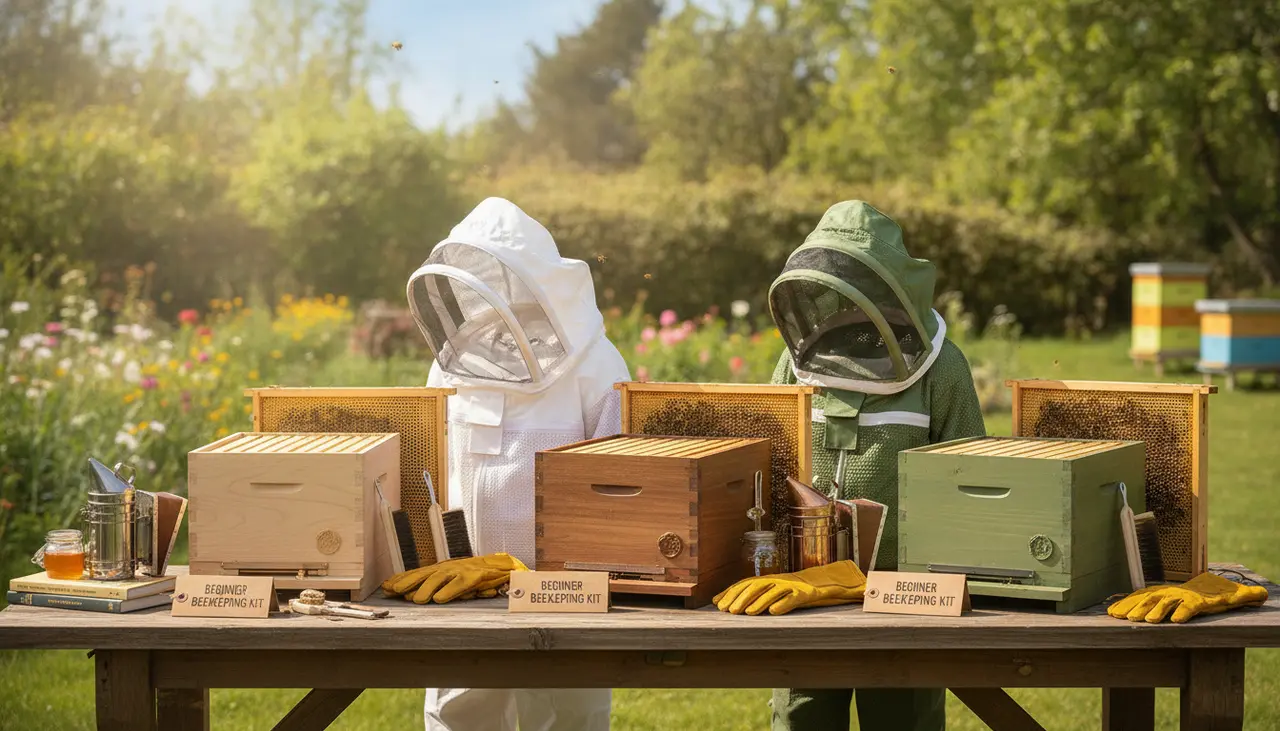
Best Beginner Beekeeping Kits of 2024: Start Your Backyard Apiary with Confidence
Affiliate Disclosure: This post contains affiliate links. If you purchase through these links, Hive & Honey may earn a small commission at no extra cost to you, which helps us continue providing supportive advice for hobbyist beekeepers.
Starting your first hive is one of the most rewarding experiences a nature lover can have. There is something truly magical about the gentle hum of a healthy colony in your own backyard. However, we know that the first look at a beekeeping catalog can feel overwhelming. Between various hive styles, protective fabrics, and specialized tools, it’s easy to feel like you need a degree in biology just to get started.
The good news is that a beginner beekeeping kit is designed to take the guesswork out of your first year. These all-in-one bundles provide the essential components you need to house your bees and keep yourself safe, allowing you to focus on the joy of learning the "language" of the hive.
The Short Answer: What is the best beginner beekeeping kit?
For most hobbyists in 2024, the best value lies in a complete 10-frame Langstroth hive kit made from high-quality cedar or wax-coated pine. A truly "complete" kit should include at least one deep brood box, a honey super, a smoker, a hive tool, and a full protective suit.
If you are looking for a balance of durability and ease of use, we recommend kits that feature pre-cut dovetail joints and pre-waxed foundations. This ensures your bees have a head start on building comb and your hive remains sturdy through the changing seasons.
Who Is This Guide For?
This guide is specifically for the aspiring hobbyist. Whether you have a small suburban garden or a few acres of land, we’ve focused on kits that are manageable for one or two people to maintain. We aren't looking at industrial-scale setups; we are looking at the tools that will help you successfully raise your first colony and maybe even harvest a few jars of liquid gold by next season.
2024 Beginner Kit Comparison Table
| Feature | The Traditionalist (10-Frame) | The Easy-Lift (8-Frame) | The Modern Auto-Harvest |
|---|---|---|---|
| Primary Material | Wax-Coated Pine | Red Cedar | Food-grade BPA-free Plastic/Cedar |
| Weight (Full) | Heavy (60-80 lbs) | Moderate (40-50 lbs) | Heavy |
| Tool Quality | Standard Steel | Premium Stainless Steel | Specialized Tools Included |
| Ease of Assembly | Moderate (Dovetail) | Easy (Pre-assembled options) | Complex (Mechanical parts) |
| Best For | Maximum Honey Yield | Beekeepers with back concerns | Hobbyists focused on easy harvest |
Top Recommendations for Your First Hive
1. The "Gold Standard" 10-Frame Langstroth Bundle
This is the most common setup for a reason. Most local beekeeping mentors use 10-frame Langstroth hives, meaning if you ever need a hand, your neighbor will know exactly how to help.
- Why we love it: It offers the most room for the colony to grow, which can help prevent swarming in the spring.
- What’s included: Usually includes a bottom board, entrance reducer, two deep brood boxes, honey supers, and a smoker.
- The Tradeoff: When full of honey, a 10-frame super can be quite heavy. If you have any back issues, you might want to consider the 8-frame version.
2. The 8-Frame "Back-Saver" Kit
If you are worried about the physical labor of lifting heavy boxes, the 8-frame kit is your best friend. It functions exactly like the standard hive but is narrower and significantly lighter.
- Why we love it: It’s much easier to maneuver during hive inspections. The bees don't mind the smaller width; they simply build "up" instead of "out."
- What’s included: High-quality cedar boxes, a ventilated bee suit, and a standard hive tool.
- The Tradeoff: Because it’s narrower, it can be a bit more prone to tipping in high winds, so a sturdy hive stand is a must.
3. The Flow Hive 2+ Starter Set
For those who are fascinated by the technology of beekeeping, the Flow Hive has revolutionized the harvesting process.
- Why we love it: You can harvest honey directly from the hive without opening it or disturbing the bees as much. It’s a beautiful piece of craftsmanship that looks great in a backyard.
- What’s included: The patented Flow frames, a premium bee suit, and high-end smoking tools.
- The Tradeoff: It is a significant financial investment compared to traditional kits. You still need to perform regular hive inspections for bee health; the "easy" part is only the harvest.
Essential Add-ons for Every Beginner
Most kits are great, but they often miss a few "quality of life" items that make your first year much smoother. Before you check out, consider if you need:
- A High-Quality Hive Tool: Most kits come with a basic pry bar. We recommend looking for a "J-hook" style tool, which makes lifting frames much gentler on the bees and your wrists.
- Protective Gear: While many kits include a veil, a full suit provides the confidence a beginner needs to stay calm. For more details on choosing the right fabric, check out The Hive & Honey Master Buying Guide.
- Feeders: Your new "nuc" (nucleus colony) or package of bees will need sugar syrup to help them build out their new home. Look for a frame feeder or a top feeder.
Common Beginner Mistakes to Avoid
When you get your shiny new kit in the mail, it’s tempting to jump right in. Here are a few things to keep in mind:
- Don't Paint the Inside: Only paint the outside of your wooden hive boxes to protect them from the rain. The bees prefer the natural wood inside and will coat it with their own antimicrobial "bee glue" called propolis.
- Skipping the Mite Check: Even a brand-new kit and a fresh colony can suffer from Varroa mites. Start your mite monitoring schedule the moment your bees are settled.
- Harvesting Too Early: It is heartbreaking, but most experts recommend not harvesting any honey in the first year. Your bees need those stores to survive their first winter. Think of the first year as an investment in their future.
Frequently Asked Questions
How much space do I need for a beginner kit? You don't need a farm! A simple 10x10 foot area in a sunny, quiet corner of your yard is usually plenty. Just ensure the hive entrance isn't pointing directly at a walkway or a neighbor’s fence.
Do these kits come with the bees? No. Almost all kits are the "hardware" only. You will need to order a "nuc" or a "package" of bees from a local supplier or a reputable online breeder, usually in the late winter for spring delivery.
Is it better to get a kit or buy parts separately? For your first hive, a kit is almost always better. It ensures that the bottom board, boxes, and cover all fit together perfectly, preventing drafts and keeping your bees warm.
Final Thoughts
Choosing a beginner beekeeping kit is the first step in a beautiful journey. Whether you choose a traditional Langstroth or a modern Flow Hive, the most important thing is that you feel supported and equipped. Remember, every expert beekeeper started exactly where you are today—with a box of wooden parts and a lot of heart.
For a deeper look at specific tools and protective clothing, don't forget to visit The Hive & Honey Master Buying Guide to round out your setup. Happy beekeeping!