
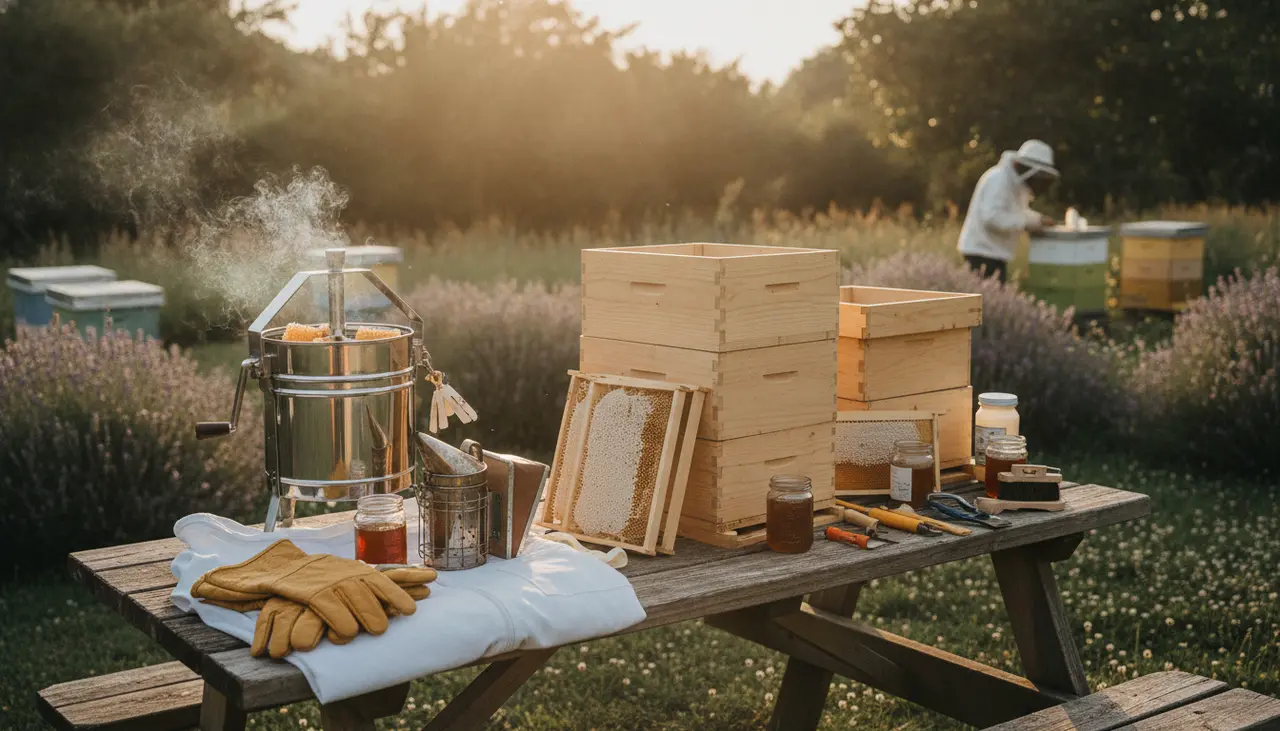
The Hive & Honey Master Buying Guide
Disclosure: This guide contains affiliate links. If you click through and make a purchase, we may receive a small commission at no extra cost to you. This helps support our mission to provide free, high-quality beekeeping advice for hobbyists.
Choosing the right equipment for backyard beekeeping involves balancing three main factors: the comfort of your bees, your physical capabilities, and your honey production goals. For most hobbyists, a standard 10-frame Langstroth hive is the gold standard due to its modularity and the wide availability of parts. Pair this with a ventilated bee suit, a high-quality smoker, and a standard J-hook hive tool to create a reliable foundation for your first season.
Success in small-scale honey production isn't about having the most expensive gadgets; it’s about having reliable tools that make hive inspections less stressful for both you and your colony. By focusing on "Beginner Essentials" first, you can scale your apiary as your confidence grows.
Who This Guide Is For
Whether you are an aspiring keeper waiting for your first "nuc" (nucleus colony) to arrive or an intermediate keeper looking to upgrade your extraction setup, this guide is for you. We understand that backyard beekeeping is a labor of love squeezed into busy weekends and evening hours. Our goal is to help you invest in gear that lasts, works effectively, and keeps you safe.
The Decision Framework: Choosing Your First Hive
The hive is the heart of your apiary. While there are several styles, your choice will dictate how you manage your bees and harvest honey.
- Langstroth Hives: The most common choice. They use stackable boxes (brood boxes and honey supers) with removable frames. This is excellent for those who want to maximize honey production.
- Top Bar Hives: These are horizontal hives where bees build comb naturally from a single bar. They are popular with hobbyists who prefer a more "natural" look and want to avoid heavy lifting, as there are no heavy boxes to stack.
- Flow Hives: A specialized version of the Langstroth that allows you to harvest honey via a tap without opening the hive. It is a premium option for those focused on ease of extraction.
Hive Comparison Table
| Feature | Langstroth Hive | Top Bar Hive | Flow Hive 2 |
|---|---|---|---|
| Primary Benefit | Industry standard; easy to find parts | No heavy lifting; natural comb | Easy honey extraction |
| Honey Yield | High | Low to Moderate | High |
| Learning Curve | Moderate | Moderate (requires different management) | Moderate |
| Expansion | Very Easy (add more supers) | Limited by hive length | Easy (add more supers) |
| Price Point | Affordable to Mid-range | Mid-range | Premium |
Protective Gear: Safety Meets Comfort
Nothing ends a hobby faster than a bad experience with stings. When shopping for protective clothing, consider your climate and your comfort level around bees.
- Full Suits vs. Jackets: Beginners often feel more secure in a full suit. If you live in a hot climate, a ventilated suit is worth the extra investment over traditional cotton, as it allows breezes to pass through while keeping the mesh away from your skin.
- Veil Types: The "fencing" style veil offers a great field of vision and doesn't require a separate hat, while the "round" veil keeps the mesh further from your face, which some find more comforting.
- Gloves: Look for heavy-duty goatskin gloves with long gauntlets. They provide a balance of protection and the dexterity needed to handle frames without crushing bees.
Essential Tools for Every Inspection
You cannot manage a hive effectively without these three "must-haves":
- The Smoker: A stainless steel smoker with a heat shield is vital. It calms the bees by masking alarm pheromones.
- The Hive Tool: Used for prying apart frames stuck together with propolis (bee glue). The J-hook style is particularly helpful for lifting frames without damaging the wooden ears.
- Bee Brush: A soft-bristled brush used to gently move bees off a frame during a "Bee Health" check or honey harvest.
Choosing the Right Gear for Your Situation
Best for the "Backyard Hobbyist" (Limited Space)
If you have a small suburban yard, a standard 8-frame or 10-frame Langstroth kit is ideal. These kits are often sold as "Complete Hive Kits" on Amazon or through niche suppliers. They provide everything you need to get started in one shipment, ensuring all parts fit together perfectly.
Best for the "Honey Producer" (Small-Scale Sales)
If your goal is to sell honey at local farmers' markets, focus on an Electric Honey Extractor. While manual extractors are cheaper, an electric model saves hours of physical labor during the harvest season. Look for a 3-frame or 4-frame stainless steel model that fits easily on a tabletop.
Best for the "Health-Conscious Keeper"
Managing Varroa mites is the most critical part of "Seasonal Maintenance." For a small-scale producer, an Oxalic Acid Vaporizer or Formic Pro strips are top-rated treatments. Having these on hand before you see a mite spike is a hallmark of a proactive keeper.
Common Beginner Mistakes to Avoid
- Harvesting Too Early: It is tempting to take honey in your first year. However, bees need their stores to survive the winter. Unless you have an exceptionally strong colony, leave the honey for them in year one.
- Skipping Mite Checks: Varroa mites are the leading cause of colony collapse. Even if your bees "look healthy," regular mite counts are essential.
- Buying Used Woodenware: While it might save money, used hives can carry diseases like American Foulbrood, which can stay dormant for decades. For your first hive, buy new.
- Opening the Hive Too Often: We know you're excited! But opening the hive every day disrupts the internal temperature and stresses the queen. Aim for once every 7–10 days during the nectar flow.
Buying Checklist for Your First Season
- [ ] 1 Complete Hive (Brood box, frames, foundation, inner cover, outer cover, bottom board)
- [ ] 1 Protective Suit or Jacket with Veil
- [ ] 1 Pair of Beekeeping Gloves
- [ ] 1 Smoker (and fuel like pine needles or burlap)
- [ ] 1 Hive Tool
- [ ] 1 Entrance Feeder or Frame Feeder (for early spring/fall feeding)
- [ ] Varroa Mite Testing Kit (Alcohol wash or sugar shake)
Frequently Asked Questions
How much does it cost to start beekeeping? For a single hive, expect to spend between $400 and $700. This includes the hive itself, your protective gear, tools, and the bees (nuc or package).
How much space do I need for a backyard hive? Not as much as you think! A 10-foot by 10-foot area is usually plenty. The most important factor is the flight path; ensure the hive entrance doesn't face a neighbor's walkway or a busy patio.
Which is better: Oxalic Acid or Formic Acid for mites? This depends on the season. Formic acid can be used when honey supers are on the hive and the temperature is moderate. Oxalic acid is often used as a "winter cleanup" when there is little to no brood present.
Final Thoughts
Beekeeping is a journey of constant learning. By choosing reliable equipment now, you set yourself up for a rewarding experience where you can focus on the biology of the bees rather than struggling with faulty gear. Remember to check your local ordinances regarding backyard beekeeping and always keep a supportive "Bee Health" strategy at the forefront of your management plan.
Stay tuned for our deep-dive "Product Reviews" where we break down specific brands of suits and extractors to help you make the most of your investment. Happy keeping!