
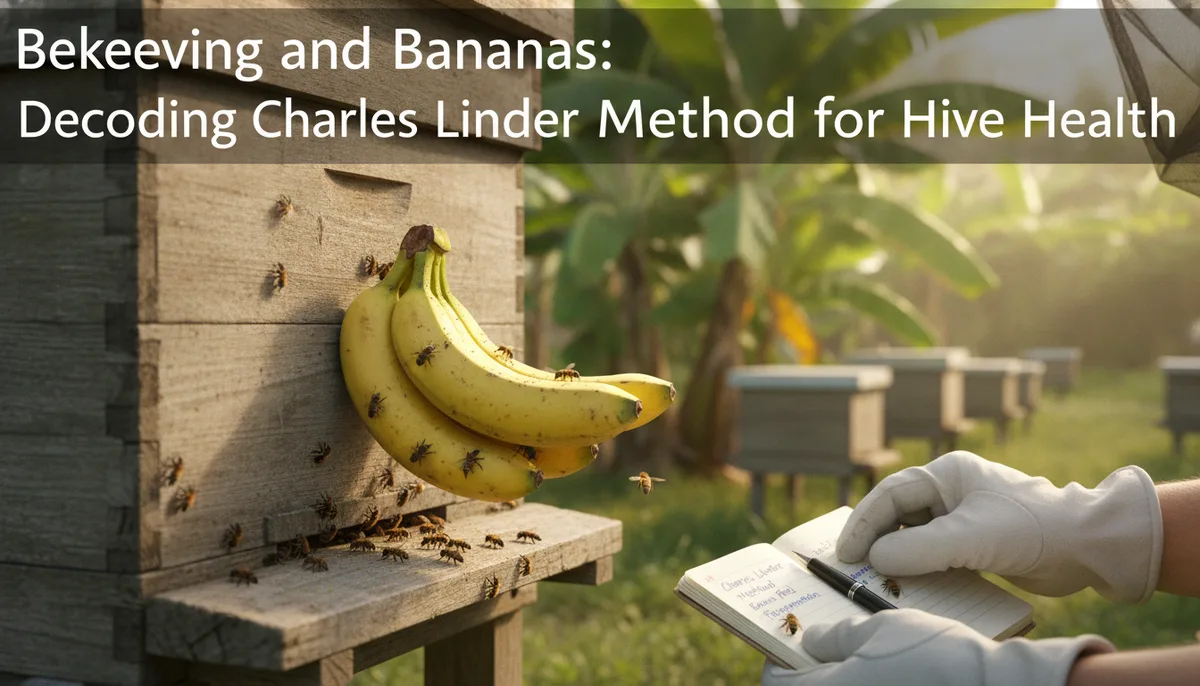
Beekeeping and Bananas: Decoding the Charles Linder Method for Hive Health
Beekeeping is an industry where tradition often meets trial and error, and few names carry as much weight in the modern era as Charles Linder. Known for his "tenacity in finding solutions," as noted in the August 2026 "The Classroom" column of the American Bee Journal, Linder has a reputation for taking action where others merely speculate. One of the most intriguing—and often misunderstood—topics he touched upon in his January 2026 article, "Into the New Year," is the role of bananas in the apiary.
To the uninitiated, the mention of bananas in a beekeeping context sounds like a prank. However, for those who follow the chemistry of the hive and the biological triggers of Apis mellifera, the banana represents a complex tool. Whether it is being used as a catalyst for hygienic behavior or avoided to prevent a defensive swarm, the humble banana is more than just a snack for the beekeeper.
The Chemistry of Conflict: Why Bananas Trigger Alarm
Before diving into the "Linder Method" of using bananas for hive health, we must address the primary reason most beginners are told to keep bananas away from their bees. The secret lies in a single chemical compound: isoamyl acetate.
Isoamyl acetate is a colorless ester that carries a strong, distinct odor of artificial banana. In the world of the honey bee, this exact compound is the primary component of the alarm pheromone. When a worker bee stings a perceived threat, she releases this pheromone to "mark" the target. This scent acts as a chemical beacon, telling every other bee in the vicinity exactly where to direct their defensive efforts.
The "Banana Breath" Risk
If you eat a banana shortly before heading into the apiary, or if you have banana residue on your hands, you are essentially walking into the hive wearing the scent of an enemy. Even the most docile colony can become agitated if they catch a whiff of what they perceive to be a distress signal. For this reason, many veterans suggest a strict "no banana" policy on inspection days.
If you are concerned about hive aggression while experimenting with these techniques, ensuring you have the right gear is paramount. You can read more about protecting yourself in our guide to the Top-Rated Bee Suits for Maximum Protection: Stay Safe and Cool in the Apiary.
Charles Linder and the Practical Application of Bananas
If bananas trigger alarm, why would a master beekeeper like Charles Linder reference them as a potential solution in the American Bee Journal? The answer lies in Linder’s philosophy of "acting on solutions." He recognizes that the bees' natural instincts—including their defensive and cleaning instincts—can be harnessed to improve hive health.
In his January 2026 piece, Linder implies that the introduction of bananas isn't about feeding the bees, but rather about stimulating a specific behavioral response. This is a classic example of "tenacious beekeeping": using the bees' own biology to solve a problem that chemical treatments might not address as effectively.
Stimulating Hygienic Behavior
The primary use for bananas in a hive is to combat Chalkbrood (Ascosphaera apis). Chalkbrood is a fungal disease that turns bee larvae into hard, white, chalky "mummies." While rarely fatal to a strong colony, it can significantly weaken a hive's productivity.
When a beekeeper places a piece of overripe banana or even just the peel on the top bars of the frames, the bees react to it as a foreign contaminant. Because of the scent and the texture, they are driven to remove it immediately. This creates a "cleaning frenzy" within the hive. As the bees work to haul out the banana, they become much more aggressive in their general housekeeping, often clearing out Chalkbrood mummies and other debris that they might have otherwise ignored.
How to Implement the "Banana Cleanse"
If you are following the lead of innovators like Linder, you shouldn't just toss a bunch of fruit into your hive and hope for the best. Precision is key to avoiding an all-out riot in the apiary.
Step-by-Step Application
- Assessment: Only use this method if you see signs of Chalkbrood or if the hive seems "lazy" in its housekeeping.
- Timing: Perform this during a nectar flow when the bees are already active and less prone to robbing behavior.
- Placement: Take a single banana, slice it lengthwise, and place it face down on the top bars of the brood chamber.
- Observation: Monitor the hive. Within 48 to 72 hours, a healthy, vigorous colony should have shredded the banana and carried the pieces out of the entrance.
During this process, the bees will be more "flighty" than usual. It is essential to use a high-quality smoker to mask the alarm pheromones you are intentionally introducing.
The Risks and Rewards of the Linder Approach
Charles Linder’s tenacity is admirable because he isn't afraid to use "folk" methods that have a basis in biological reality. However, the use of bananas is not without risks.
Potential for Increased Aggression
Because you are introducing the chemical equivalent of an alarm pheromone, the hive will be on high alert. This is not the time for a "suitless" inspection. If you are a new beekeeper still getting comfortable with hive temperaments, it is best to stick to standard management practices before trying advanced techniques like this.
If you are just starting your journey and want to ensure you have the right foundation before trying advanced methods, check out our Best Beginner Beekeeping Kits of 2024: Start Your Backyard Apiary with Confidence.
Pest Attraction
Bananas are high in sugar. If left in a weak hive that cannot remove them quickly, they can attract Small Hive Beetles (SHB) or ants. The "Linder Method" assumes the colony is strong enough to act on the "solution" quickly. If the banana sits for more than three days, you must remove it manually to prevent a secondary infestation.
Beyond the Banana: The Linder Legacy of Innovation
The discussion in the August 2026 American Bee Journal highlights a broader trend in beekeeping: a return to observation-based management. Charles Linder’s reference to bananas is a microcosm of his larger impact on the industry. He encourages beekeepers to look at the hive not as a box of bugs to be medicated, but as a complex biological system that can be nudged toward health.
The "Into the New Year" article serves as a reminder that being a "fan" of a great beekeeper isn't just about reading their words—it's about acting on them. Whether it’s experimenting with unconventional hive stimulants or refining your queen-rearing techniques, the goal is always the same: a more resilient honey bee.
Final Thoughts for the Modern Beekeeper
The "Bees and Bananas" mystery is a perfect example of why beekeeping is a lifelong learning process. What seems like a simple "don't do this" rule (because of alarm pheromones) can be flipped on its head by an expert like Linder to become a "do this" solution for hive hygiene.
As you move forward into your own beekeeping season, remember to:
- Observe first: Don't add anything to the hive without a clear reason.
- Protect yourself: Use the right gear when experimenting with pheromone-altering techniques.
- Keep records: If you try the banana method for Chalkbrood, note the results. Did the "mummy" count drop? Did the bees' temperament change?
For a complete overview of the tools you'll need for these more intensive hive manipulations, refer to The Hive & Honey Master Buying Guide.
Beekeeping is as much an art as it is a science. By following the tenacious examples set by leaders like Charles Linder, we can continue to find creative, effective ways to support our pollinators in an ever-changing environment. Whether you're using a banana to clean a hive or simply enjoying one as a snack far away from your bees, understanding the "why" behind the "what" is what makes a master beekeeper.
Beekeeping hive tools and scrapers